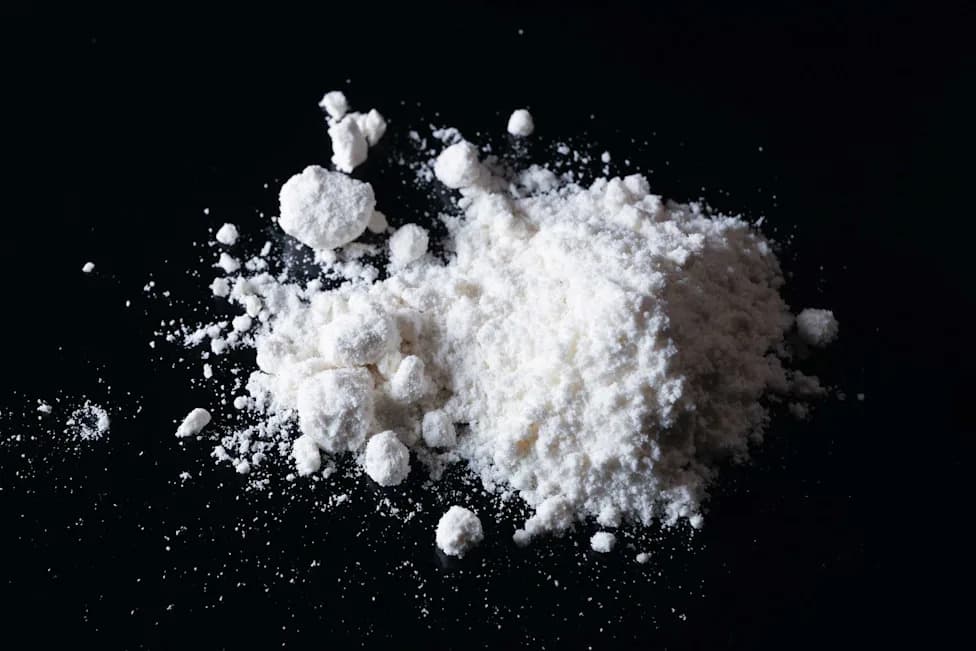
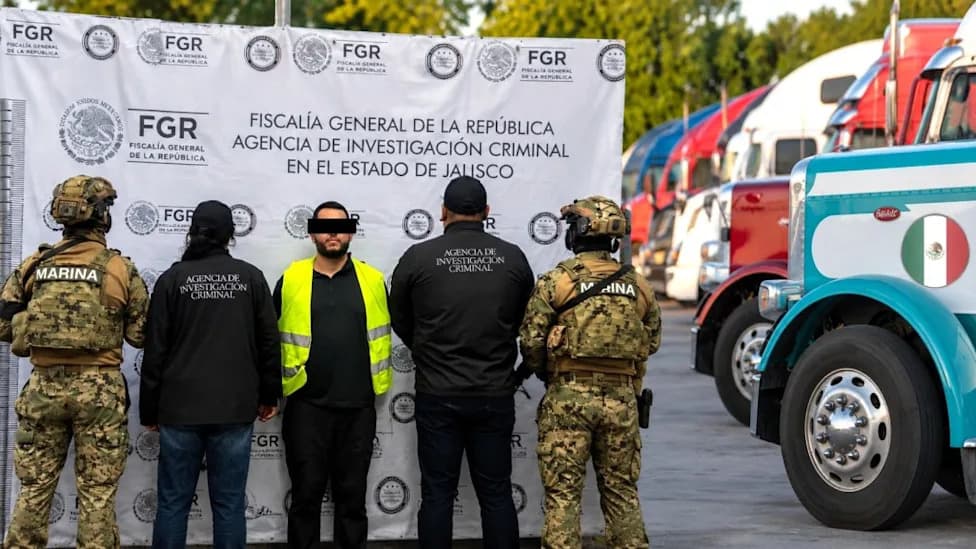
California’s homelessness crisis overlaps with an international fentanyl supply chain: Chinese-made precursor chemicals, refined by Mexican cartels, are reaching U.S. streets via West Coast ports and highways. Overdose is now the leading cause of death among unhoused Californians, even as federal disruptions to production coincided with a marked drop in fentanyl deaths. The author argues that solving homelessness requires addressing housing, mental health and poverty alongside sustained federal action to disrupt the drug supply.
How California’s Homelessness Crisis Connects to the International Fentanyl Supply Chain
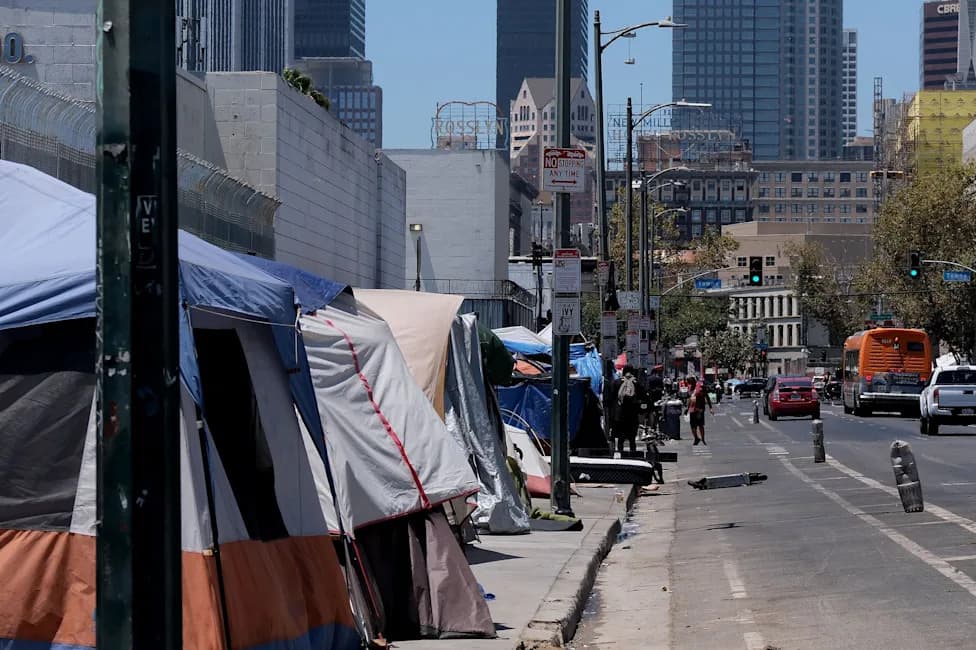
Homeless figures in Los Angeles have risen as Mayor Karen Bass points fingers at others for the issue. Downtown Los Angeles, CA, on Thursday 23rd July 2026.
Los Angeles residents were right to be alarmed when homelessness in the region began rising again. But the crisis in California is not only local—it intersects with an international drug-supply chain that federal officials now treat as a national-security threat.
Addiction, Overdose, and the Streets
California’s public-health data show a stark reality: overdose has become the leading cause of death among people experiencing homelessness in the state. In San Francisco, fentanyl is implicated in a majority of street overdose deaths. Los Angeles County public-health reports and behavioral-health surveys consistently find that roughly one in three unhoused Californians report regular illicit drug use; independent researchers argue the true share is likely higher when methamphetamine and fentanyl are both counted.
Andy Johnstone for CA Post
Where The Drugs Originate
The precursors used to produce synthetic opioids originate in chemical firms located in parts of China such as Guangzhou, Wuhan and Shandong. Mexican trafficking organizations then synthesize those precursors into finished fentanyl on an industrial scale. Last September, the U.S. State Department sanctioned Guangzhou Tengyue Chemical, accusing elements tied to those supply lines of "actively sustaining and expanding the business of poisoning our communities." That statement frames the flow of precursor chemicals as a transnational threat that contributes directly to overdose deaths on American streets.
Cartels, Money Laundering, and U.S. Trade Routes
U.S. authorities have designated groups such as the Sinaloa Cartel and the Jalisco New Generation Cartel (CJNG) as Foreign Terrorist Organizations; both are reported to oversee large-scale synthesis operations along Mexico’s Pacific coast. Proceeds from the trade are then laundered back into the United States through channels that include Los Angeles real estate, Bay Area shell companies and informal banking networks on the West Coast. Major logistics hubs—most notably the Ports of Los Angeles and Long Beach, which together handle roughly 40% of U.S. containerized imports—plus the I-5 freight corridor, can be exploited as parts of that supply chain.
David Buchan for Ca Post
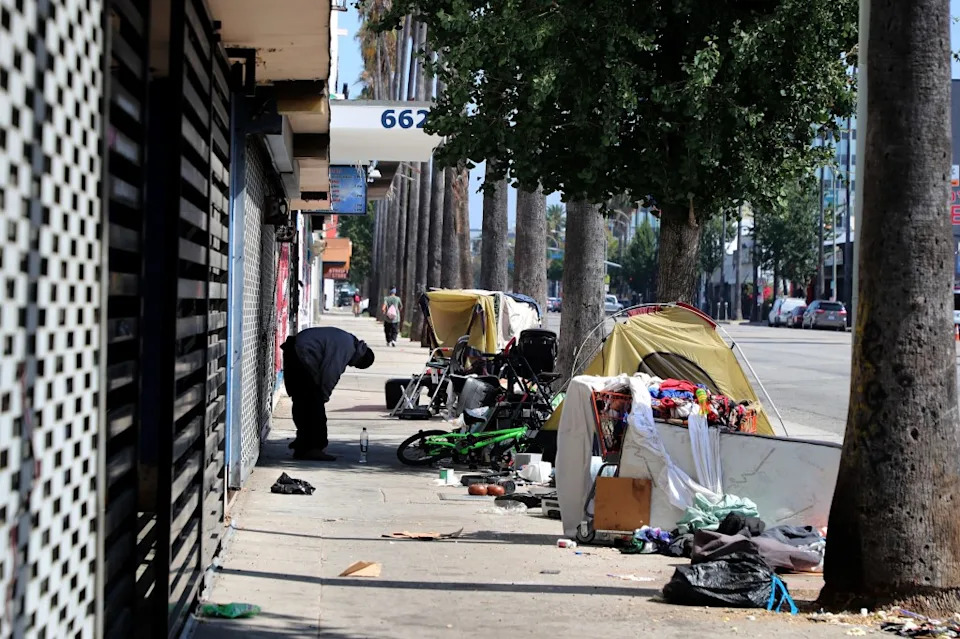
Every tent on a city sidewalk can, in some cases, represent the end point of an international supply chain that began with foreign-manufactured precursors.
Policy Responses: Supply Versus Demand
Local responses—building housing, expanding behavioral-health services and distributing naloxone—are essential but focus primarily on demand-side solutions. Those efforts save lives and address long-term needs, but they do not, by themselves, stop the flow of lethal drugs coming from abroad. Federal enforcement actions aimed at disrupting production and distribution appear to have an effect on overdose fatalities: the White House and the Office of the Director of National Intelligence (ODNI) reported a roughly 22% drop in U.S. fentanyl overdose deaths from 48,913 in 2024 to 38,084 in 2025, and Los Angeles County deaths fell from a 2022 peak of 3,220 to 2,298 in 2025—changes the ODNI attributed in part to disruptions in the production supply chain.
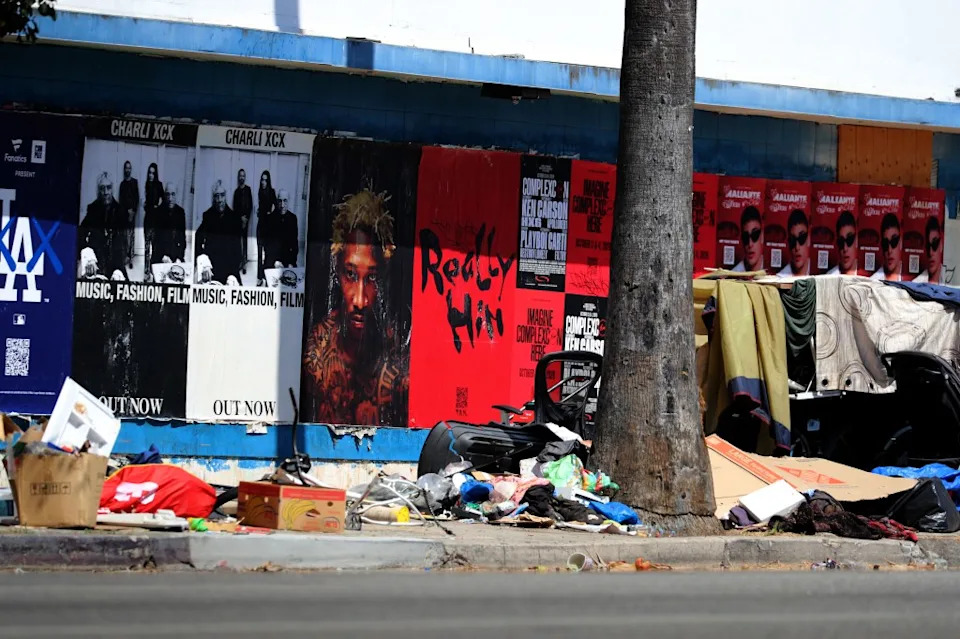
At the same time, California’s homeless population has continued to grow: the City of Los Angeles reported a 3.4% overall rise in homelessness, with unsheltered homelessness increasing by 7.9%. These diverging trends suggest that reducing overdose deaths through supply-chain disruption does not automatically translate into fewer people living on the streets.
David Buchan for Ca Post
A Multifaceted Crisis Requires a Multifaceted Response
Homelessness in California is simultaneously a housing shortage, a mental-health crisis, a poverty problem—and a national-security issue to the extent that foreign-produced chemicals and transnational criminal networks supply the drugs driving addiction and fatalities. Effective policy must address all of these dimensions together: expand housing and social services, scale mental-health and addiction treatment, and maintain sustained, targeted federal action to disrupt the international supply chains that flood U.S. communities with fentanyl.
Lisa Daftari is a foreign-policy analyst and media commentator based in Los Angeles.
Help us improve.