UC Riverside researchers found that bistrifluron, a compound that blocks chitin production, can kill the majority of drywood termite colonies by preventing termites from completing molts. Laboratory trials showed whole colonies died within 90 days when only about 5% were initially exposed, and follow-up tests reported roughly 95% mortality (some groups reached 99% within 60 days). The chemical spreads through colonies via social feeding, raising the possibility of effective spot treatments that avoid whole-house fumigation, though field-ready carriers and regulatory approvals are still needed.
New Compound Forces Drywood Termites to Self-Destruct by Blocking Molting
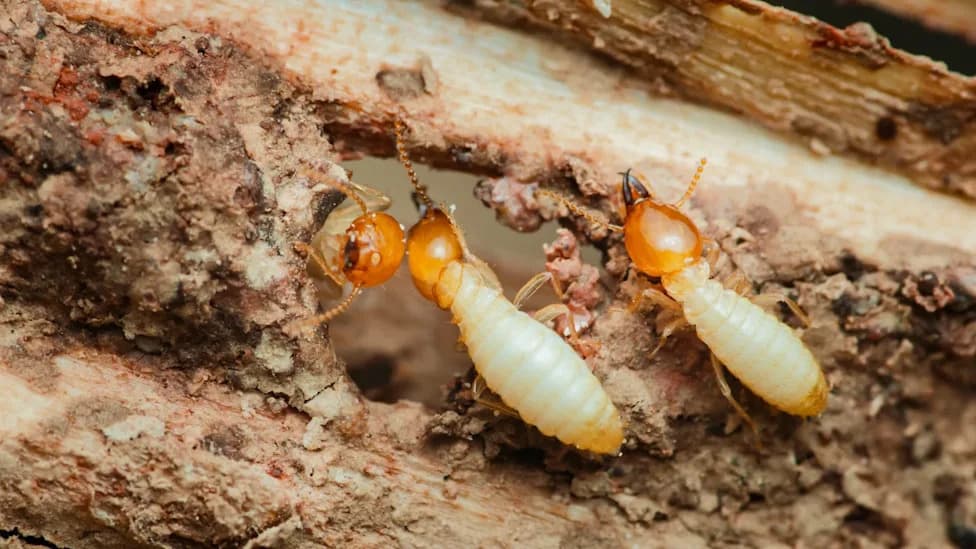
Photo Credit: iStock
Researchers at the University of California, Riverside, report a promising new way to eliminate drywood termite colonies by disrupting the insects' ability to molt. In laboratory trials, a compound called bistrifluron prevented termites from producing chitin, the material they need to form a new exoskeleton, and produced very high colony mortality when it spread through social feeding.
How the Treatment Works
Drywood termites protect their bodies with an external shell made largely of chitin. To grow, they must periodically shed that shell and build a new one. Bistrifluron interferes with chitin production so exposed termites cannot complete the molt and die.
Key Results From the Study
According to results published in the Journal of Economic Entomology and summarized by ScienceDaily, entire laboratory colonies were eliminated within 90 days even when only about 5% of individuals were initially exposed. Follow-up lab trials measured roughly 95% colony mortality overall, with some groups reaching 99% mortality within 60 days.
“This chemical is more environmentally friendly than ones traditionally used for drywood termite infestations. It's specific to insects and can't harm humans,” said Nicholas Poulos, the paper's corresponding author and a doctoral student in UC Riverside's Department of Entomology (as reported by ScienceDaily). The researchers note that further safety and regulatory testing is required before any commercial home-use product is approved.
Spread Through the Colony and Practical Potential
Termites that fed on treated wood passed the compound to nestmates through normal social interactions, allowing the active ingredient to move well beyond the initially exposed insects. That behavior suggests treated wood or localized spot treatments could reach a large share of a colony without tenting an entire house.
“Once the termites reach a certain stage, they have to molt. They cannot avoid that. With a lethal dose of this chemical, they'll try to shed their old exoskeleton but won't have a new one ready to protect them,” said senior author Dong-Hwan Choe, a UC Riverside entomology professor (as reported by ScienceDaily).
Next Steps and Practical Challenges
The team is working to translate laboratory methods into safe, field-ready formulations. In the experiments researchers dissolved bistrifluron in acetone before applying it to wood, but acetone is flammable and has a strong odor, making it unsuitable for typical home use. The lab is testing alternatives and delivery methods, including pairing treated wood with attractants.
In earlier experiments, adding pinene—a naturally occurring tree scent that attracts western drywood termites—increased mortality from about 70% to more than 95%, suggesting lures could improve uptake and spread inside colonies.
Context and Caution
Drywood termite infestations are hard to detect because the insects live inside wood, allowing colonies to grow before damage is noticed. Conventional whole-house fumigation can be disruptive and still may not prevent future reinfestation. While bistrifluron shows strong lab results and appears to be specific to insects, it must undergo further field testing and regulatory review to confirm safety, effectiveness, and best application methods in real-world settings.
Source: University of California, Riverside; study published in the Journal of Economic Entomology; coverage by ScienceDaily.
Help us improve.