Researchers modelled superionic hydrogen in Earth's core and find the hexagonal close-packed (HCP) superionic phase is thermodynamically favoured across most inner-core conditions. The body-centred cubic (BCC) superionic form becomes favourable only at extremely high temperatures (~6,400 K) and hydrogen fractions (>20%), but melting likely prevents it. Models also show a steep radial hydrogen gradient that drives hydrogen back to the inner-core boundary, where it re-enters the outer core, a process that may contribute chemical buoyancy powering the geodynamo.
Deep Secrets of Earth's Core: Abundant Superionic Hydrogen—HCP Phase Likely Dominant
(Rost-9D/iStock/Getty Images Plus)
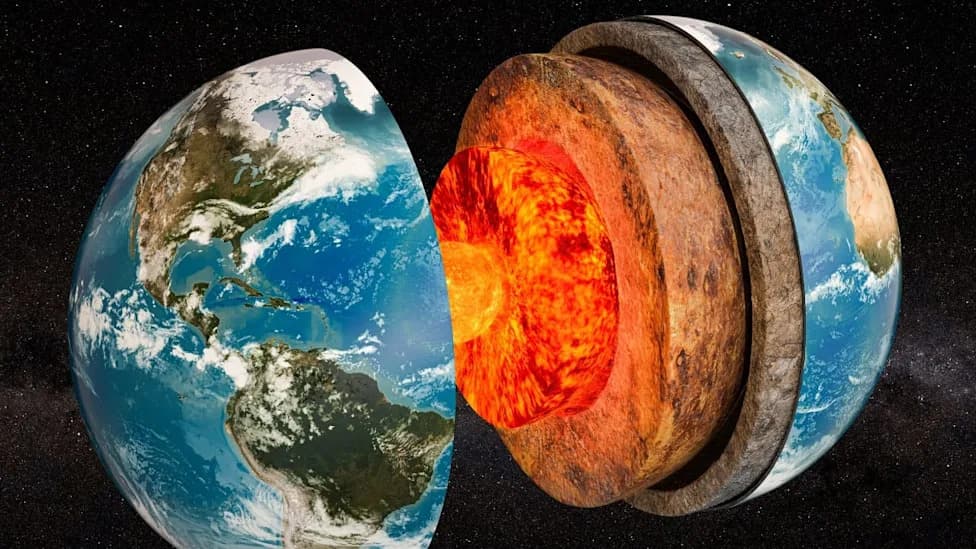
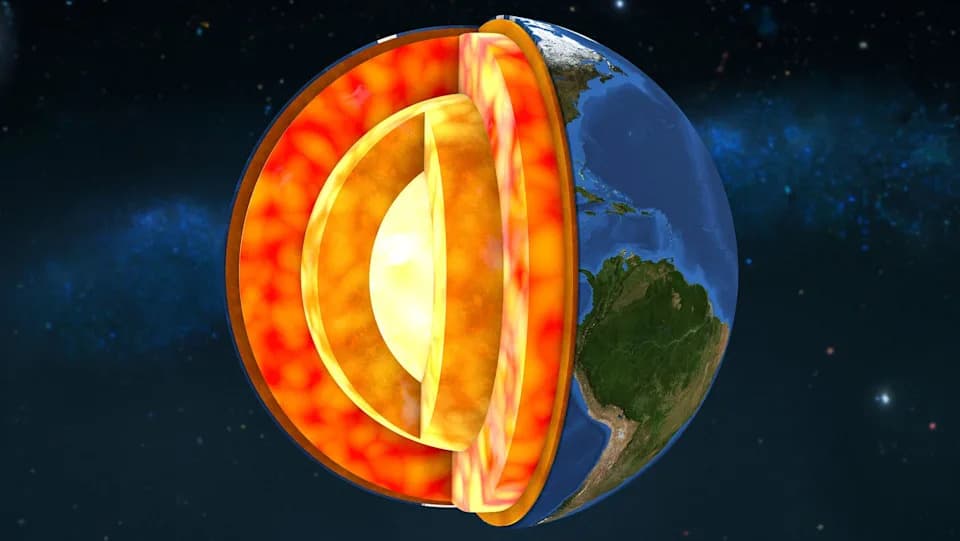
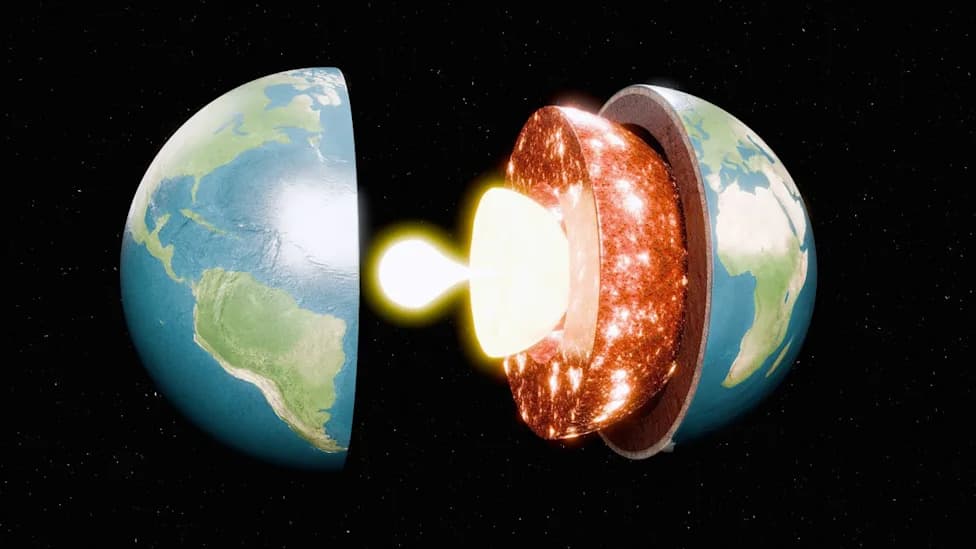
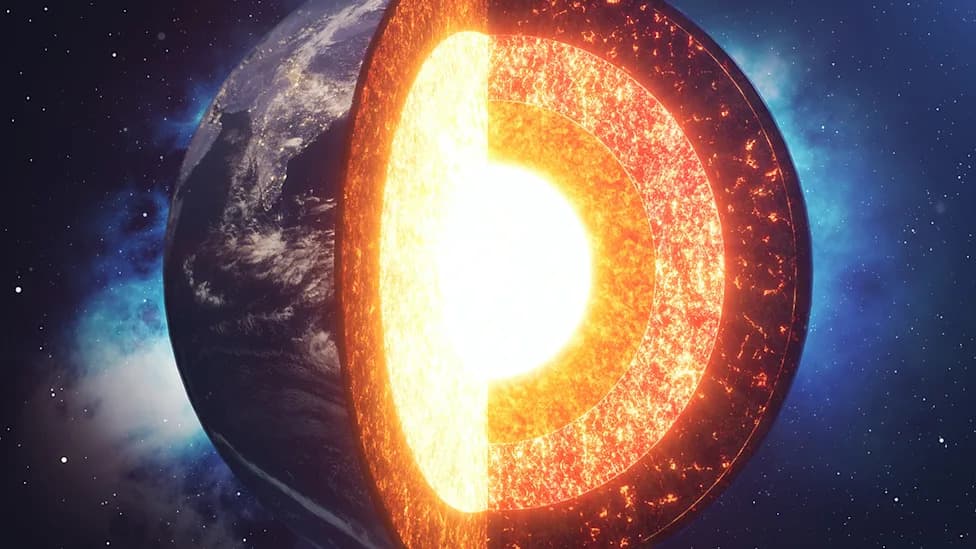
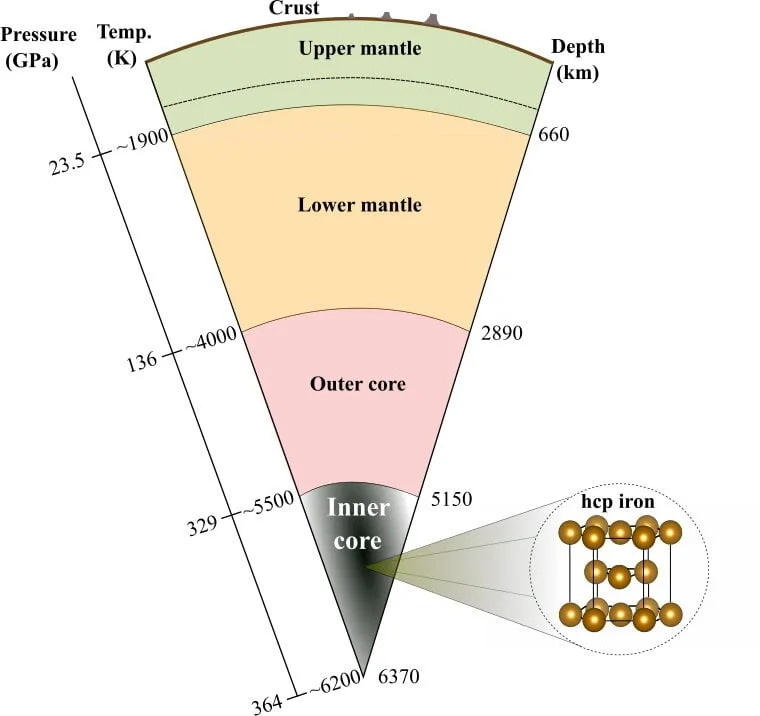
The Earth can be pictured as a layered rocky globe with a molten centre. While only a few dozen people have visited the deepest trenches or walked on the Moon, the planet's core is an environment no human will ever reach. Pressures and temperatures rise sharply toward the centre, producing material behaviours that grow stranger with depth.
In a recent study (Wu et al., PNAS, 2026), researchers modelled exotic "superionic" hydrogen—an extreme phase in which hydrogen ions flow like a liquid through a solid metal lattice while still conducting electricity—and found it could be abundant in the inner core even though it does not occur at Earth’s surface.
(Ehime University)
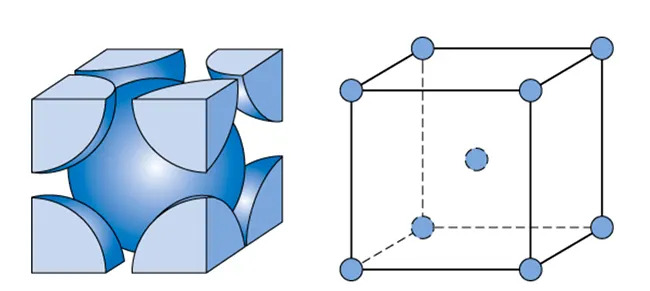
What Was Modelled: The team examined three structural scenarios for iron–hydrogen (Fe–H) material, focusing on two superionic alloy geometries in which mobile hydrogen percolates through crystalline iron lattices: the hexagonal close-packed (HCP) arrangement and the body-centred cubic (BCC) arrangement.
Thermodynamic Findings: The models show that the BCC superionic phase has a higher free energy than the HCP phase, making BCC less thermodynamically stable across much of the inner-core conditions explored. The HCP superionic structure appears more stable under most plausible inner-core temperatures and pressures.
(Callister/Rethwisch 5e)
The balance shifts only under extremely severe conditions: the BCC phase may become thermodynamically favoured when temperatures exceed roughly 6,400 K (≈6,100 °C) and hydrogen fractions exceed about 20% at pressures near 3.6 million atmospheres. However, the authors note that such conditions are likely to trigger melting, producing an "igneous iron slush" that would destroy crystalline order and preclude a stable BCC superionic lattice.
“Our calculations show that hydrogen can stabilize a superionic BCC phase at sufficiently high temperature and hydrogen content. However, this stability field is superseded by melting, so only the superionic HCP phase coexists with the liquid in the Fe–H system.” — Wu et al., PNAS (2026)
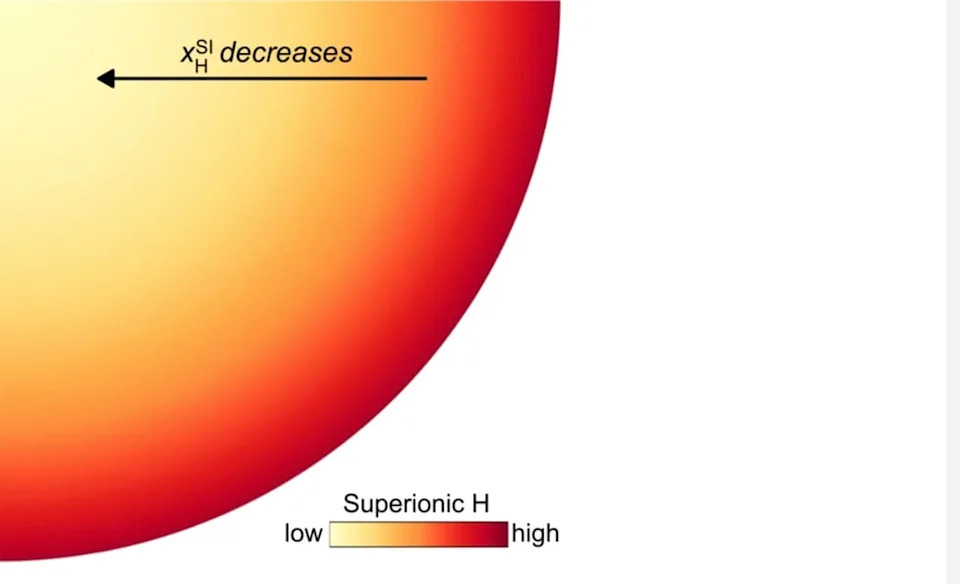
Hydrogen Distribution and Dynamics: The models predict a steep radial hydrogen gradient across the inner-core boundary: hydrogen abundance falls sharply when material crosses from the liquid outer core into the solid inner core and continues to decline toward the centre. This gradient tends to drive superionic hydrogen back toward the inner-core boundary, where it would lose its superionic character and re-partition into the liquid, enriching the outer core.
(Wu et al.,PNAS, 2026)
Consequently, hydrogen exchange between the inner and outer cores is not limited to partitioning during crystallization; it also includes continuous redistribution of superionic hydrogen as the inner core grows. The study notes an approximate inner-core growth rate of ~1 millimetre per year. Both crystallization-driven partitioning and ongoing hydrogen migration can generate chemical buoyancy, an important energy source believed to help power the geodynamo that sustains Earth’s magnetic field.
Caveats and Broader Context: The authors emphasise that other light elements—especially oxygen and carbon, which strongly prefer the liquid phase—must be included to fully explain density contrasts and material differences at the inner-core boundary. Overall, their results indicate that temperature, more than pressure, primarily controls partitioning between hydrogen phases in the core.

Subscribe to ScienceAlert's free fact-checked newsletter
Implications: If superionic hydrogen is widespread in the inner core, it could influence the core’s thermal and electrical properties, the chemistry of core–mantle exchange, and the long-term evolution of Earth’s magnetic field. The study provides a thermodynamic framework for how hydrogen and other light elements might be distributed and redistributed in Earth’s deepest interior.
Research reference: Wu et al., Proceedings of the National Academy of Sciences (PNAS), 2026.
Help us improve.