Police departments are increasingly producing their own true-crime podcasts to generate tips and public awareness for cold cases. High-profile examples include a Newport Beach series linked to the capture of Peter Chadwick, an Elgin podcast that helped recover Karen Schepers in March 2025, and Aurora PD's White Whale investigating Chelsea Yasser's 2016 killing. While podcasts can widen reach and organise investigations, experts warn of legal risks, resource demands and the potential to spread inaccuracies. When produced responsibly, they can be a useful addition to investigative tools.
When Police Make True-Crime Podcasts: Can They Help Solve Murders?

Peter Chadwick with the wife he killed, Quee Choo Chadwick [Getty Images]
Police departments across the United States are increasingly producing their own true-crime podcasts to raise public awareness, solicit tips and pressure suspects — sometimes with dramatic results. Proponents say these shows can reach listeners who miss traditional news coverage and help structure investigations; critics warn of legal risks, resource strains and the danger of spreading inaccuracies.

The unsolved murder of Chelsea Yasser, 21, is the subject of a new police podcast [Aurora Police Department]
Notable Cases
Peter Chadwick (Newport Beach, California): A police-produced podcast about fugitive Peter Chadwick attracted widespread attention and helped focus public pressure while he was on the run. Chadwick was captured in Mexico 10 months and 20 days after the podcast premiered; he later pleaded guilty to second-degree murder and was sentenced to 15 years to life. The series drew controversy for language that critics said presumed guilt before trial.

Aurora Police Department interviewed its own officers for the White Whale podcast [Aurora Police Department]
Karen Schepers (Elgin, Illinois): After decades as a cold case, Schepers' disappearance was the subject of a police podcast that renewed investigative leads. Within weeks of an episode airing, Elgin officers located Schepers and her car at the bottom of the Fox River in March 2025, following new underwater searches prompted by the programme and old leads uncovered during the series.

Karen Schepers was missing for more than 40 years until her body was found in 2025 [Elgin Police Department]
Chelsea Yasser (Aurora, Colorado): The Aurora Police Department launched the podcast White Whale to solicit tips about the 2016 stabbing death of 21-year-old Chelsea Yasser. The series updated listeners as detectives re-examined DNA using forensic genealogy. By the end of July the podcast had been downloaded 7,184 times and generated several tips investigators continue to pursue.

Serial was a groundbreaking true crime podcast about the killing of Hae Min Lee in Baltimore [Getty Images]
How These Podcasts Help Investigations
Departments say in-house podcasts give them more control over the narrative, allowing officials to present timelines, evidence and unanswered questions while inviting listeners to share memories or tips. Producing episodes also forces teams to organise theories and timelines, which can sharpen investigative focus — as Elgin officers reported when each theory became a natural episode topic.
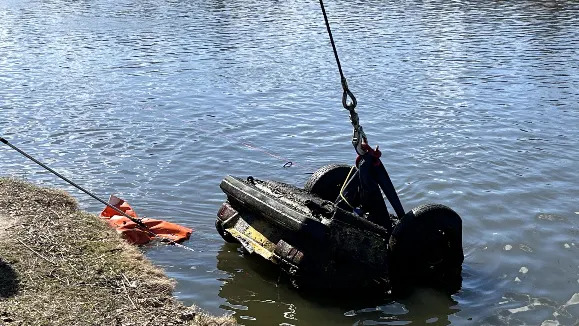
Divers recovered the car of Karen Schepers in the Fox River [Elgin Police Department]
“The true crime genre — whether TV, podcasts or books — is wildly popular,” says Joe Moylan, public information officer for the Aurora Police Department. “We were deliberate in trying to tap into that broader audience.”
Risks, Limits and Practical Challenges
Podcasts are resource-intensive: most agencies lack the staff, budget and technical expertise to produce high-quality episodic shows. Legal advisers warn that aggressive or prejudicial language can compromise defendants' rights and invite civil liability. Retired investigators also caution that poorly produced or inaccurate episodes could spread misinformation or hinder prosecutions.

A picture of Peter Chadwick mounted on a board during a police press conference [Getty Images]
Even so, some departments have found that publicity accelerates certain processes — from generating tips to clearing paperwork like warrants and extraditions — by raising public and interagency awareness.
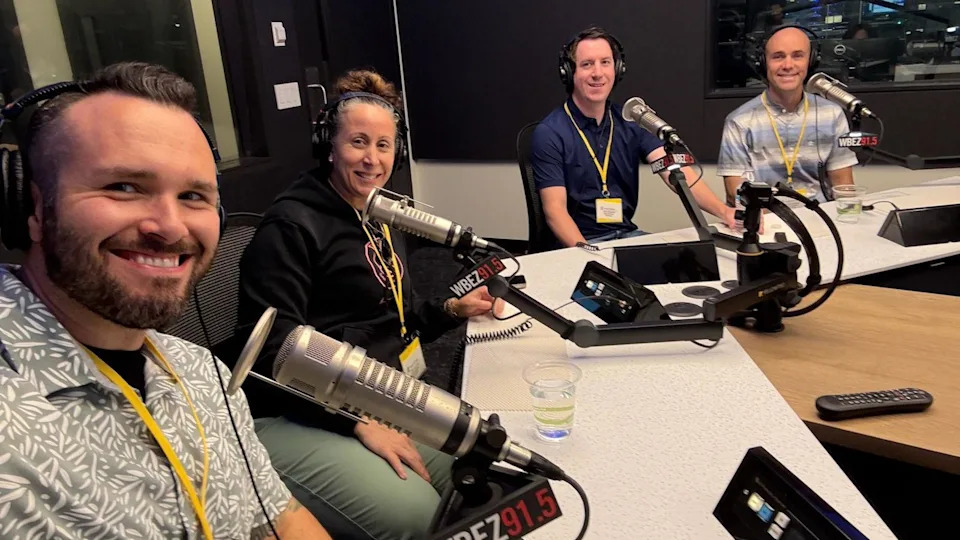
Andrew Houghton (second from right) and Matthew Vartarian (on far right) chat to Elgin's police chief, Ana Lalley for their podcast Somebody Knows Something [Elgin Police Department]
Looking Ahead
Experts expect the trend to grow, driven by younger officers' familiarity with podcasts and social media and by the potential benefits for recruitment and community engagement. But most agree the format must be handled carefully: successful police podcasts combine rigorous investigative discipline, legal oversight and professional production standards to balance storytelling with fairness and accuracy.
Concluding Thought
Police-produced true-crime podcasts can be powerful investigative tools when done responsibly. They expand reach, help reconstruct cases and sometimes generate critical leads — but they also require careful ethical, legal and procedural safeguards to avoid causing harm to investigations or individuals.
Help us improve.