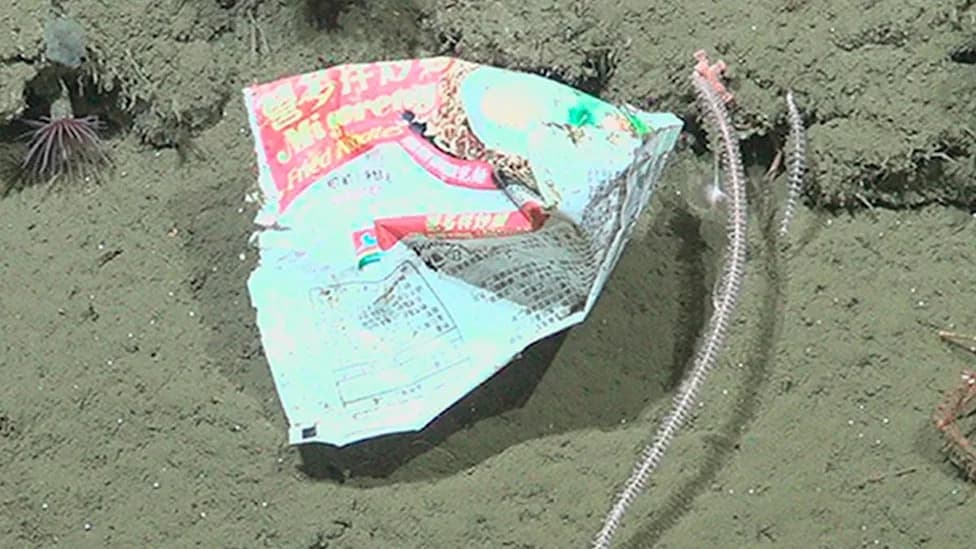
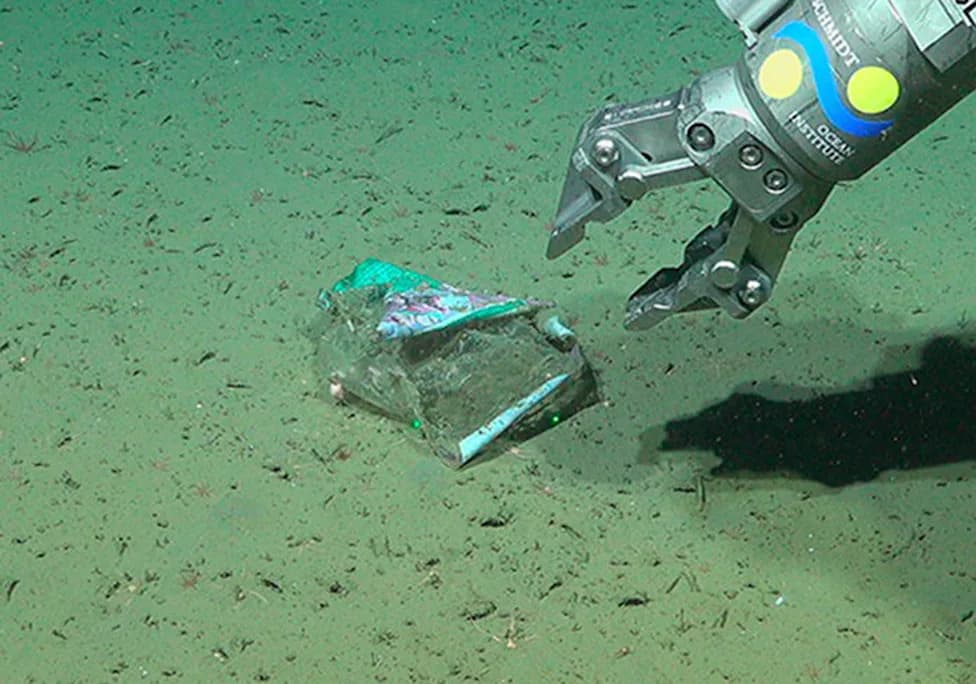
A KRIBB-led study published in Water Research found microplastics in 92% of snails and mussels sampled from deep-sea hydrothermal vents about 2,000 m below the surface. On average each animal contained 3.42 plastic pieces, with polystyrene the most common polymer. Feeding mode affected tissue distribution (grazers had plastics concentrated in digestive organs; filter-feeders showed broader distribution), and animals from the Central Indian Ridge carried higher loads than those from the North Fiji Basin. The authors call for source-level action and monitoring because deep-sea cleanup is impractical.
Microplastics Reach 2,000 m: Deep-Sea Hydrothermal Vents Contaminated
(Kiattisakch/iStock/Getty Images Plus)
Microplastics have been discovered in animals living around deep-sea hydrothermal vents — one of Earth’s most remote and extreme habitats. A team led by the Korea Research Institute of Bioscience and Biotechnology (KRIBB) found plastic particles in snails and mussels collected about 2,000 meters (≈6,562 feet) below the ocean surface, demonstrating how pervasive microplastic pollution has become.
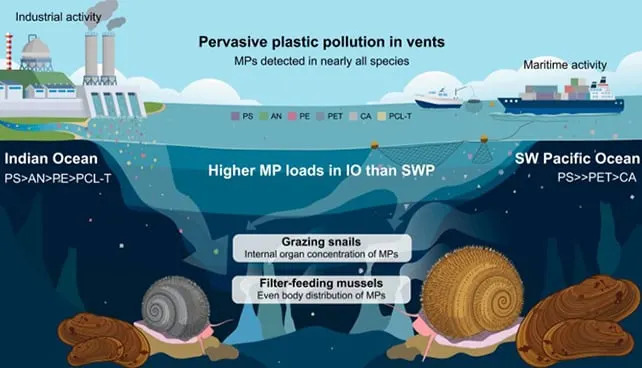
The study shows how deep microplastics can sink in the ocean. (Korea Research Institute of Bioscience and Biotechnology)
Published in the journal Water Research, the study examined specimens from two regions: the North Fiji Basin (southwestern Pacific) and the Central Indian Ridge (Indian Ocean). Microplastics were detected in 92% of animals sampled (11 of 12 specimens) from four vent-associated species, with an average of 3.42 particles per individual. Polystyrene — a widely used polymer — was the most frequently identified material.
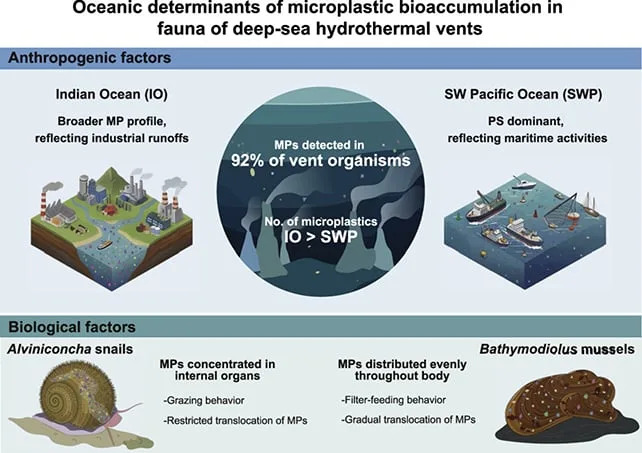
Several factors affect microplastic levels at each location. (Lee et al.,Water Res., 2026)
Feeding behavior influenced how plastics were distributed inside animals. Grazing snails tended to concentrate microplastics in digestive organs, while filter-feeding mussels showed a more even tissue distribution. These consistent, taxon-specific patterns suggest ingestion and internal partitioning depend on feeding mode and physiology.

Subscribe to ScienceAlert's free fact-checked newsletter
The researchers also found regional differences: animals from the Central Indian Ridge contained significantly higher microplastic loads than those from the North Fiji Basin. The team suggests this may reflect regional variations in human activities and pollution sources, ocean circulation, and riverine inputs that influence how microplastics are transported and settle on vent surfaces.
"Plastic pollution has now spread even to deep-sea hydrothermal vent ecosystems that were once considered among the most isolated environments on Earth," said marine biologist Se-Joo Kim of KRIBB.
Removing plastics from deep-sea environments is effectively impractical. The study therefore reinforces the urgency of reducing plastic inputs at the source through better waste management, reduced single-use plastics, improved recycling, and development of alternatives. While the full health and ecological impacts of microplastic exposure remain uncertain, prior studies have raised concerns about potential effects on animal and human health; causal links are still being investigated.
Implications: These findings provide baseline evidence to support future deep-sea environmental monitoring and conservation policies, and highlight that even the planet’s most inaccessible ecosystems are not immune to human-driven pollution.
Study citation: Lee et al., Water Research (KRIBB-led research).
Help us improve.