An Arizona homeowner, Ronaldo, was swarmed after disturbing an estimated 100,000-bee Africanized hive hidden inside an outdoor love seat while weed‑whacking. He reportedly suffered "30 or 40" stings and was hosed down by a neighbor before a specialist known as Killer Bee Guy removed the colony. The professional crew dismantled the furniture, treated the area and warned viewers against DIY removal, noting the invasive bees threaten people, pets and native pollinators.
Arizona Man Swarmed by an Estimated 100,000 Africanized Bees After Weed‑Whacking
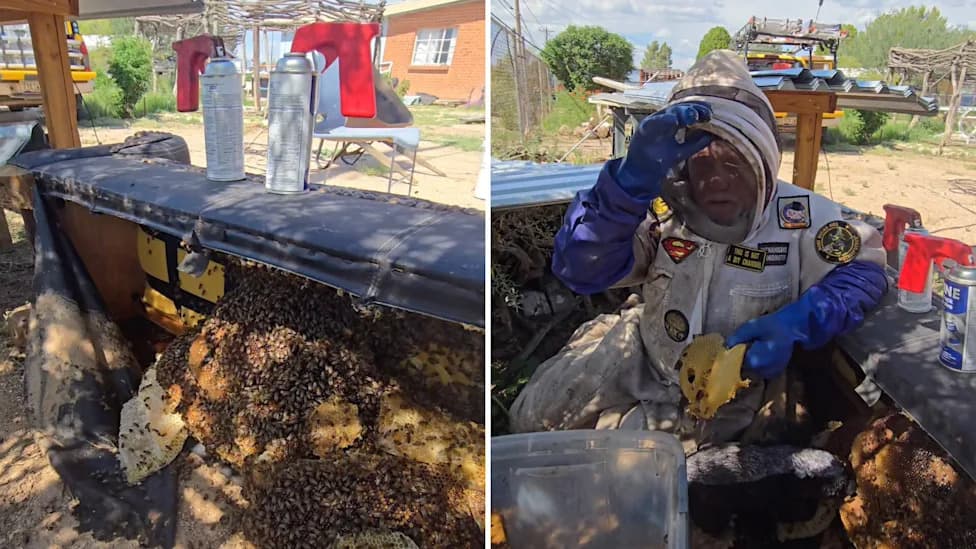
Photo Credit: TikTok
An Arizona man's routine yard work turned dangerous when a weed whacker apparently disturbed a large colony of invasive Africanized honey bees nesting inside an outdoor love seat.
Video posted by a bee‑removal specialist known as Killer Bee Guy (@killerbeeguy) shows the aftermath and the team's removal of an estimated 100,000-bee hive. The specialist said the bees had packed the furniture with dense comb and pointed to multiple queen cells — a sign the colony was both large and actively reproducing.
The homeowner, identified as Ronaldo, was reportedly weed‑whacking when the bees swarmed. A neighbor hosed him down afterward; the remover estimated Ronaldo suffered "30 or 40" stings.
In the footage the specialist surveys the scene and remarks,
"What a mess."He noted the colony had been more aggressive the previous day, and although the bees appeared calmer by the time the crew arrived, they treated the nest as an immediate hazard to people, pets and local wildlife.
Human structures and discarded items can unintentionally provide ideal shelter for wildlife. In this case, an abandoned piece of outdoor furniture supplied a ready‑made cavity for nesting, and the noise and vibration from a landscaping tool appears to have triggered the colony's defensive response.
Why This Is Important
Africanized honey bees are an invasive, highly defensive strain that can outcompete native pollinators for resources. A large, active colony close to homes increases the risk of repeated attacks on residents, children and pets, and can harm local ecosystems.
Removal And Response
The removal crew wore full protective suits, dismantled the infested furniture, and treated the area to discourage recolonization. The specialist emphasized this work is not for amateurs and cautioned repeatedly,
"This is not a DIY channel."
Safety Tips
- Inspect old outdoor furniture, stacked items and sheds before mowing, trimming or using power tools near them.
- Watch for concentrated bee traffic entering holes, seams or gaps — a common sign of a hidden nest.
- Keep children and pets away if you suspect a hive and contact a licensed removal professional instead of attempting removal yourself.
Some viewers objected to destroying the colony. The specialist argued the hive had already demonstrated dangerous behavior and posed an unacceptable risk if left in place, stressing the goal of protecting people and native bees.
If invasive bees are nesting near your home or if an attack has occurred, contact a licensed professional rather than attempting to handle the situation on your own.
Help us improve.