
After three difficult years, militias aligned with Iran—the "Axis of Resistance"—are re-emerging across the Middle East and strengthening Tehran’s regional leverage. Recent Houthi strikes on Saudi targets and renewed Hezbollah activity have opened new fronts and increased risks to shipping and energy routes. Analysts emphasize that while these groups advance Tehran’s aims, they retain independent agendas and differing degrees of dependence on Iran.
Iran’s 'Axis of Resistance' Rebounds: Militias Reopen Fronts and Heighten Regional Risks
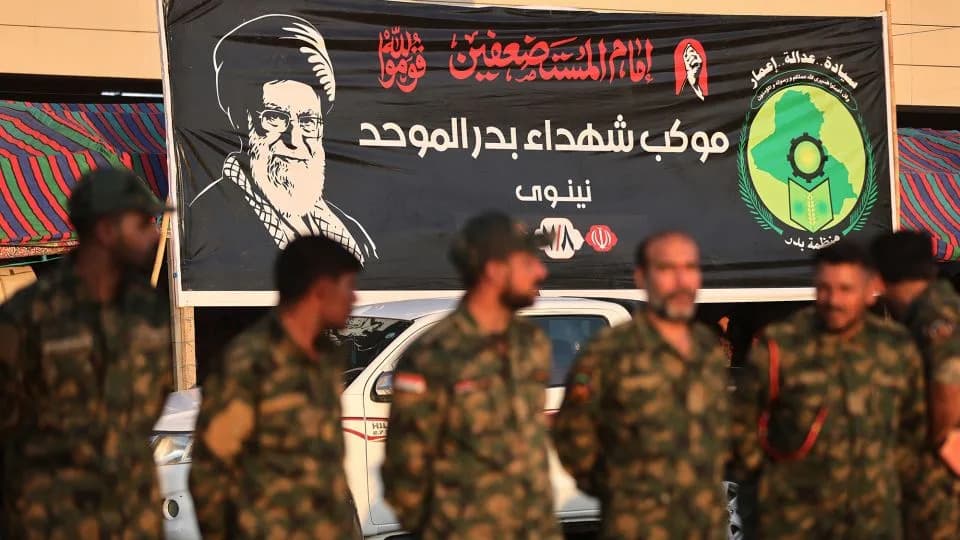
Members of Iraq's Popular Mobilization Forces stand near a portrait of Iran's slain supreme leader Ali Khamenei at the shrine of Imam Hussein on the eve of his funeral ceremonies in the holy Iraqi city of Karbala on July 7. - Ahmad Al-Rubaye/AFP/Getty Images
After three difficult years, armed groups aligned with Tehran—the network often called the "Axis of Resistance"—are showing renewed activity across the Middle East. Analysts say this resurgence is strengthening Iran’s leverage in its widening confrontation with the United States and Israel and is opening new fronts that complicate the broader security landscape and threaten global trade and energy supplies.
From Weakness to Reinvestment
For decades these militias helped deter direct attacks on Iran by extending Tehran’s influence across Lebanon, Iraq, Syria, Gaza and Yemen. The Axis was substantially disrupted after Israel’s military response to the October 2023 Hamas attack and the regional reverberations that followed. During that period of diminished capacity, direct tensions between Israel, the United States and Iran intensified.
Rather than abandoning its forward-defense posture, Tehran has reportedly reinvested in its regional partnerships. As Trita Parsi, executive vice president of the Quincy Institute for Responsible Statecraft, told CNN:
"The Axis worked very well for more than two decades, helping ensure there was no attack on Iran while these groups extended their influence within their own territories. Once they were weakened, Iran paid the price by facing strikes from both the U.S. and Israel."
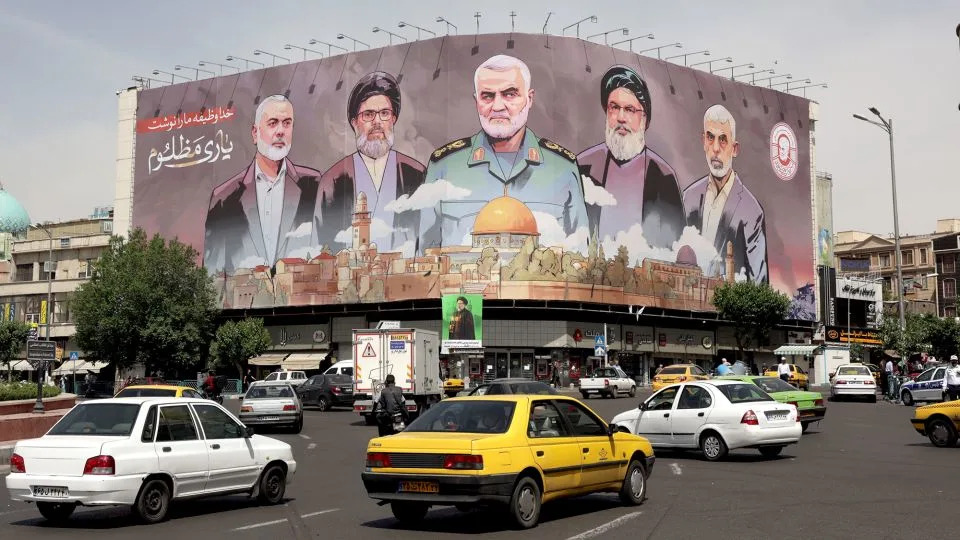
Iranians drive past a billboard with the pictures of late Iranian IRGC Quds Force commander Qasem Soleimani, center, late Hamas leaders Ismail Haniyeh, left, and Yahya Sinwar, right, and late Hezbollah leader Hasan Nasrallah at the Enghelab square in Tehran, Iran, on May 5, 2025. - Abedin TaherkenarehEPA-EFE/Shutterstock
Actions on the Ground
In recent months several Iran-aligned groups have opened new fronts. Yemen’s Houthi movement, which analysts consider among the more independent actors in the network, has struck Saudi infrastructure and targeted shipping in the Red Sea and Bab al-Mandeb. Satellite imagery and geolocated video suggested significant damage to oil facilities near Jazan after missile strikes that followed attacks on commercial tankers.
Hezbollah in Lebanon has also reemerged as a potent force on Israel’s northern border, and other Iraqi and Syrian militias backed by Tehran remain active. Experts say these moves reflect an increasingly coordinated approach by allied groups to translate periods of confrontation into opportunities to consolidate gains and reshape facts on the ground.
Complex Networks, Independent Motives
Observers caution against oversimplifying these actors as mere "proxies." As Ali Ahmadi of the Geneva Centre for Security Policy noted, each group has its own identity, political goals and local constituencies, even as they share ideological and geopolitical affinities with Tehran. That mix of autonomy and alignment means the alliance is adaptable but also occasionally unpredictable.
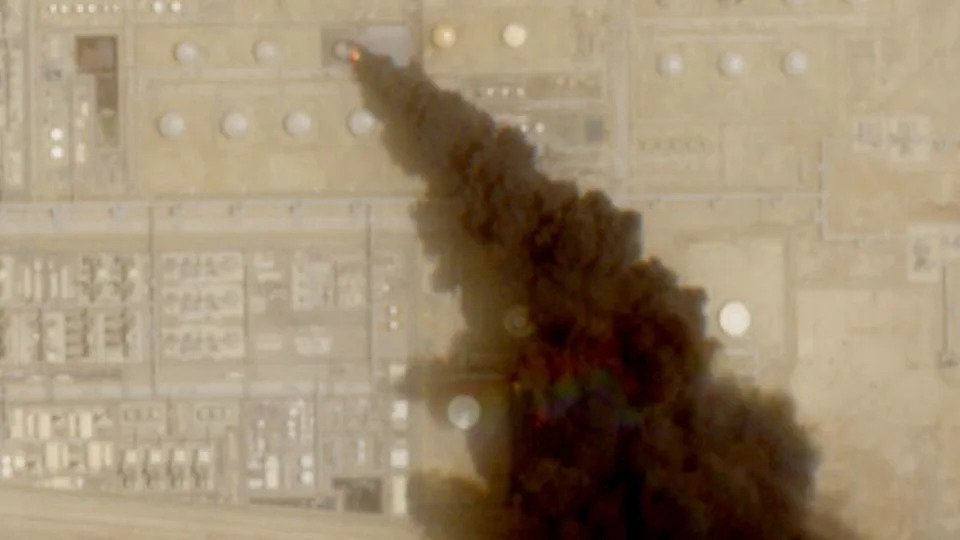
A satellite image shows trail of smoke rising from an oil facility in Jazan province, Saudi Arabia, on Sunday. - European Union/Copernicus Sentinel-2/Reuters
There have been multiple targeted strikes and attempts across the region against commanders and facilities tied to Iran’s network, and some leaders and operatives have been killed or wounded. Claims about strikes on Iran’s highest leadership remain unverified and should be treated cautiously.
Diplomacy and Deterrence
Diplomatic exchanges and ceasefire discussions have included conditions tied to activity in southern Lebanon and other flashpoints. Tehran has made halting Israeli operations in southern Lebanon a prominent demand in de-escalation talks, underscoring the centrality of Hezbollah to Iran’s regional strategy.
Experts remain divided on trajectory: some see the Axis adapting and strengthening regional leverage, while others warn that renewed activity by allied militias raises the risk of wider escalation and significant economic disruption—especially to shipping routes and energy markets.
Bottom line: The Axis of Resistance is not gone. It has shifted tactics and is reasserting influence in ways that complicate efforts to stabilize the region.
Help us improve.





















