Gen. Alexus Grynkewich, head of U.S. European Command, warned the Pentagon he does not have enough destroyers to sustain ballistic-missile defense for Israel without an additional ship. Five destroyers are staged from Spain, with a sixth expected later this year. Ongoing U.S.-Iran hostilities, a reinstated naval blockade and heavy interceptor use have depleted naval resources and raised political and operational concerns in Washington.
Top U.S. General Warns Pentagon: Not Enough Destroyers To Keep Defending Israel From Ballistic Missiles

Gen Alexus Grynkewich, who leads the US European Command, warned the Pentagon this week that he would no longer be able to defend Israel without more military resources (Getty)
Gen. Alexus Grynkewich, commander of U.S. European Command, has warned Pentagon leaders that he lacks sufficient naval resources to continue defending Israel from incoming ballistic missiles unless an additional Navy destroyer is deployed to the region.
What the General Told the Pentagon
In a letter to senior defense officials, Gen. Grynkewich said that without another destroyer he could be forced to choose between protecting the U.S. homeland and maintaining missile-defense coverage for Israel, the Washington Post reported. The Pentagon has been asked for comment.
Current Naval Posture
Five U.S. destroyers currently operate from a Spanish port and are available to deploy into the eastern Mediterranean to help shield Israel; a sixth destroyer is expected to join later this year, according to reporting. As of last reported, two destroyers were at sea in the Mediterranean while three remained in port in Spain.
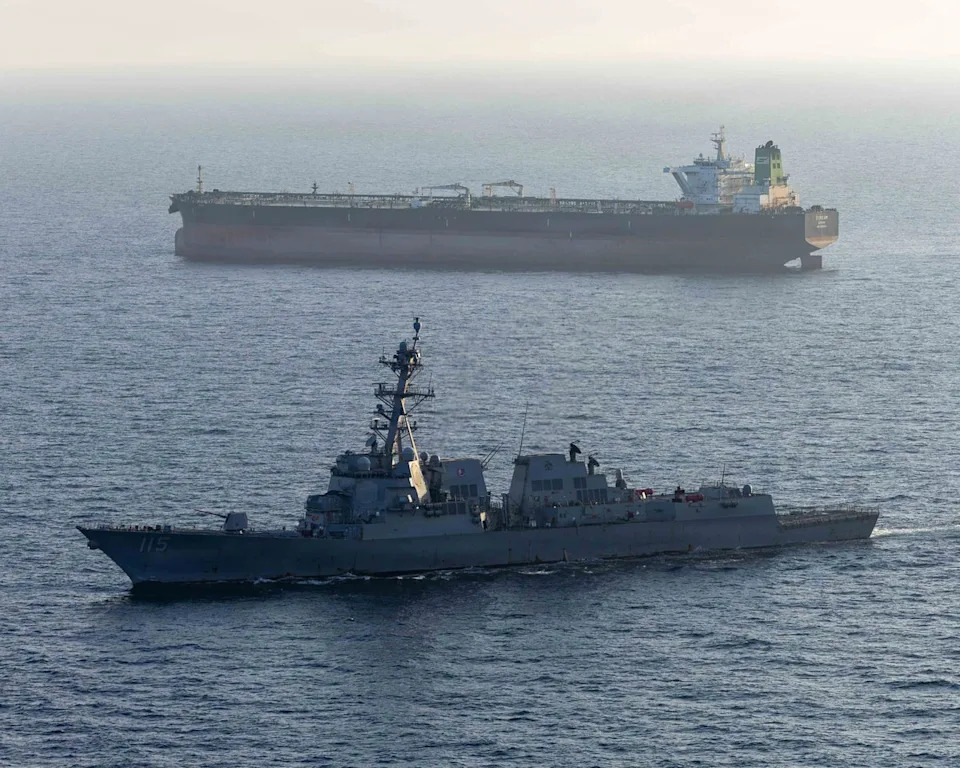
Trump's war with Iran has strained US Navy resources, with multiple vessels deployed near Iran amid the ongoing Strait of Hormuz tensions as well as other deployed to help defend Israel (US Navy)
Why Resources Are Strained
The protracted U.S.-Iran confrontation has stretched naval assets. Destroyers assigned to missile defense have required increased maintenance and have expended advanced interceptors and other munitions. A May Defense Department assessment, cited by the Washington Post, found U.S. forces had used more advanced missile-defense interceptors while protecting Israel than Israeli forces had expended.
Since a ceasefire between the U.S. and Iran broke down in early July, the U.S. has reinstated a naval blockade on Iranian ports and redeployed multiple vessels — including aircraft carriers and at least 11 destroyers — nearer to Iran to support the blockade and protect shipping through the Strait of Hormuz. Those additional deployments have further strained Navy capacity.
Human and Political Costs
Beyond equipment and interceptor depletion, the clashes have resulted in casualties: at least 18 U.S. service members have been killed in related operations, which has contributed to growing domestic opposition to the current confrontational posture toward Iran. Political pressure in Washington is apparent: in mid-July nearly half of House Democrats voted in favor of cutting billions in aid to Israel, signaling waning enthusiasm among some lawmakers for further commitments.
Operational Balance
U.S. commanders say they are balancing a limited number of naval platforms across competing demands in both the Mediterranean and the Persian Gulf. The general's warning highlights the operational trade-offs the Navy faces when assets are committed to multiple theaters simultaneously.
Note: Details in this article are based on reporting by the Washington Post and U.S. official statements to the press.
Help us improve.