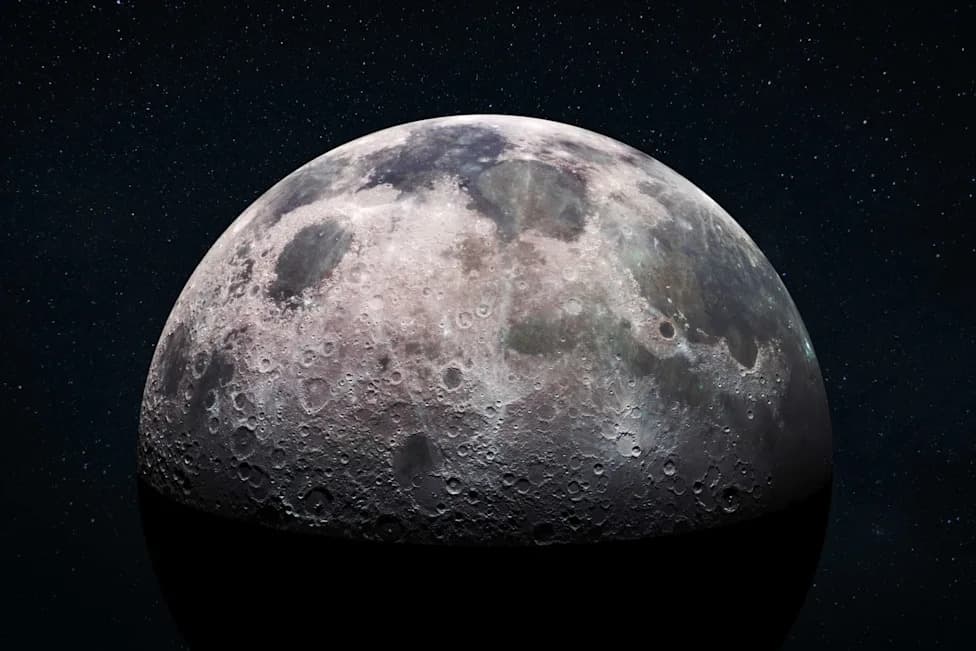
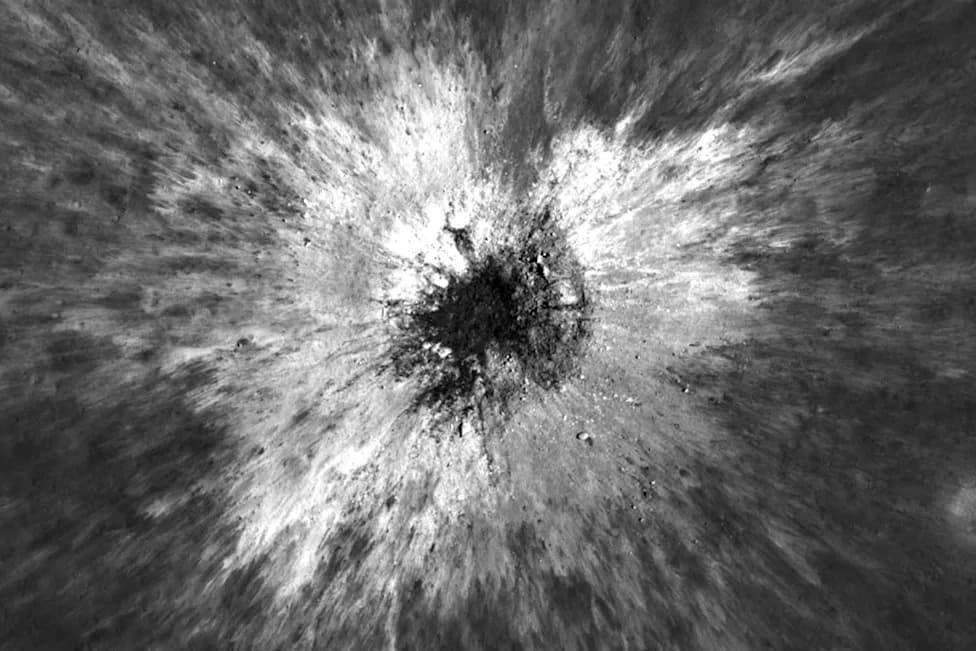
The upper stage of a Falcon 9 launched on Jan. 15, 2025 is predicted to hit the Moon about 19 months after liftoff, striking on Wednesday at 2:35 a.m. EST at roughly 5,400 mph (≈8,700 km/h). The impact — expected near Einstein Crater on the Moon’s sunlit western limb — could excavate a crater about 16 feet deep and 89 feet across (≈5 m × 27 m). The strike was accidental; experts say a small maneuver could have sent the stage into solar orbit. Telescope users in parts of eastern North and South America may see a brief plume for several minutes.
Falcon 9 Upper Stage Headed For Moon — Telescope Observers May Spot Impact Plume
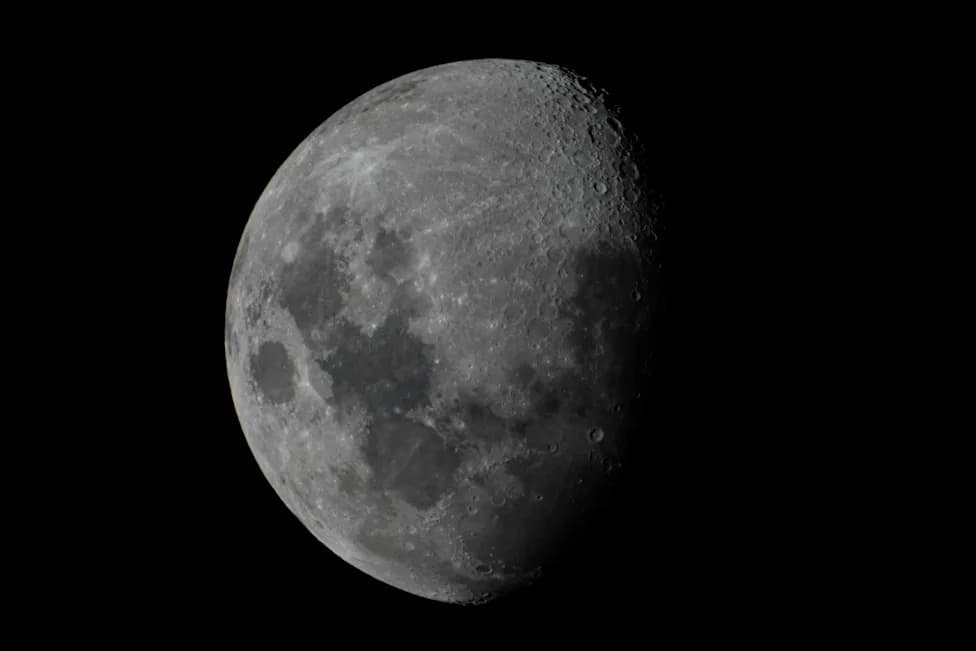
A chunk of a SpaceX rocket is on a collision course with the moon
A discarded upper stage from a SpaceX Falcon 9 rocket is predicted to strike the Moon about 19 months after launch. The collision is expected to occur on Wednesday at 2:35 a.m. EST and will be visible only through telescopes as a brief plume above the lunar surface.
What To Expect
Models indicate the object will impact at roughly 5,400 mph (≈8,700 km/h), excavating a crater approximately 16 feet (≈5 m) deep and about 89 feet (≈27 m) across. Space‑tracking specialist Bill Gray predicts the strike will occur near Einstein Crater on the Moon’s sunlit western limb — the near side that faces Earth.
Visibility
The flash and resulting plume will not be visible to the unaided eye, but observers using moderate- to large-aperture telescopes in the right regions may see the ejecta cloud rise above the surface. Best viewing is expected from eastern parts of the U.S. and Canada and much of South America. Gray says he will observe the event from New Brunswick, Canada.
Background And Significance
The object is the Falcon 9 upper stage that launched from Cape Canaveral on Jan. 15, 2025, on a mission carrying Firefly Aerospace’s Blue Ghost‑1 and ispace’s Resilience lunar landers. The stage is roughly 40 feet (≈12 m) long and weighs about 10,000 pounds (≈4,500 kg).
The impact appears to be accidental. Experts say the collision could likely have been avoided by a small post‑deployment burn to place the upper stage into a heliocentric (sun‑centered) orbit.
Context: This will be the second documented accidental rocket impact on the Moon. In 2022 a Chinese rocket stage that launched in 2014 struck the Moon’s far side after years in space, leaving paired craters.
Impact Energy And Observational Notes
Analysts estimate the collision will release energy equivalent to roughly three tons of TNT, lofting material for miles and creating a plume that should remain visible through telescopes for several minutes. Amateur and professional observers interested in watching should prepare a telescope and consult sky charts to locate the Moon’s western limb at the predicted time.
Help us improve.