Federal research cuts have pushed a UCLA team studying yellow‑bellied marmots to launch an OnlyFans account, OnlyMarms, offering free subscriptions and accepting voluntary tips to support fieldwork. The move follows widespread National Science Foundation grant cancellations in 2025 and proposed deep budget cuts for 2027. Blumstein says his long‑running marmot study — one of the world’s longest continuous mammal programs — has been told to stop applying for NSF renewal after repeated rejections.
Scientists Turn to OnlyFans to Keep Long‑Running Marmot Study Alive After Federal Cuts
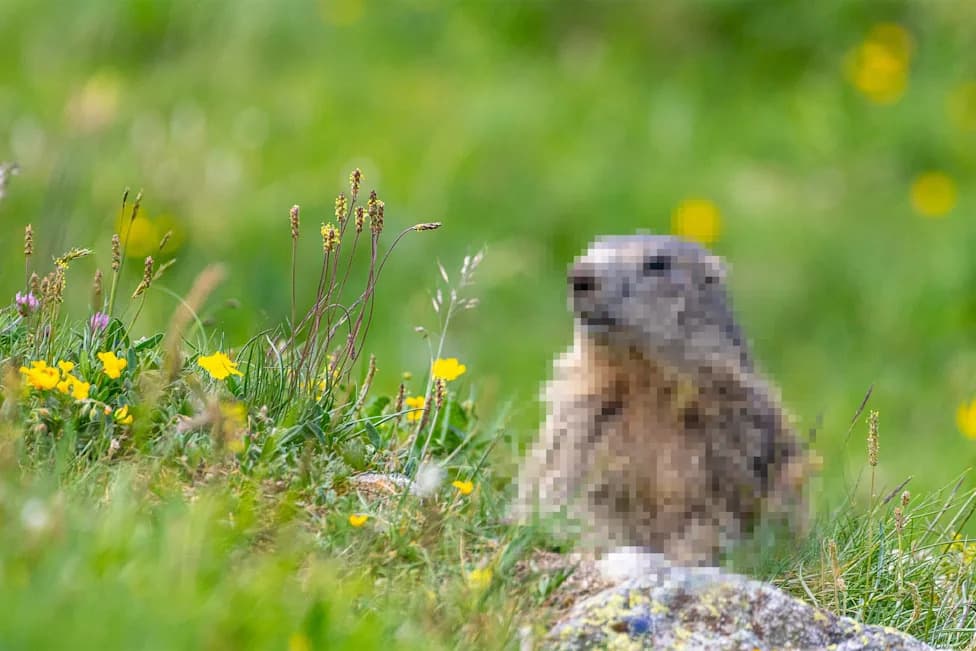
Illustration by Tag Hartman-Simkins / Futurism. Source: Shutterstock
When long‑term research depends on government grants, sudden budget cuts can force scientists to find inventive — and sometimes unconventional — ways to keep field programs running. That is the reality facing Daniel Blumstein, a biologist at UCLA known for decades of work on yellow‑bellied marmots, whose lab has started an OnlyFans account to raise modest funds and boost public outreach.
The lab’s account, called OnlyMarms, posts near‑daily photos and videos of marmots observed in the Rocky Mountains. Subscriptions are free; viewers can leave voluntary tips on content, and those donations are being used to support ongoing fieldwork and data collection, according to reporting by SFGate.
"Sometimes I'm just posting the videos I think will get the most 'aws,'" said Emily Renkey, a student in Blumstein’s lab who helped start the account. "But my favorite is when I find footage of a particular behavior and I can use that to educate people." The account is both a fundraising experiment and an outreach tool that brings the lab’s long‑term observations to a wider audience.
The move follows a broader pattern of cuts to federally funded science under the current administration. In a push described as cost‑cutting by a now‑defunct Department of Government Efficiency, roughly 1,700 National Science Foundation grants — totaling about $1.4 billion — were cancelled in 2025. In 2026 the NSF reportedly distributed only a fraction of the roughly $9 billion it typically awards each year, and the White House proposed a near‑50% cut to the agency’s 2027 budget.
Many of the cancelled awards appear to have been selected for political reasons, with climate‑related work disproportionately affected; court documents also state that some cancellations in specific states were made "based solely" on whether those states supported Trump in the 2024 election. It remains unclear why marmot research was targeted.
Blumstein: "These long‑term projects ask some of the most important questions in our time. After the third time, our program officer told my colleague… that they will never fund us because they think we have too much data. I don't even know how to parse that sentence. It's nuts."
Blumstein’s marmot program represents one of the world’s longest continuous studies of free‑living mammals, offering rare insights into evolution and behavior over decades. But the program is now "running on fumes": OnlyMarms has raised only a few hundred dollars so far, and the lab is pursuing other, more traditional funding avenues while continuing outreach and data collection.
The situation highlights a larger challenge for long‑term ecological and behavioral studies: they require steady, sustained support to produce the population‑level and multi‑decade datasets that are increasingly valuable for understanding environmental change. For now, marmot fans and curious members of the public provide a small financial lifeline — and a new window into scientific work that might otherwise be hidden behind grant proposals and academic papers.
Help us improve.