
As the U.S. marks its 250th anniversary, Donald J. Trump has placed his likeness and signature on several national symbols, including $1 coins and newly issued banknotes bearing his autograph. Proposals for a $250 bill and a 24‑karat gold commemorative coin have raised legal and ethical objections, and limited‑edition passports and redesigned park passes featuring his image have sparked lawsuits and public criticism. Supporters call the items patriotic; critics say they blur the line between public commemoration and personal promotion.
Trump’s Image on Currency, Passports and Parks Fuels Controversy Ahead of U.S. 250th
Americans will get more free national park days next year, but it's going to cost foreign tourists much more to visit some of the most popular parks.
Starting Jan. 1, 2026, "nonresidents without an annual pass will pay a $100 per person fee to enter 11 of the most visited national parks, in addition to the standard entrance fee," the Department of Interior announced on Nov. 25, among other changes. "These policies ensure that U.S. taxpayers, who already support the National Park System, continue to enjoy affordable access, while international visitors contribute their fair share to maintaining and improving our parks for future generations," Interior Secretary Doug Burgum said in a news release in line with an executive order designed to "allow more Americans to visit national parks."
Here's what all national park visitors should know.(Department of the Interior)
As the United States observes its 250th anniversary, former President Donald J. Trump has extended his branding to a range of national symbols — from circulating coins to park passes and a limited‑edition passport — triggering intense legal, ethical and political debate.
What Has Been Issued
The U.S. Mint began producing $1 coins bearing Trump’s portrait in mid‑July; the Treasury said the pieces have a "gold‑like finish" and are expected to enter circulation in the fall. Treasury Secretary Scott Bessent promoted the coins on social media as celebrating "the strength of American values." According to reports, $100 bills with Trump’s signature also began circulating on July 4 as part of a broader roll‑out of banknotes bearing the president’s autograph.
Proposals and Designs Still In Question
Mockups for a proposed $250 bill featuring Trump’s portrait have circulated, and Republican‑backed legislation asking the Treasury to produce such a note is stalled in the House. A commission selected by Trump approved a 24‑karat gold commemorative coin design showing him leaning over the Resolute Desk — a design modeled on a Smithsonian photo and cleared by the Commission of Fine Arts — but the Citizens Coinage Advisory Council declined to review it, citing legal and principled objections to depicting a living president on U.S. currency.
Passports, Park Passes and Merchandise
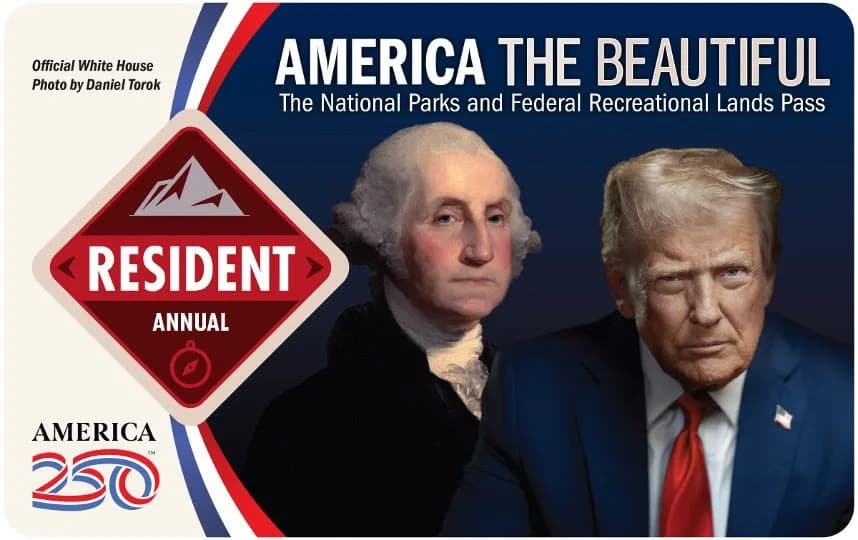
In late June, the White House unveiled a limited‑edition "patriot passport" design featuring an image of Trump on the Resolute Desk and John Trumbull’s painting of the Declaration of Independence on a facing page; roughly 40,000 were released at the Washington, D.C., Passport Agency. Annual "America the Beautiful" national park passes for U.S. residents were revised to include portraits of Trump and George Washington, marking the first time a sitting president’s likeness appeared on those passes. The change, along with altered fee structures and a new free entry day on June 14 (Flag Day, also Trump’s birthday), provoked legal challenges and public pushback — including stickers purchased by some visitors to conceal Trump’s image.
The Trump Organization’s online store launched "Trump 250" merchandise — from polos and blankets to medallions — after filing trademark applications tied to the semiquincentennial; prices ranged from modest to premium, and branded items were also sold at Trump‑backed Freedom 250 events on the National Mall.
Support, Criticism and Historical Context
"President Trump is focused on saving our country — not garnering recognition," White House spokesman Davis Ingle told USA TODAY, calling the celebrations a revival of patriotism. Treasury Secretary Scott Bessent framed the commemorative currency as honoring national achievement.
Critics — including ethics groups, historians and government watchdogs — say these steps blur the line between public commemoration and personal promotion. Villanova political scientist David Barrett, who teaches presidential history, noted that attaching a living president’s image to national institutions would once have been widely seen as unseemly and, to some, nearly unconstitutional. The Citizens Coinage Advisory Council explicitly cited federal law and founding principles when it declined to review the gold coin design.
What’s Next
Many proposed items remain uncertain: the $250 bill faces stalled legislation, the 24‑karat coin has not been posted on the U.S. Mint website and some designs have not completed required advisory reviews. Legal challenges and public debate are likely to continue as the semiquincentennial unfolds and as authorities and courts weigh questions about precedent, law and the proper use of national symbols.
Sources: USA TODAY reporting, Treasury and White House statements, Citizens Coinage Advisory Council disclosures, Commission of Fine Arts actions, and public releases from the Trump Organization.
How much does it cost to visit national parks?
Not all national parks charge entry fees. Those that do typically top out at $35 per private vehicle.
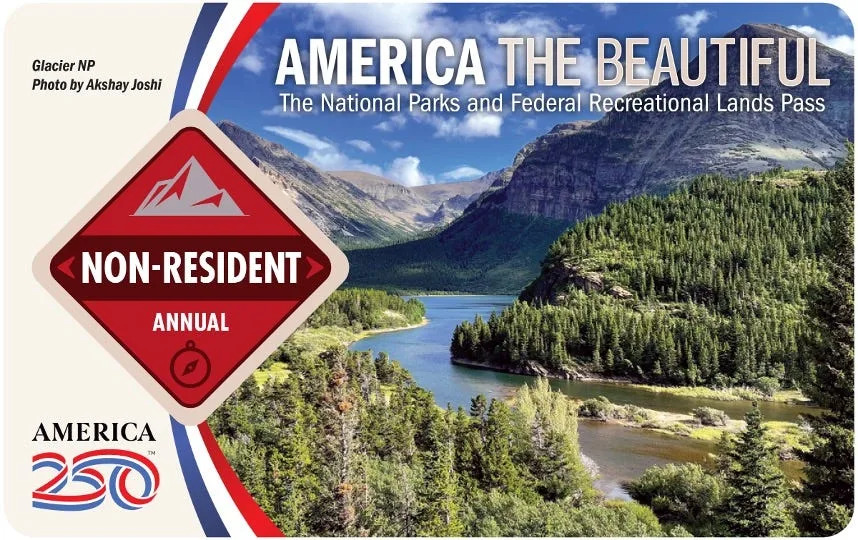
To save money on multiple trips, visitors can buy an America the Beautiful annual pass. Pricing for those will stay flat for U.S. residents at $80. However starting Jan. 1, annual passes will cost $250 for nonresidents. And international travelers who opt out of annual passes will be subject to extra $100 per person fees at several bucket-list parks. Residents will be asked to enter their ZIP code when buying passes through Recreation.gov and show a U.S.-government issued photo ID when using the passes. Individuals without such identification will be asked to upgrade to a nonresident annual pass, according to the Department of Interior, which noted that existing passes will continue to be honored until expiration. Revenue generated by the new pricing will be invested back into the parks for upgrades and improvements as well as essential maintenance.(Department of the Interior)
Which national parks are impacted?
* Acadia National Park in Maine
* Bryce Canyon National Park in Utah
* Everglades National Park in Florida
* Glacier National Park in Montana
* Grand Canyon National Park in Arizona
* Grand Teton National Park in Wyoming
* Rocky Mountain National Park in Colorado
* Sequoia and Kings Canyon National Parks in California
* Yellowstone National Park in Idaho, Montana and Wyoming
* Yosemite National Park in California
* Zion National Park in Utah
Sequoia and Kings Canyon are technically different parks, but operate as one.(Department of the Interior)
National park fee-free days for 2026
Next year, there will be more free entry dates across national parks, but only U.S. residents will be eligible. The "patriotic fee-free days" will also fall on largely different dates than in recent years.
* President's Day: Feb. 16
* Memorial Day: May 31
* Flag Day/President Donald Trump's birthday: June 14
* Independence Day weekend: July 3-5
* 110th Birthday of the National Park Service: Aug. 25
* Constitution Day: Sept. 17
* Theodore Roosevelt's birthday: Oct. 27
* Veterans Day: Nov. 11(Department of the Interior)
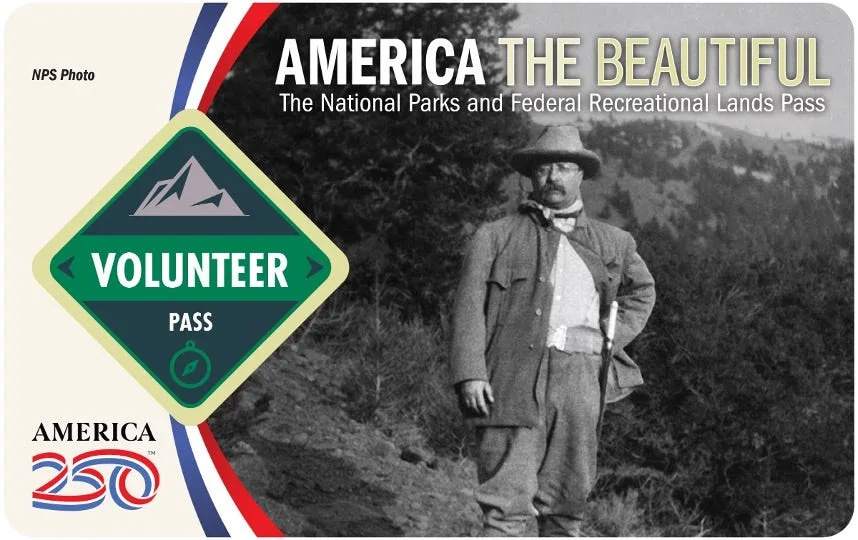
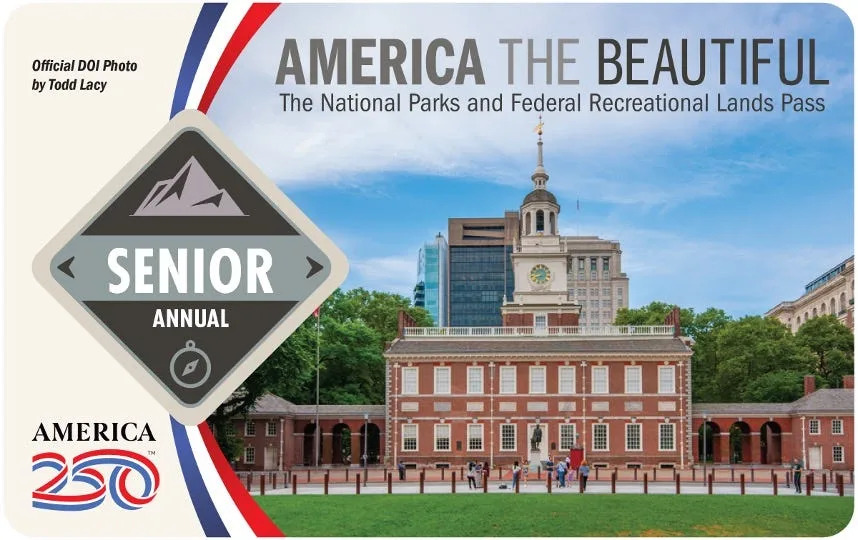
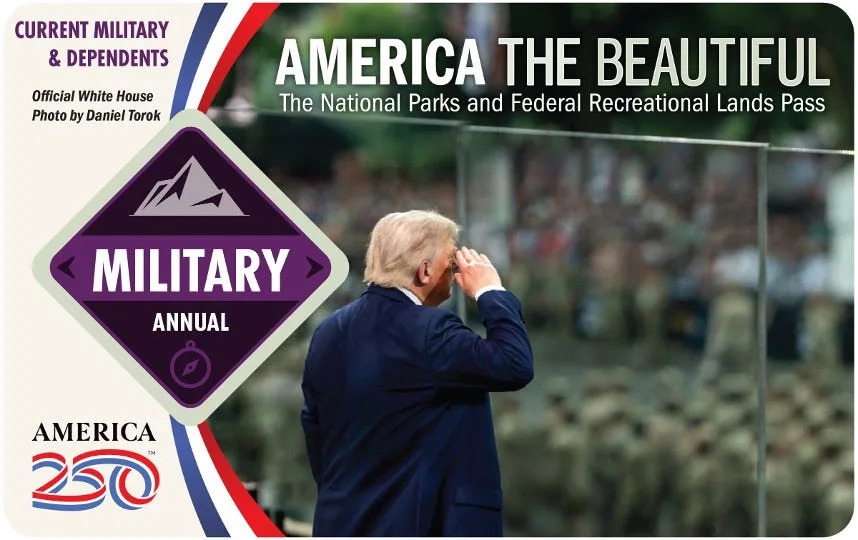
Other national park changes. In addition to the pricing changes, the Department of Interior is rolling out new digital America the Beautiful passes for annual pass holders, military, seniors, fourth graders and visitors with disabilities. Those can be stored on mobile devices and linked to physical cards for user convenience. Going forward, the passes will cover two motorcycles per pass, instead of one. Also, both digital and physical passes will feature new artwork with "patriotic designs that honor America's landscapes, heritage and outdoor legacy," according to the Interior Department. One pass features Presidents George Washington and Donald Trump side-by-side.(Department of the Interior)
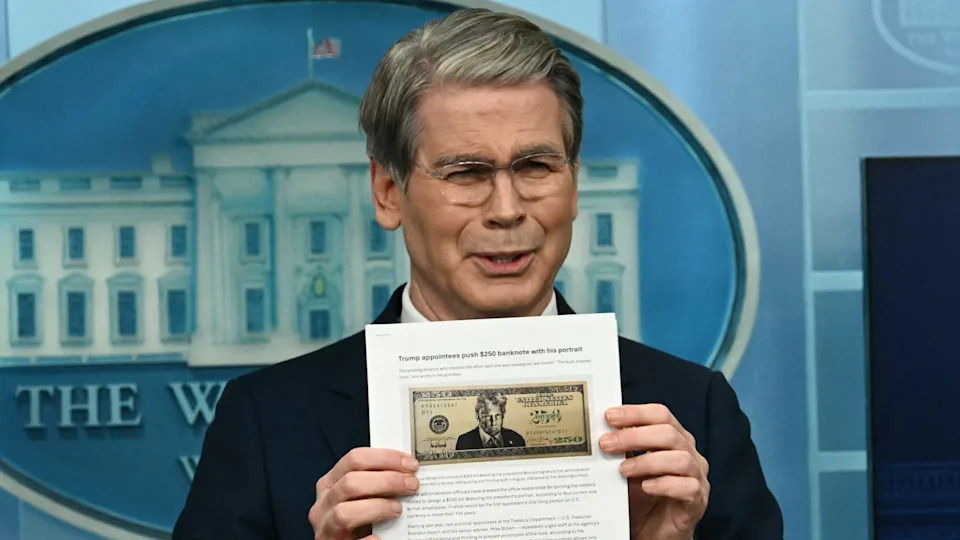
Trump portrait proposed for new $250 dollar bill

A view of the stage before US President Donald Trump delivers remarks during the "Salute to America" Independence Day celebration on the National Mall in Washington, DC, on July 4, 2026. The nation is marking the 250th anniversary of the United States Declaration of Indpendence.
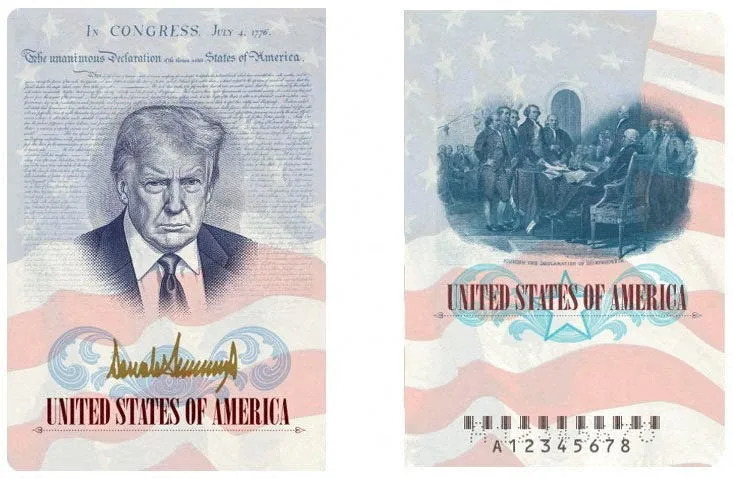
Rendering of a U.S. passport featuring an image and signature of President Donald Trump is released by the State Department in Washington, DC, on April 28, 2026.
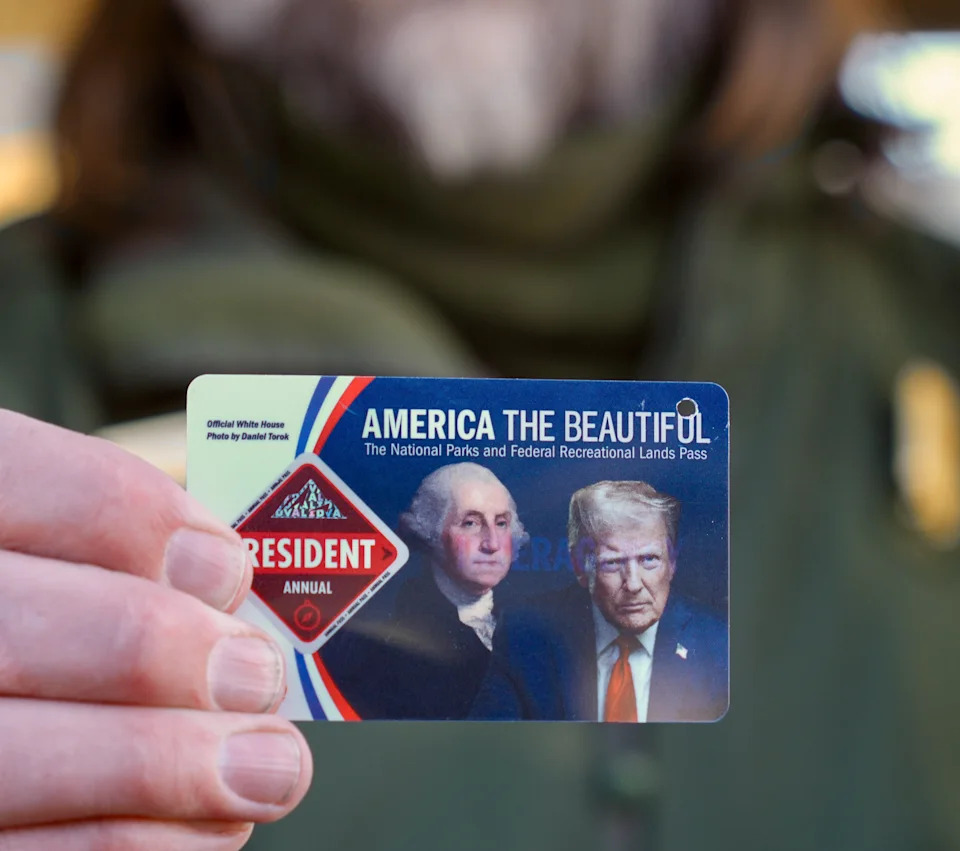
A National Park Service ranger at Rocky Mountain National Park shows the new America the Beautiful annual pass featuring President Donald Trump alongside George Washington. Trump is the first sitting president to be featured on the pass.
Help us improve.





















