The Supreme Court may decide whether a public school can ban students from wearing "Let's Go Brandon" sweatshirts, a slogan used as a euphemism for a vulgar criticism of President Biden. A divided appeals court applied a 1986 Supreme Court precedent permitting schools to prohibit obscene or vulgar speech, while a dissenting judge called the phrase political satire. If the justices take the case, they could clarify how far schools may regulate coded or politically charged clothing under the First Amendment.
Supreme Court May Decide Whether 'Let's Go Brandon' Sweatshirts Are Lewd — A Free Speech Clash Over School Dress Codes
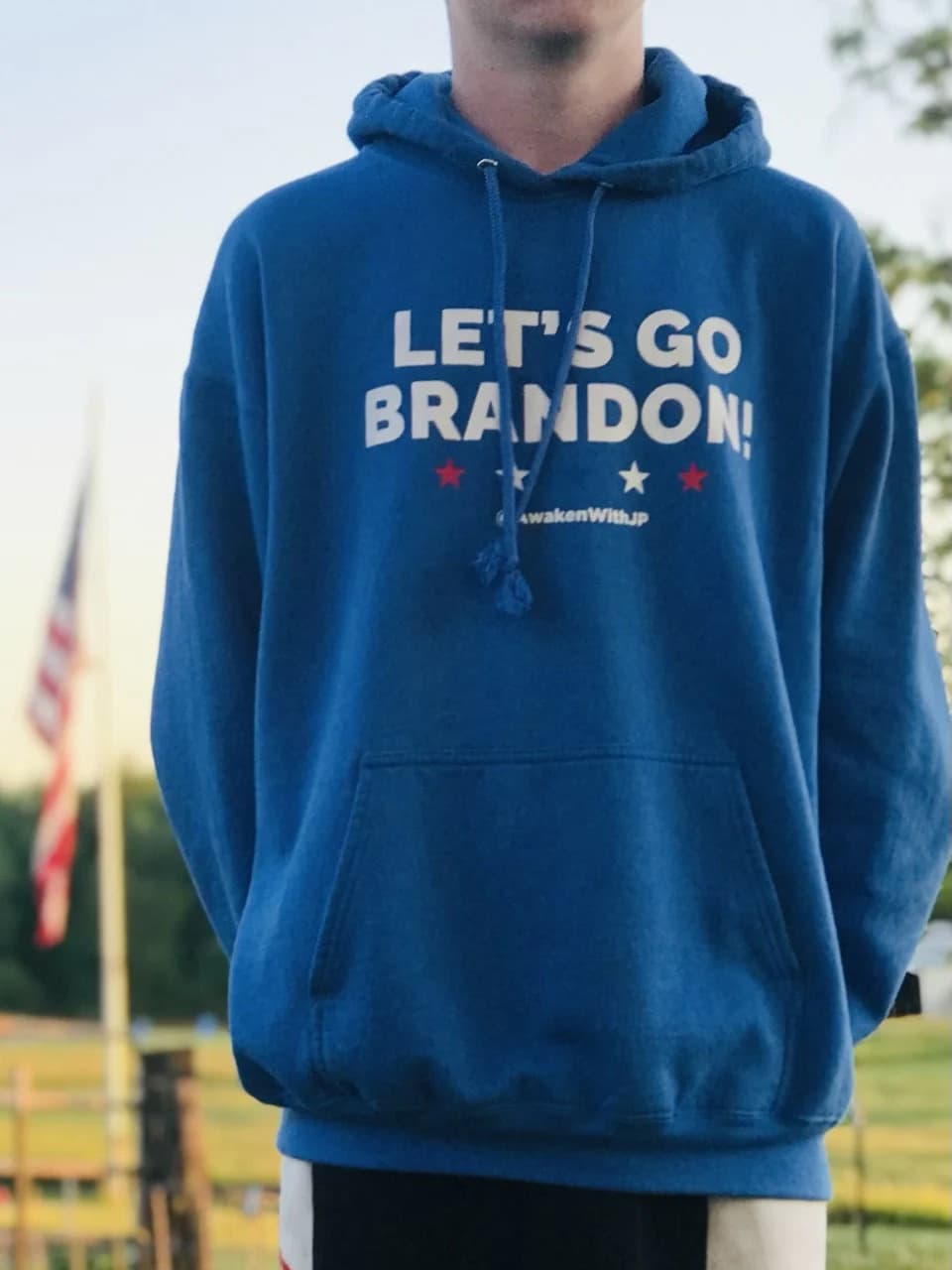
A western Michigan school district barred students from wearing hoodies like this, which spurred a federal lawsuit alleging the students free speech rights were denied.
WASHINGTON — In 2022, two brothers in rural Howard City, Michigan, arrived at their middle school wearing sweatshirts that read "Let's Go Brandon," a slogan that had circulated as a euphemism for an obscene criticism of President Joe Biden. School officials, citing a district dress code that bans clothing with lewd, indecent or vulgar messages, told the boys to change.
The students and their mothers sued, arguing the directive violated the boys' First Amendment rights. Lower courts upheld the school's decision. The family has now asked the U.S. Supreme Court to take the case and clarify whether schools may censor political expressions that are not "plainly profane or lewd." Their appeal is backed by the Foundation for Individual Rights and Expression (FIRE).
The dispute centers on a 1986 Supreme Court precedent — Bethel School District No. 403 v. Fraser — which allows schools to prohibit student speech that is obscene or plainly vulgar, and the 1969 Tinker v. Des Moines decision, which protects student speech unless it materially disrupts school operations. In 2025, the Cincinnati-based 6th U.S. Circuit Court of Appeals applied the 1986 standard and ruled that school officials reasonably concluded the slogan was vulgar because of its commonly understood origin.
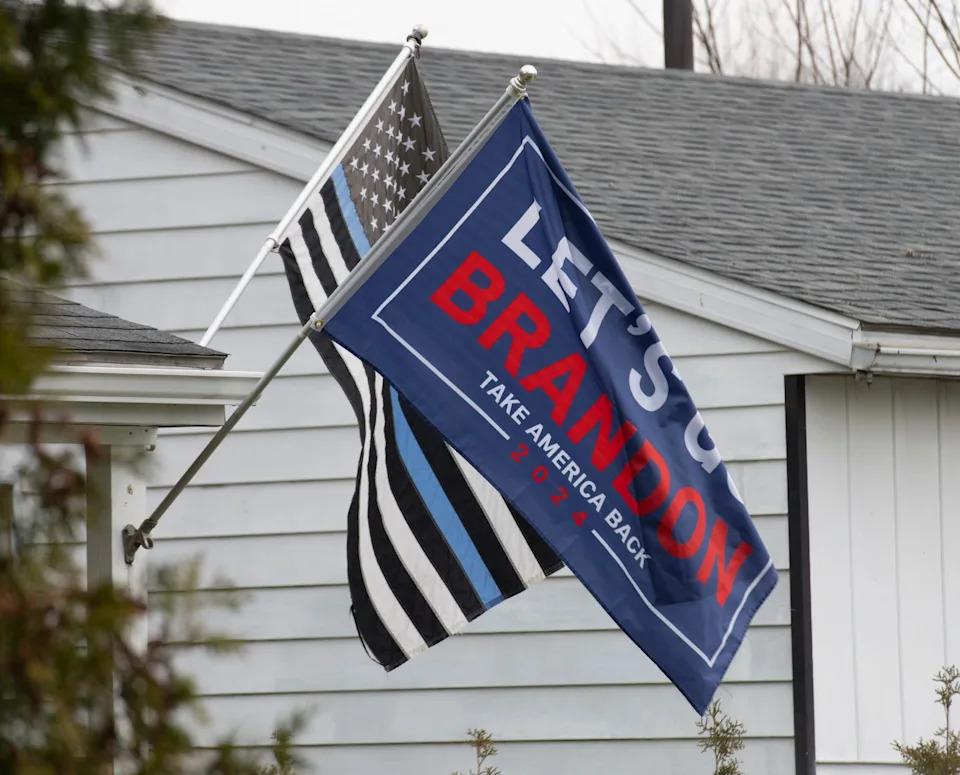
Let's Go Brandon sign on a home.
"The uncontroverted origin of the slogan shows a plainly vulgar meaning," wrote Judge John Nalbandian for the panel.
But the decision was not unanimous. Judge John K. Bush dissented, arguing that "Let's Go Brandon" has evolved into a national inside joke and a form of political satire, likening its transformation to how political figures repurpose advertising taglines. In his view, the phrase "cheekily expressed criticism of a president's leadership capabilities," and the Supreme Court should clarify and, ideally, narrow the reach of the 1986 precedent.
Supporters of the school warned the justices that reopening the issue would present a thorny task. Lisa Blatt, the high-profile attorney representing Tri County Area Schools, submitted filings containing more than 200 potentially offensive examples and apologized "for the use of offensive language and images." She argued that much lewd speech appears through coded language, innuendo and double meanings (citing, for example, how the number "69" commonly carries a sexual connotation).
Blatt urged the court to defer to administrators, warning that distinguishing protected political expression from sanitized or coded obscenity would be "head-spinning." The school posed hypotheticals — from playful political riffs to thinly veiled vulgar codewords — to illustrate the breadth of phrases judges might be asked to evaluate.
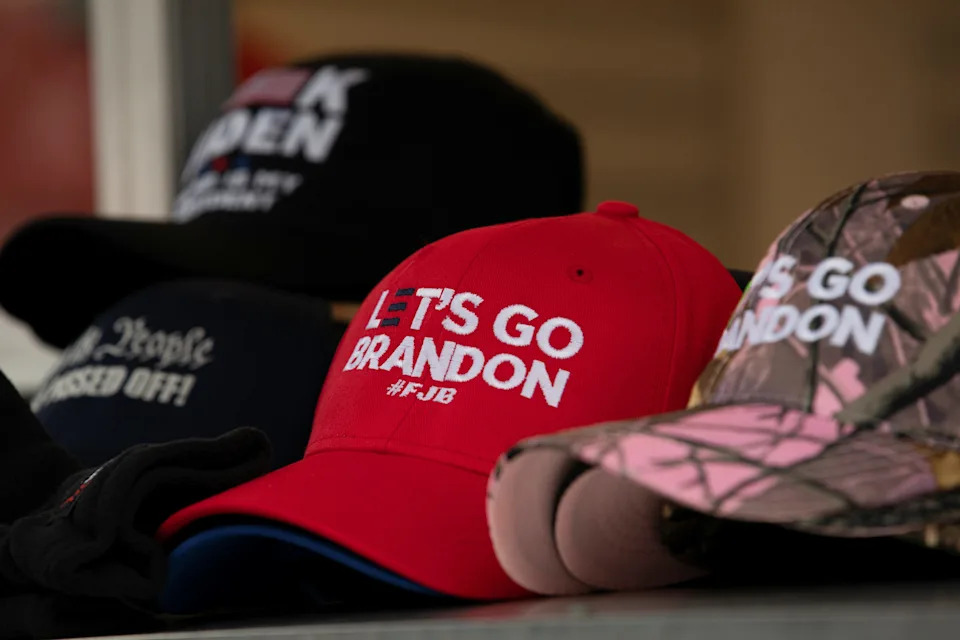
Hats are seen on display along with other merchandise as supporters attend a "Let's Go Brandon Festival" rally, promoted by the Michigan Conservative Coalition and in opposition to U.S. President Joe Biden, in the Brandon Township village of Ortonville, Michigan, U.S., November 20, 2021.
The Supreme Court typically announces whether it will hear a case after federal justices return from recess. If the court takes this appeal, it could provide fresh guidance on how schools balance students' political expression with the authority to limit lewd or plainly vulgar speech in the classroom.
What This Case Could Mean
If the high court sides with the students, schools could face tighter limits on policing clothing and slogans that communicate political views through innuendo or coded language. If the court sides with the school, administrators may retain broader discretion to ban apparel they reasonably deem vulgar, even when the message is a political critique.
This article originally appeared on USA TODAY.
Help us improve.