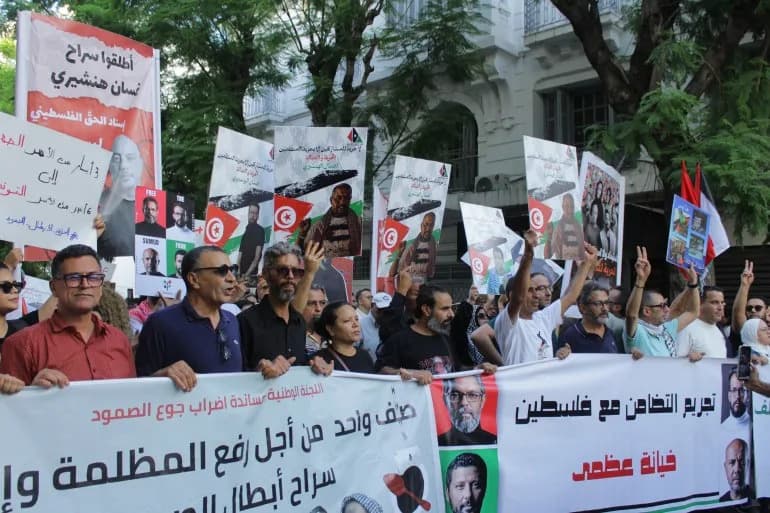
Five years after President Kais Saied’s 2021 power consolidation, many of the democratic gains of Tunisia’s 2011 uprising have eroded. A heatwave and wildfires have contributed to prolonged power cuts that are deepening economic and humanitarian hardship and prompting mass protests and counter-rallies. Authorities have tightened controls on media and political opponents while external partners, prioritising regional stability and migration concerns, have largely engaged with Saied’s government despite democratic backsliding.
Beneath Tunisia’s Silence: Five Years After Saied, Public Anger Boils Over
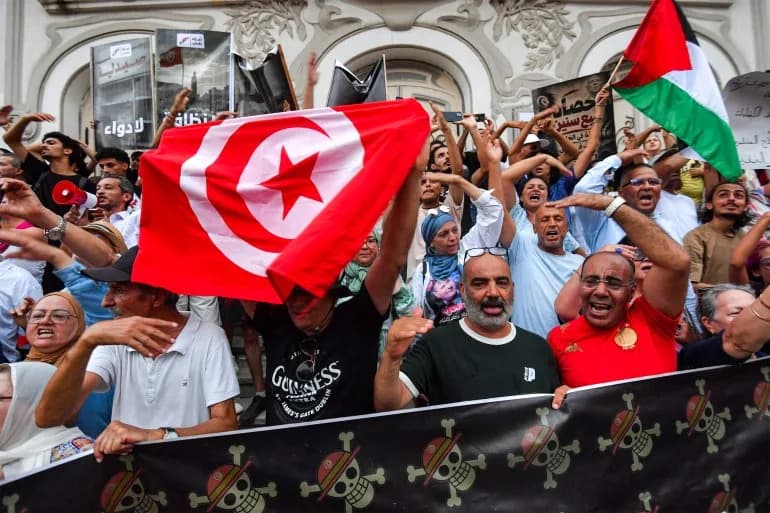
People gather to protest against Tunisia's President Kais Saied during a demonstration marking five years since his suspension of parliament and assumption of emergency powers, along Avenue Habib Bourguiba in Tunis on July 25, 2026 [AFP]
Five years after President Kais Saied concentrated power in 2021, many of the democratic hopes born of Tunisia’s 2011 uprising have evaporated. What began as broad public participation in drafting a new constitution and building democratic institutions has been replaced by political silence, economic strain and frequent outages that are fueling popular anger.
Heat, Blackouts and Public Protests
A severe heatwave and widespread wildfires have compounded daily hardship. The fires are estimated to have destroyed roughly 4,400 hectares (10,900 acres) of land despite firefighting assistance from Italy and Algeria. State-owned utility STEG has imposed staggered power cuts — at times lasting up to 12 hours — to cope with soaring demand for fans and air conditioning, causing damage to crops, industry and public services.
On Saturday, thousands gathered in Tunis to denounce what many see as Saied’s growing authoritarianism and the collapse of living standards. Counter-demonstrations also took place, with supporters calling for the jailing of those they labelled "traitors." Coverage of the protests has been shaped by a sweeping crackdown on independent media, prompting many journalists to self-censor or avoid direct criticism.
Crackdown, Censorship and the Silencing of Critics
Human Rights Watch's Tunisia director, Salsabil Chellali, told Al Jazeera that criticism of the government is increasingly viewed as intolerable. "Five years ago, Kais Saied buried Tunisia’s democratic transition and dragged the country back into authoritarianism," she said, accusing the leadership of dismantling the rule of law and targeting the opposition, civil society and the press.
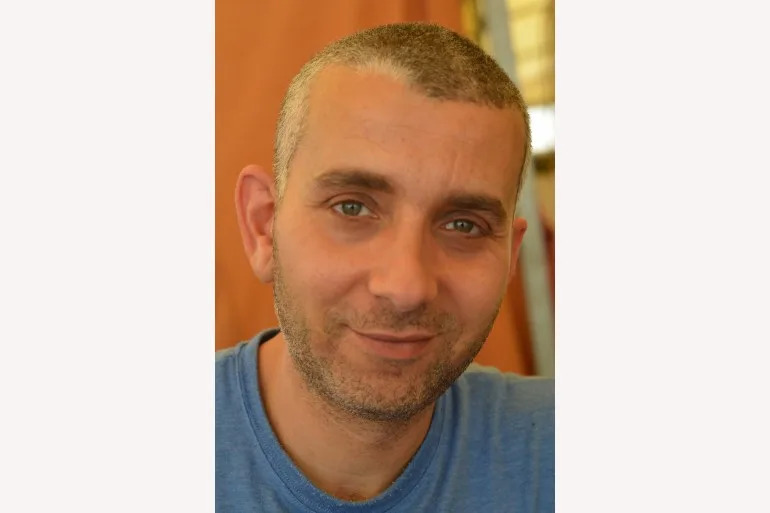
Heythem El Mekki [Simon Speakman Cordall/Al Jazeera]
"His record is one of human rights crisis: the dismantling of the rule of law, and the targeting of the opposition, civil society and the media... No critic is safe under his rule." — Salsabil Chellali, Human Rights Watch
Many prominent critics are jailed or in exile. Much of Ennahdha's leadership, including its 85-year-old leader Rached Ghannouchi, is detained. Ghannouchi collapsed in detention last month — reportedly due to the heat — and his condition and location remain unclear. New laws criminalising state-defined "fake news" and a spate of high-profile arrests have further narrowed space for dissent. Satirist and commentator Heythem El Mekki fled the country after receiving a one-year sentence for a social media post criticizing a hospital morgue.
Failures of Planning and Governance
Analysts and residents describe an absence of effective planning for recurring summer demands. "There is no plan for anything," an analyst in Tunisia told Al Jazeera on condition of anonymity, citing a lack of investment and budgetary resources. The resulting outages and service failures are provoking tangible human costs: livestock losses, shuttered businesses, and risks to sick and elderly people who rely on power-dependent care.
External Pressures and the Choice of Stability
Saied’s hold on state institutions is also reinforced by external actors that prioritise stability. The European Union — concerned about irregular migration from Tunisia’s coast — has quietly pursued cooperation and aid despite worries about democratic backsliding. Neighbouring countries, including Algeria and Libya, similarly prefer a stable Tunisia and have signalled support for measures to prevent spillover instability.
Riccardo Fabiani of the International Crisis Group warned that Tunisia risks becoming trapped in a governance model that blames external conspiracies for domestic failures, while foreign partners increasingly abandon a reform agenda. The Tunisian prime minister’s office did not respond to requests for comment for this article.
Outlook
With temperatures rising and outages continuing, pressure on the government is likely to persist. The central questions for Tunisia remain whether leaders will restore space for political pluralism and mount a credible program to stabilize services and revive the economy — or whether the country will settle into a prolonged period of authoritarian stability with mounting social costs.
Help us improve.