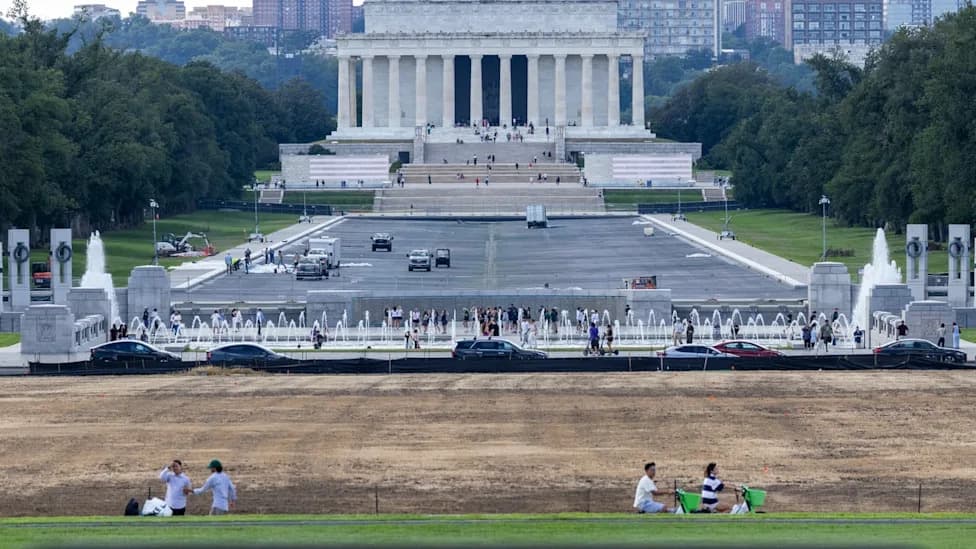
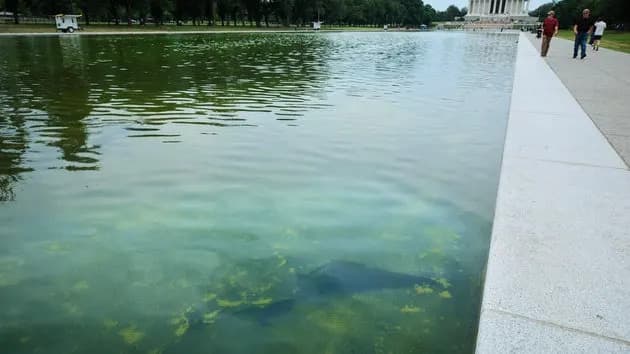
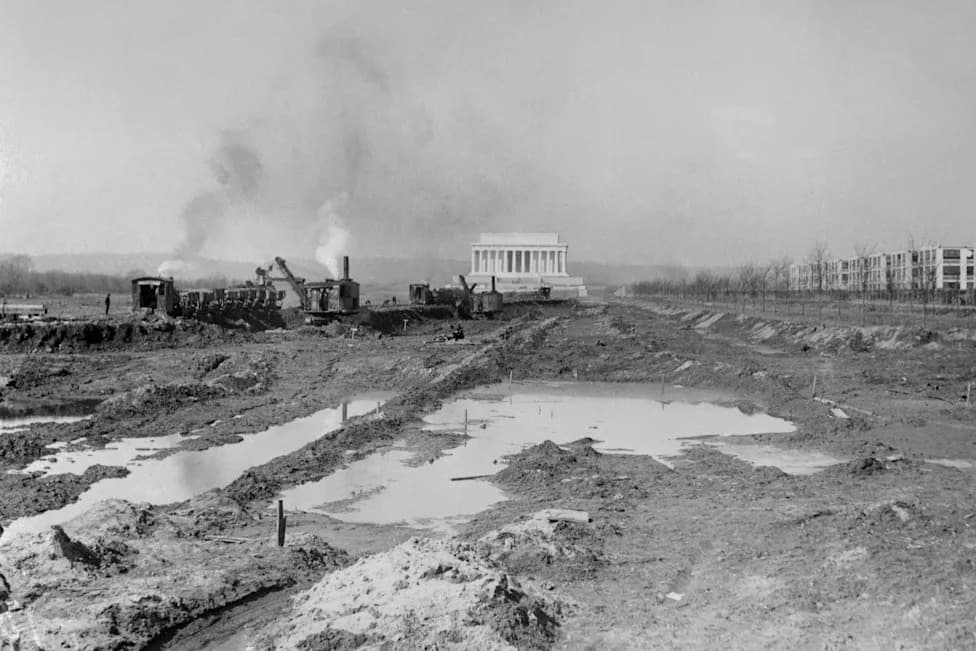
Federal prosecutors have moved to dismiss a felony charge against former Olympian David Hearn after new evidence showed the Lincoln Memorial Reflecting Pool damage resulted from a flawed contractor installation rather than vandalism. The U.S. Attorney's office says the blue sealant began peeling almost immediately after renovations, and a grand jury witness testified the pool was leaking about 1 million gallons a week before Hearn's arrest. Hearn's lawyers called the prosecution an abuse of power and have demanded an apology.
Charges Dropped Against Former Olympian After Administration Admits Contractor Fault in Reflecting Pool Damage
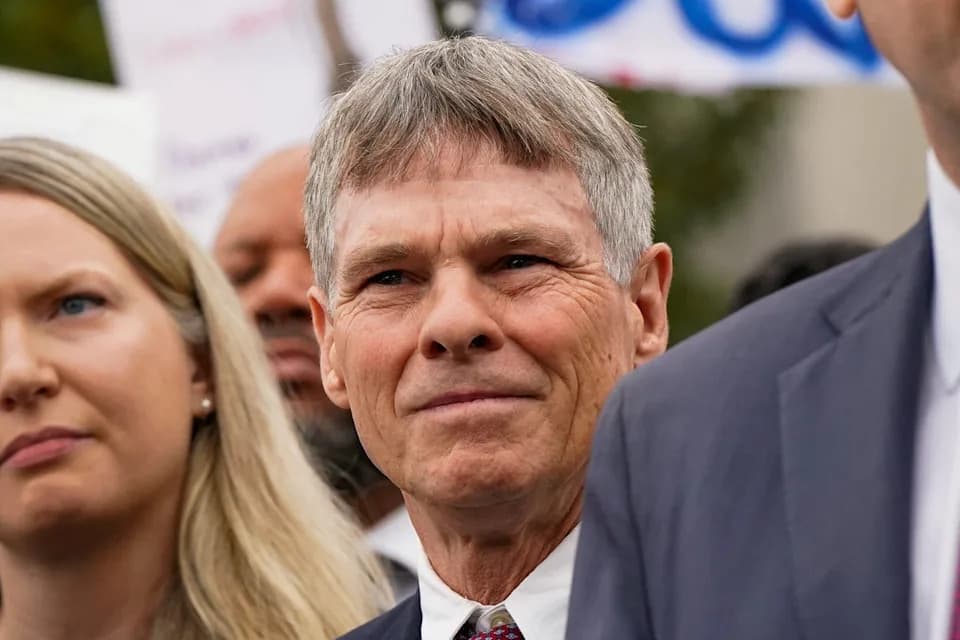
Prosecutors have dropped charges against former Olympian David Hearn after he was accused of vandalizing the Lincoln Memorial Reflecting Pool after evidence from the Trump administration showed it was already damaged when he touched it (Reuters)
Federal prosecutors in Washington, D.C., have moved to dismiss a felony charge against former Olympian David Hearn after the Trump administration acknowledged that damage to the Lincoln Memorial Reflecting Pool was caused by a flawed contractor installation, not deliberate vandalism.
U.S. Attorney Jeanine Pirro filed the motion to dismiss the destruction-of-property charge that Hearn pleaded not guilty to earlier this month. Pirro had publicly condemned Hearn at a July 2 press conference, saying he 'woefully destroyed property' and acted 'forcefully and violently' by pulling at the pool's liner. The new court filing, however, shows fresh evidence that undermines that allegation.
What the Filing Says
According to the filing from Pirro's office, the dark-blue sealant recently applied to the bottom of the pool began peeling 'almost immediately' after renovation work was completed. The filing states the Department of the Interior initially provided incomplete information, and only after the indictment did a federal agent determine the visible damage resulted from a botched installation rather than vandalism.
Background And Timeline
The shallow, roughly 2,030-foot pool was refurbished with a blue liner and fitted with what the White House described as 'advanced nanobubbler technology' to fight chronic algae blooms. Algae and peeling sealant reappeared soon after the work was finished, and chunks of sealant bubbled to the surface.
Federal spending records show the administration paid nearly $14.7 million to Atlantic Industrial Coatings LLC of Virginia for the project. Officials awarded the work through a no-bid contract, arguing that urgent repairs were necessary to prevent 'serious injury' to the government; public records do not clearly define that claimed urgency.
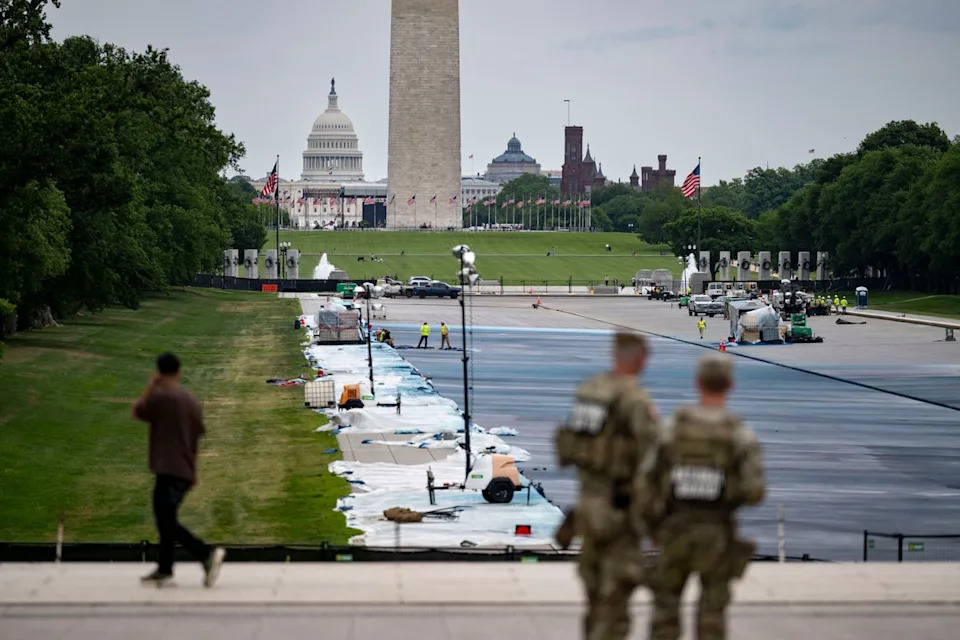
According to Pirro, damage to the Reflecting Pool was caused by 'flawed installation by the contractor' that had been awarded more than $14 million in no-bid contracts to refurbish the monument (AFP/Getty)
Separately, government court filings in a lawsuit said the liner was cut with a sharp knife or razor and foam sealant was damaged in an incident that occurred about 10 days before Hearn touched the liner.
Hearn's Account And Legal Response
Hearn, a two-time whitewater-racing world champion and three-time Olympic canoe slalom competitor, says he was on a 52-mile bike ride on June 19 when he stopped by the Reflecting Pool. He told The Washington Post he reached in and grabbed a flapping, already peeling piece of liner that was still attached to the bottom and did not remove anything.
Hearn's counsel — Norm Eisen of Democracy Defenders Fund, Mary Dohrmann of the Washington Litigation Group and Steve Levin of Steptoe LLP — said the case should never have been brought and called for an apology. 'Its dismissal today does not erase the abuse of government power in arresting and charging a patriotic American who did nothing wrong,' they said in a statement to The Independent.
Evidence Undercutting The Original Case
New court filings included testimony from a key grand jury witness that the pool was losing roughly 1 million gallons of water per week prior to Hearn's arrest. Prosecutors now say that testimony established substantial preexisting damage requiring repair before any alleged conduct by Mr. Hearn.
The pool has since been closed and drained again for further repairs.
Why This Matters
This development raises questions about the handling of the investigation, the accuracy of initial public statements by officials, the decision to award a costly no-bid contract, and the standards used to pursue criminal charges. The case has drawn attention because it intersects public monuments, federal contracting, and criminal prosecution of a well-known athlete.
Help us improve.