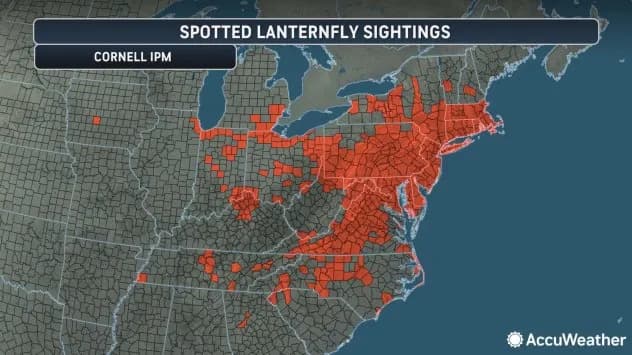
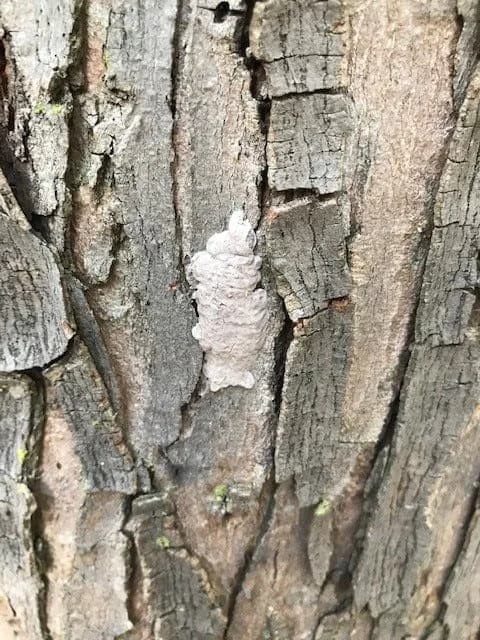
Virginia Tech and partners are training owner‑handled pet dogs to detect spotted lanternfly egg masses as an affordable, community‑driven early‑warning tool for vineyards and farms. A 2025 study found owner‑trained dogs identified egg masses with 82% accuracy in lab tests and 61% in field trials. The spotted lanternfly now occupies 19 states plus D.C., threatens more than 70 plant species and can cause severe economic losses in grape and timber industries. About 80 volunteer dog‑handler teams are certified so far.
Pet Dogs Trained To Sniff Out Spotted Lanternfly Eggs — A Low‑Cost Early Warning For Vineyards
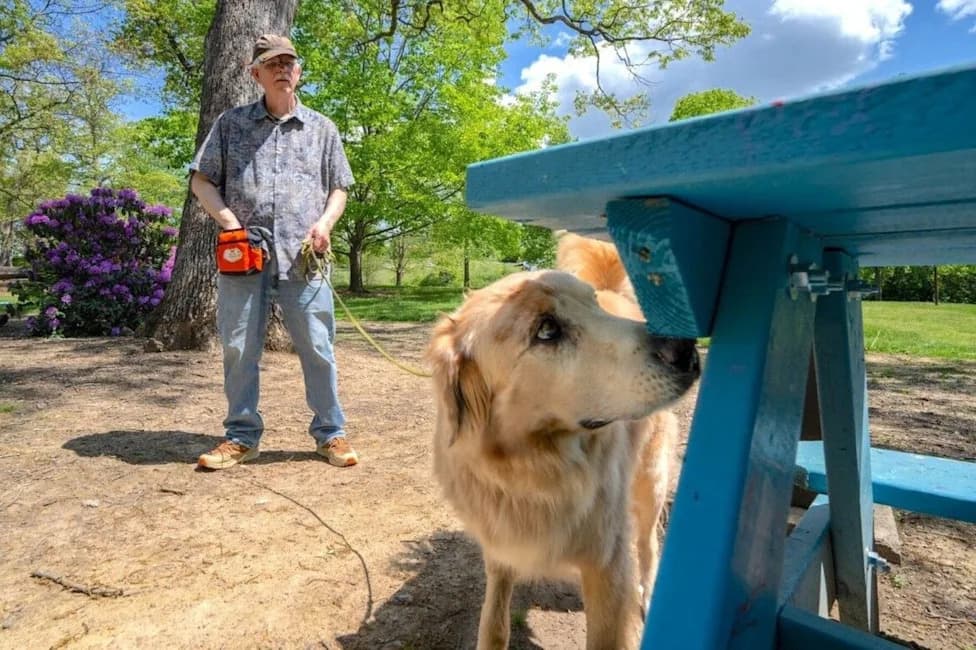
Photo Credit: Clark DeHart for Virginia Tech
A Virginia program is training everyday pet dogs to detect spotted lanternfly egg masses before the invasive insects hatch and spread across U.S. farms and vineyards. Dogs such as Fozzie, an 11-year-old Labrador mix, are being taught to find egg clusters hidden in fields, along fence lines and in dense vegetation — offering growers an inexpensive, community-driven early‑warning system.
How the program works
The citizen‑science initiative, run through Virginia Tech with collaboration from Texas Tech, enlists dog owners to search for egg masses that people often miss. Trainers pair the faint scent of lanternfly egg masses with a dog’s favorite treat so detection is both rewarding and reliable. Because the program relies on owner‑trained pets rather than expensive professional detection dogs, it is more accessible to a wide range of communities and breeds.
Spotted lanternflies are good hitchhikers. They can hang on at high speeds.
— Julie Urban, Penn State University
Why it matters
First detected in the U.S. aboard imported cargo in the 2010s, the spotted lanternfly has spread to 19 states plus Washington, D.C. Native to parts of Asia, the insect feeds on more than 70 plant species. Lanternflies suck plant sap and leave behind sticky honeydew that promotes black sooty mold, which can damage fruit quality and weaken plants.
The agricultural and ecological consequences can be severe: lanternflies have been associated with grape crop losses of up to 90% in affected vineyards. Pennsylvania’s logging and agriculture industries face roughly $50 million in annual losses, researchers estimate. Projections also show New York’s grape sector could lose more than $14 million in the first three years after invasion, and Virginia could face as much as $324 million in annual losses if spread continues unchecked.
Study results and progress
Results cited from a 2025 Virginia Tech study demonstrate the potential of owner‑trained pets: in controlled scent‑recognition tests, pet dogs correctly identified spotted lanternfly egg masses 82% of the time, and in real‑world field trials they detected egg masses at a 61% rate. To date, about 80 volunteer dog‑handler teams have passed the program’s certification test and more than 50 teams have completed field trials.
Erica Feuerbacher, a professor of applied animal behavior and welfare at Virginia Tech, emphasizes the dual benefit: training is enjoyable for dogs and provides a practical conservation service. Feuerbacher also notes that many breeds can excel at scent tasks — the work does not require a specific pedigree.
Complementary tools and public role
Detection dogs are one of several strategies being tested to curb lanternflies. For example, a student‑built solar device that lures and electrocutes lanternflies was highlighted as a complementary control method. Public participation remains important: people without trained dogs can still help by killing lanternflies on sight where permitted and reporting infestations to local agricultural authorities.
If you don't kill it, you'll carry it. Stomping spotted lanternflies buys important time for these other solutions to improve.
— Julie Urban, Penn State University
With more certified teams, citizen volunteers and new control technologies, communities across the eastern U.S. can better protect vineyards, orchards, forests and urban greenery from this invasive pest.
Help us improve.