The clash between state governments and online prediction markets intensified at a lawmakers' summit in Chicago, where officials accused Kalshi and Polymarket of evading state gambling rules. Industry leaders argue these platforms are federally regulated derivatives under the CFTC, while a coalition of 44 attorneys general and several states insist sports-related contracts fall under state gambling authority. Key concerns include youth access, insider trading, consumer protections, tribal sovereignty, and the potential for increased gambling harm. Legal battles are escalating and many expect the dispute to reach the U.S. Supreme Court.
State Lawmakers Confront Prediction Markets: Kalshi, Polymarket Face Scrutiny and Lawsuits
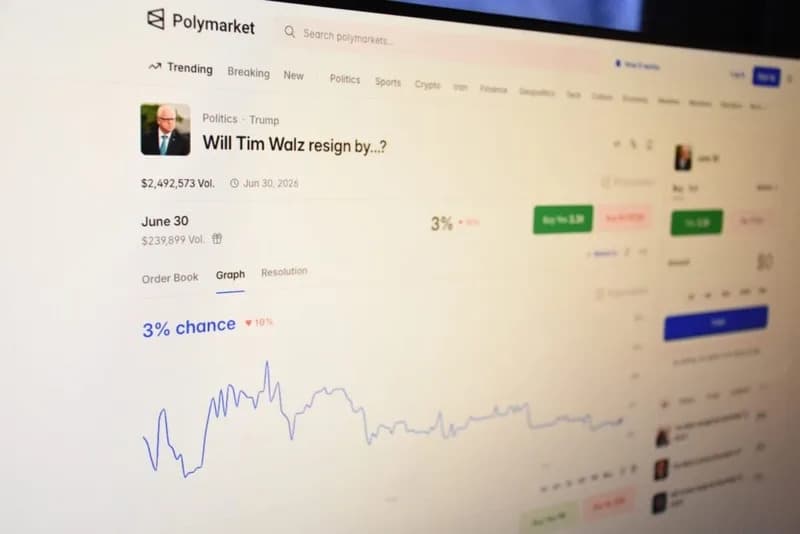
Online prediction markets such as Kalshi and Polymarket are attracting scrutiny from state lawmakers, who argue the platforms are undermining state gambling regulations. (Photo by Alyssa Chen/Minnesota Reformer)
CHICAGO — State lawmakers and regulators sharply criticized online prediction markets such as Kalshi and Polymarket at the National Conference of State Legislatures summit, arguing the platforms skirt state gambling laws and pose public-health and integrity risks.
Regulatory Rift: CFTC vs. States
Prediction-market companies maintain their contracts are derivative-style instruments regulated by the federal Commodity Futures Trading Commission (CFTC) — akin to commodity or futures exchanges — and therefore outside state gambling regimes. State officials, a coalition of 44 attorneys general, and some legislators counter that sports-related event contracts are a form of gambling subject to state oversight and taxation.
Legal Moves and Enforcement
Kalshi preemptively sued in March to block Iowa Attorney General Brenna Bird from pursuing enforcement actions, saying there was a "substantial risk" of prosecution. The CFTC, a five-member agency that currently has multiple vacancies, has aggressively defended its jurisdiction and sued several states to maintain federal control. Meanwhile, the attorneys general have asked the CFTC to clarify — and limit — its authority over sports-related contracts.
Concerns Raised by Lawmakers
Iowa state Sen. Dan Dawson recounted at the conference that high-school students used Kalshi to trade on World Cup matches, noting Iowa requires participants in legal online sports betting to be at least 21. Lawmakers also described difficulties obtaining basic data from prediction-market firms when studying their state impacts.
Insider Trading and Workplace Restrictions
Critics point to several high-profile incidents alleging use of nonpublic information to profit on event contracts. This week the White House announced that the president's teleprompter operator was no longer on staff after accusations he traded on inside knowledge of presidential remarks. In response, Minnesota Gov. Tim Walz issued an executive order banning state employees from wagering on prediction markets; at least eight states have adopted similar measures.
Consumer Protection, Public Health, and Tribal Concerns
States and researchers warn prediction markets may increase problem gambling, enable insider activity, and lack consumer safeguards. Rachel Volberg, a longtime gambling-harms researcher, told lawmakers that heavy gambling involvement can damage families and that the effects of fast, accessible online wagering are not yet fully understood.
Tribal leaders say prediction markets threaten tribal gaming revenue and sovereignty. Michael Hoenig of the Yuhaaviatam of San Manuel Nation described the platforms as an affront to tribes' right to control gaming on their lands.
Politics, Industry Response, and What Comes Next
Industry representatives, including Kalshi's Sara Slane, argue a national regulatory standard under the CFTC is preferable to a state-by-state patchwork. Opponents — and some in the industry advocacy space — contend gambling has traditionally been regulated at the state level and should remain so. With litigation mounting on both sides, many observers expect the dispute to reach the U.S. Supreme Court.
"We take this very seriously. We want to promote integrity around our exchange," Kalshi's Sara Slane said at the conference.
Experts at the conference agreed the market is likely to persist, prompting calls for clearer rules and stronger consumer protections whether oversight is federal, state, or a combination of both.
Reporting: Stateline reporter Kevin Hardy contributed. He can be reached at [email protected].
Help us improve.