The U.S. Air Force has solicited prototypes for a reusable VTOL strike aircraft that can reach hypersonic speeds and operate without runways, with industry responses due by August 4 and a potential award in 30–45 days. The concept uses a liquid-propellant rocket, demands autonomous flight control, thrust-vectoring, cryogenic propellant handling and heat-tolerant materials. New Frontier Aerospace appears to be the closest current match, while other firms offer partial capabilities. The program complements, but does not replace, the B-21 and extends beyond DARPA’s short-runway SPRINT research by requiring full VTOL capability.
US Air Force Seeks Reusable Hypersonic VTOL Bomber That Can Strike Without Runways
US Air Force eyes reusable hypersonic VTOL bomber that can strike without runway
The U.S. Air Force has issued a solicitation for a prototype vertical takeoff and landing (VTOL) strike aircraft that would be reusable and capable of hypersonic flight — and would not rely on conventional runways. Industry responses are due by August 4, with a potential contract award projected within 30 to 45 days. The solicitation documents themselves have not been released publicly.
Operational Motivation
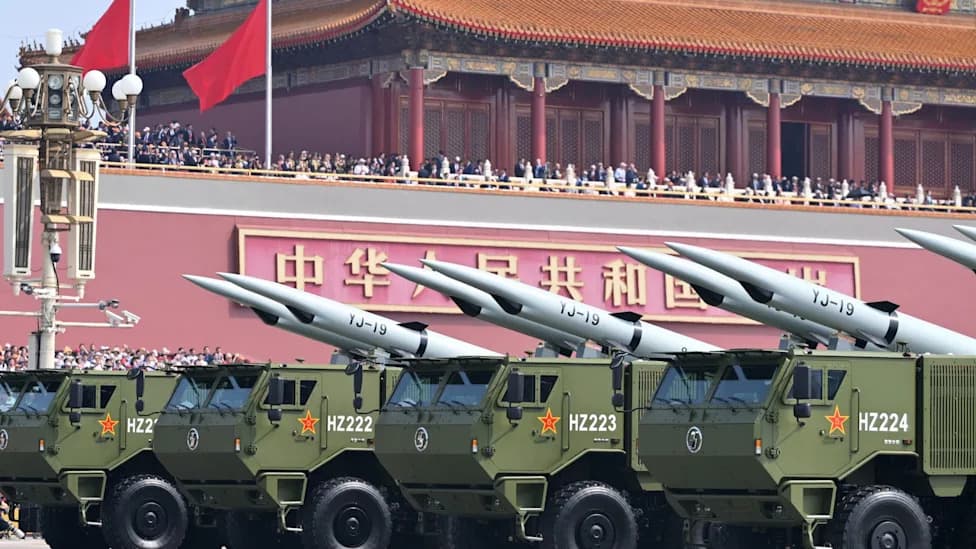
The effort is driven by survivability concerns in the Indo-Pacific, where major U.S. air bases in Guam and Japan fall within the range of Chinese ballistic missiles. In a high-intensity conflict those bases could be degraded or neutralized early, leaving runways and traditional airfields vulnerable. A VTOL platform that launches and lands vertically and flies at hypersonic speeds for strikes would remove runway infrastructure from the list of high-value targets and enable operations from improvised sites such as road segments, clearings or other dispersed forward positions.
Concept and Technical Requirements
According to the solicitation, the concept centers on a liquid-propellant rocket propulsion system. The vehicle would: lift off vertically, transition to horizontal flight, accelerate to hypersonic speeds to conduct a strike, then return and land vertically — all while being reusable rather than expendable.
The documents list several specific technology requirements, including:
- Autonomous flight-control systems capable of managing VTOL, transition and hypersonic regimes.
- Thrust-vectoring control and aerodynamic control surfaces to manage the vertical-to-horizontal transition.
- Cryogenic propellant storage and handling systems suitable for rapid ops and reuse.
- Structures and thermal protection materials capable of surviving sustained hypersonic heating.
Industry Landscape
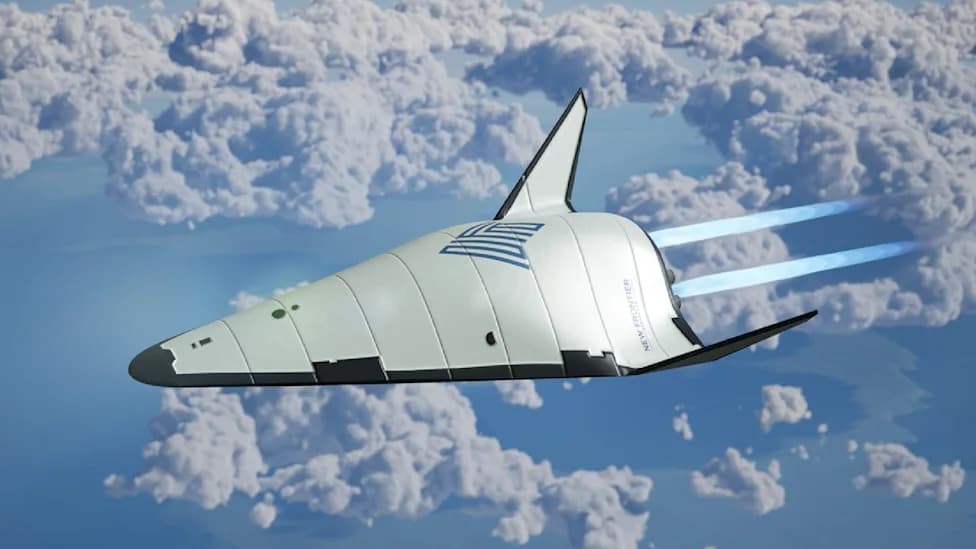
The technical bar is narrow: few firms combine rocket propulsion, hypersonic development and VTOL experience. New Frontier Aerospace appears to be the closest match today. The company is developing the Mjölnir reusable liquid-propellant engine and in 2025 signed a research agreement with the Air Force Institute of Technology to advance a hypersonic VTOL concept; its Rocketplane design shares several characteristics outlined in the solicitation.
Other firms bring important but partial capabilities: Shield AI’s X-BAT offers autonomous VTOL combat capability but uses a vectored-thrust turbojet rather than a rocket engine; Bell Textron is working on short-field demonstrators under DARPA’s SPRINT program; Aurora Flight Sciences has deep experimental VTOL experience; and Hermeus and Venus Aerospace are advancing hypersonic technologies but currently lack a vertical-takeoff hypersonic solution.
How This Fits With Existing Programs
Officials stress this VTOL hypersonic platform is not intended to replace the B-21 Raider, which remains the backbone of the strategic bomber force. In February 2026 the Air Force announced a 25% production increase for the B-21, supported by an additional $4.5 billion in funding. That program addresses a different survivability challenge for long-range stealth bombers.
DARPA’s SPRINT program already sponsors work on high-speed aircraft able to operate from short or damaged runways, but Air Force Global Strike Command’s solicitation goes further by explicitly seeking full vertical takeoff and landing capability to eliminate runway dependence entirely.
Strategic Implications
A reusable hypersonic VTOL strike platform would create a new category of U.S. military aviation between strategic bombers, reusable hypersonic glide vehicles and space-access systems. Its ability to operate from dispersed sites would complicate adversary targeting, increase survivability of strike aircraft in contested environments and likely draw close attention from China and Russia as they monitor U.S. advances in hypersonics and runway-independent operations.
Bottom line: The solicitation is a focused, technically demanding push to combine rocket propulsion, VTOL operations, hypersonic performance and reusability — a combination only a handful of firms are positioned to pursue today.
Help us improve.