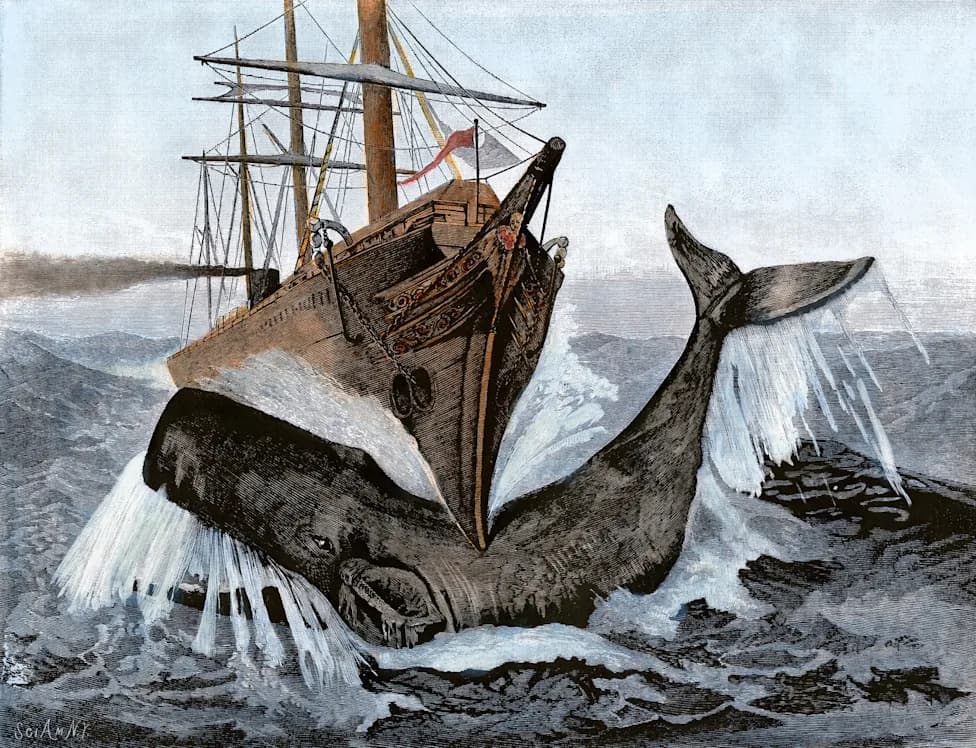
A study in the Journal of Experimental Biology finds sperm whales release bubbles to regulate buoyancy during long vertical rest episodes. Researchers tagged 42 whales off Northern Norway between 2005 and 2019; 17 were recorded resting from seven minutes to over three hours. Whales dive head-first then float head-up and emit bubbles to offset expanding lung gas and maintain neutral buoyancy. Authors plan to use EEG tags next to confirm whether these episodes are true sleep and to identify bubble-trigger cues.
Sleeping Giant: How Sperm Whales Use Bubbles to Stay Afloat While Resting
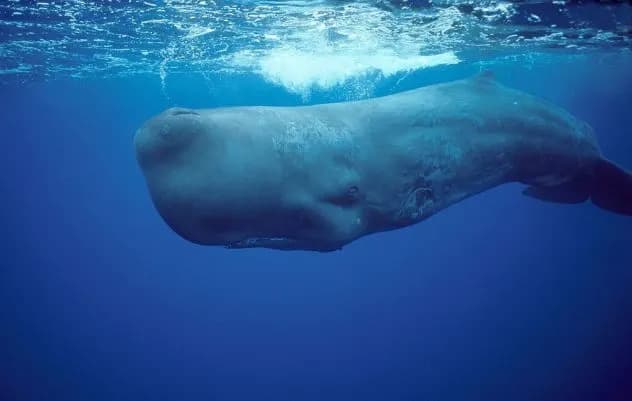
Sperm whale. Physeter macrocephalus. Near the Azores Islands (Portugal). North Atlantic Ocean. (Photo by: Francois Gohier/VW Pics/Universal Images Group via Getty Images)
Sperm whales have long puzzled scientists with their unusual vertical resting posture. A new study in the Journal of Experimental Biology reveals a clever trick these giants use to avoid drifting or sinking while they rest: they release bubbles to regulate their buoyancy.
How the Study Was Done
Researchers attached biologging tags to 42 free-ranging sperm whales (Physeter macrocephalus) in the Lofoten Islands region of Northern Norway across eight boreal summers from 2005 to 2019. The tags recorded movement and audio, capturing the sounds of bubbles as well as the whales' motion patterns. Seventeen of the tagged whales were observed in prolonged resting episodes that lasted from seven minutes to more than three hours.
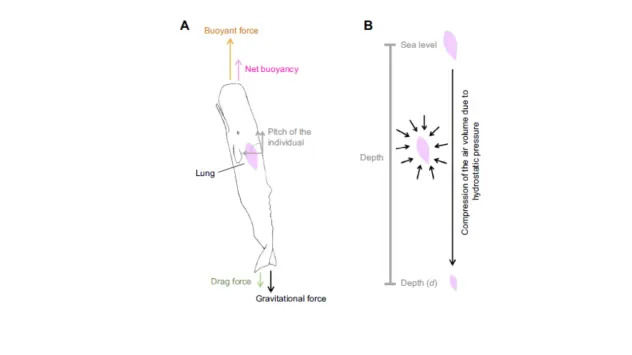
(A) Illustration of the forces acting on a drifting whale. (B) Illustration of Boyle–Mariotte's gas law, showing the compression of the air carried by the whale at depth due to hydrostatic pressure. (Image credit: Journal of Experimental Biology)
What the Whales Do While Resting
The recordings show a consistent behavioral pattern: whales typically begin a rest sequence by diving head-first (head-down) and then settling into a vertical, head-up position near the surface. Every individual that used this head-down then head-up pattern released bubbles during the resting period, indicating bubble release is a routine mechanism for controlling buoyancy.
As sperm whales are breath-hold divers, if they slowly drift up while resting, the gas in their lungs will slowly expand. Hence, releasing bubbles would enable them to counteract the expanding diving gas and achieve neutral buoyancy.
The team explains that, as lung gas expands while a whale drifts upward, intentionally releasing bubbles relieves the expanding gas and helps the animal maintain a stable, neutrally buoyant position.
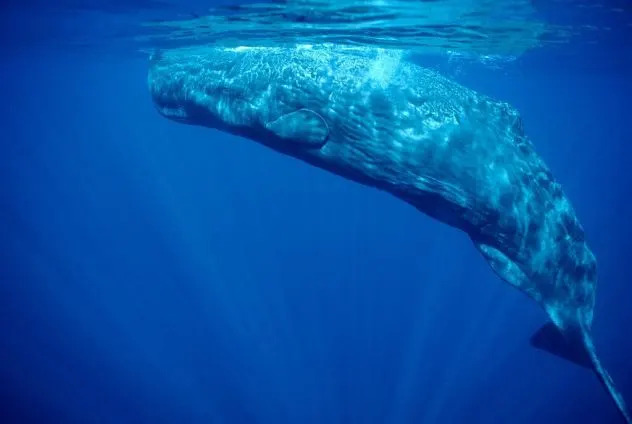
Sperm whale. Physeter macrocephalus. Azore Islands (Portugal), North Atlantic Ocean. (Photo by: Francois Gohier/VW Pics/Universal Images Group via Getty Images)
Additional Findings And Next Steps
Researchers also found evidence that whales reduce their initial lung gas volume before beginning these rest episodes, suggesting they adjust carried gas volume depending on the dive or rest type. The authors — Noémie Freymond, Alec Burslem and Patrick Miller — note that if these periods represent sleep, then sperm whales are capable of precise position control even during low-activity states.
The team recommends deploying EEG-equipped tags next to confirm whether whales are actually sleeping during these resting episodes and to identify triggers that prompt bubble release. The study also references basic physical principles (Boyle-Mariotte gas law) to explain how hydrostatic pressure affects lung volume with depth.
Why This Matters
Sperm whales are the largest toothed whales and are listed under the U.S. Endangered Species Act (NOAA Fisheries). They inhabit oceans worldwide and face threats such as vessel strikes, entanglement in fishing gear, underwater noise, and marine debris. Understanding their resting behavior and physiological adaptations can help inform conservation efforts and reduce human impacts.
Note: Sperm whales are named for spermaceti, a waxy substance in an oil sac in their head that helps focus sound for echolocation.
Help us improve.