
Pakistan said it was continuing to mediate talks between Iran and the United States even as the US carried out a heavy series of strikes in response to fresh Iranian attacks. The strikes and counterstrikes have included reported casualties in Iran, missile interceptions over Jordan, and a deadly strike in Kuwait. Egypt experienced its first drone attack on a Mediterranean port, and Saudi Arabia announced a 14-country maritime defence alliance to protect key shipping routes. Pakistan reiterated efforts to resume technical negotiations aimed at de-escalation, especially around the Strait of Hormuz.
Pakistan Says US–Iran Talks Continue Amid Escalating Regional Strikes and Attacks
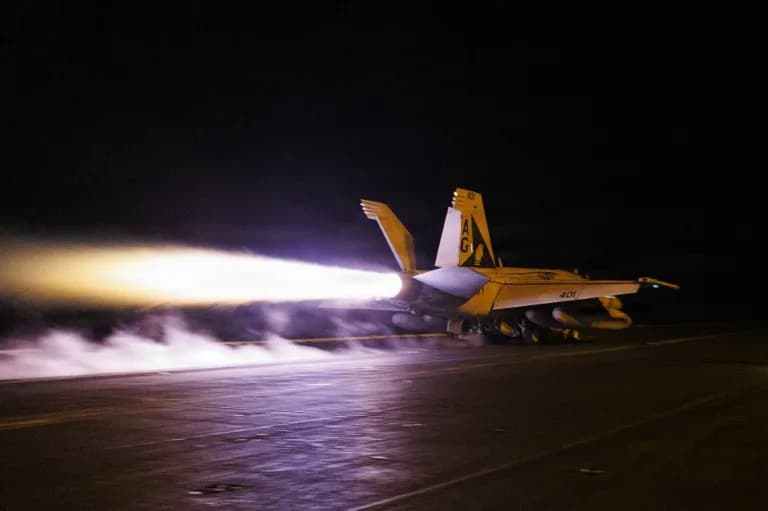
This US Navy handout photograph shows an F/A-18E Super Hornet launching from the flight deck of Nimitz-class aircraft carrier USS George H.W. Bush (-)
Pakistan, acting as a mediator, said on Thursday that diplomatic talks between Iran and the United States remain ongoing despite a fresh round of strikes and counterstrikes across the Middle East that have raised fears of wider escalation.
Diplomatic Efforts and Mediation
Pakistan’s foreign ministry spokesman Tahir Andrabi told reporters that “negotiations between parties are ongoing, particularly on the Strait of Hormuz and to de-escalate.” Islamabad said it helped broker an agreement that created a path for technical talks toward a more lasting settlement and that it was doing its utmost to bring parties back to the negotiating table.
Recent Military Strikes and Fallout
The United States said it had carried out a “heavy wave of strikes” against dozens of Islamic Revolutionary Guard Corps (IRGC) targets, including command centres, in retaliation for recent attacks that struck Jordan and other locations. Iran’s Revolutionary Guards reported that three of its members were killed in Zanjan province, and state media cited strikes in Khuzestan province and on Qeshm island.
Jordan reported intercepting five missiles for a second consecutive day, with no casualties reported. Kuwait said an Iranian strike hit a building belonging to a Chinese company in its north, killing one worker and causing significant damage.
Maritime Routes and Regional Security
Fighting has again disrupted critical shipping lanes: Iran briefly closed the Strait of Hormuz earlier this month, and the IRGC said two oil tankers attempting to transit the strait with US escort turned back after one vessel caught fire. In response to growing threats in the Red Sea, Saudi Arabia announced a maritime defence alliance of 14 regional countries to protect navigation through the strategic Bab al-Mandab Strait.
Attack At Egyptian Port
For the first time since the conflict intensified in February, Egypt suffered a drone strike at a Mediterranean gas import hub that sparked a fire and damaged two vessels. Authorities confirmed a drone caused the blaze and said no group had claimed responsibility; Yemen’s Houthi rebels denied involvement. Iran’s foreign minister suggested the incident could be a false-flag operation, while Egypt launched an inquiry and called for international cooperation to halt the escalation.
Regional Reactions And Next Steps
With strikes reported across Iran, missile intercepts over Jordan, a deadly hit in Kuwait and attacks on shipping and port infrastructure, tensions remain high. Pakistan continues to press for technical negotiations focused on de-escalation, especially around the Strait of Hormuz, while regional states pursue defensive measures to protect maritime trade. The situation remains fluid and diplomatic channels appear to be running alongside military responses.
Key quote: "Negotiations between parties are ongoing, particularly on (the) Strait of Hormuz and to de-escalate," — Tahir Andrabi, Pakistan Foreign Ministry spokesman.
Help us improve.





















