
SpaceX’s Starship second stage remained afloat in the Indian Ocean five days after Flight 13, following what the company called its "softest splashdown" there to date. The 124-metre vehicle launched from Starbase in Texas; the Super Heavy booster landed in the Gulf of Mexico while the upper stage traveled more than 16,000 km before splashing down. Flight 13 also deployed 20 Starlink V3 satellites, and SpaceX plans to ready Starship for NASA’s Artemis III by 2027, with further lunar mission support planned.
SpaceX’s Starship Still Afloat in Indian Ocean Five Days After Flight 13 — 'Softest Splashdown' Yet
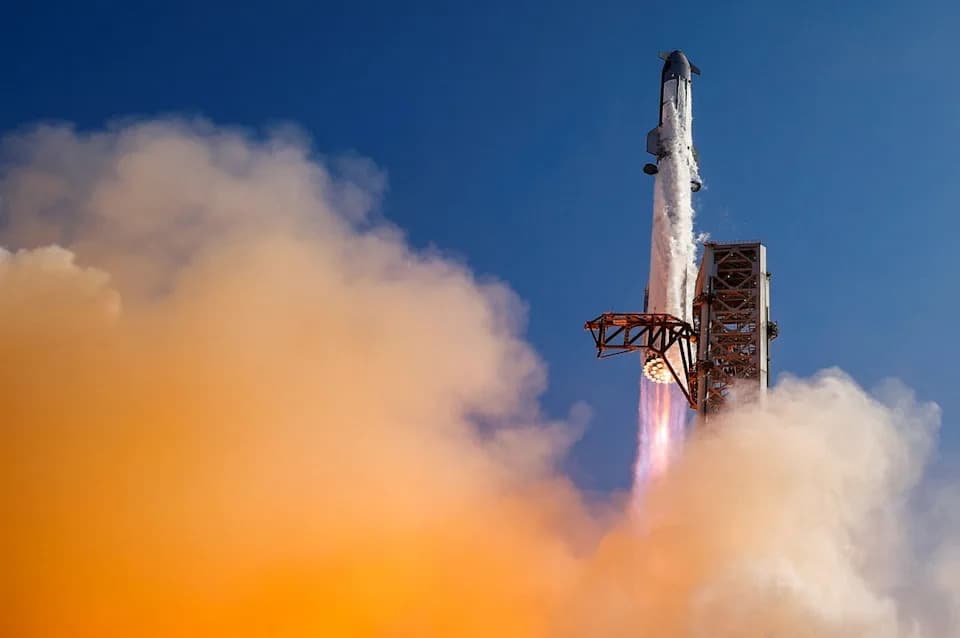
The SpaceX Starship and Super Heavy Booster lift off on its 13th test flight on 24 July, 2026 (Reuters)
SpaceX’s Starship second stage remained afloat in the Indian Ocean five days after it splashed down following Flight 13, a milestone test the company called its "softest splashdown" in that region.
Flight Overview
The 124-metre Starship system launched from SpaceX’s Starbase facility in southern Texas on 24 July 2026 as the 13th major test of the vehicle. The Super Heavy first-stage booster separated and splashed down in the Gulf of Mexico shortly after liftoff, while the upper-stage Starship traveled more than 16,000 kilometres before coming down in the Indian Ocean off Western Australia.
Why This Test Mattered
SpaceX described Flight 13 as its most successful test of the system to date because the second stage survived re-entry and splashdown intact, demonstrating a key step toward full reusability. A video shared by SpaceX CEO Elon Musk on X showed the rocket floating at sea, and he said the landing accuracy was high enough that the vehicle "would have been caught by the tower arms."
Elon Musk on X: "The ship landing was precise, meaning that it would have been caught by the tower arms. Unless we discover problems after mission data review, SpaceX will attempt to catch the ship with the tower on the next flight."
Other Mission Highlights
During Flight 13, SpaceX also deployed 20 next-generation Starlink Version 3 satellites, demonstrating Starship’s ability to place many payloads quickly into orbit and expand the company’s space-based internet constellation.
Next Steps
No date has been announced for Flight 14. SpaceX aims to have Starship operational by 2027 in time to support NASA’s Artemis III mission, which would return astronauts to the lunar surface later this decade. Upcoming objectives include performing orbital rendezvous and docking with another Starship vehicle; if those steps proceed successfully, Artemis IV could use either Blue Origin’s Blue Moon lander or SpaceX’s Starship HLS to transfer astronauts from lunar orbit to the Moon, with an estimated launch currently targeted for early 2028.
Inspection and recovery teams will review mission data and assess the floating upper stage for damage before any recovery attempt or future reuse. The successful soft splashdown and satellite deployments mark meaningful progress toward SpaceX’s long-term goals of frequent, reusable heavy-lift launches—critical for Mars ambitions and lunar exploration alike.
Help us improve.





















