
Chile has declared a preventive hantavirus alert across 13 of 16 regions after a sharp rise in deaths. Officials report 46 infections and 18 deaths this year (39% fatality) versus 44 infections and eight deaths in 2025 (18%). The alert expands surveillance, speeds resource allocation and permits hiring specialists. Experts cite environmental changes and greater human exposure to rodent reservoirs; no vaccine or specific antiviral treatment exists.
Chile Issues First Nationwide Preventive Hantavirus Alert After Fatality Rate Rises
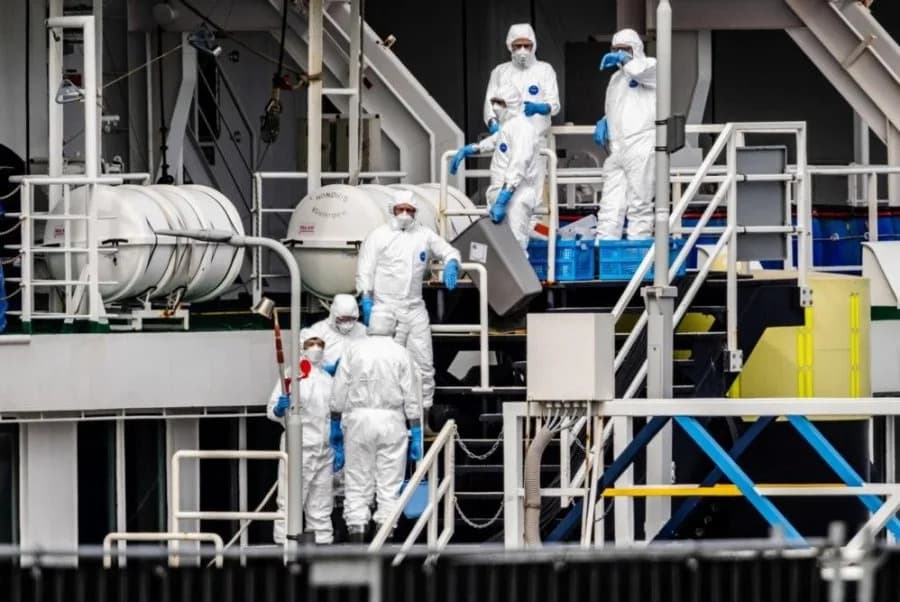
Staff members prepare for the cleaning of the cruise ship MV Hondius after its arrival in the Port of Rotterdam, the Netherlands, in May. Several passengers on the Hondius were infected with the hantavirus. Three people on board died. File Photo by Jeffrey Groeneweg/EPA
Chile's Health Ministry has issued its first-ever nationwide preventive alert for hantavirus, covering 13 of the country's 16 administrative regions, to bolster the health system's response amid a sharp rise in the virus' fatality rate and the concurrent circulation of other infectious threats such as dengue, yellow fever and avian influenza.
Current Situation
As of last week authorities recorded 46 confirmed infections and 18 deaths — a case fatality rate of 39%. By comparison, Chile reported 44 infections and eight deaths in 2025, an 18% fatality rate.
What the Alert Does
The preventive alert is designed to strengthen epidemiological surveillance, speed up resource allocation, permit the hiring of specialized personnel, reinforce health controls and enable direct procurement of essential supplies. The ministry says it is closely tracking virus behavior and disease progression but does not currently classify the situation as an epidemic.
"We are very concerned and actively addressing the situation because this year the virus' fatality rate has increased," said Deputy Health Minister for Public Health Dr. Alejandra Pizarro.
Regional And International Context
The Pan American Health Organization (PAHO) has maintained an epidemiological alert since December 2025 because of rising hantavirus activity across the Southern Cone. International attention also rose in May after an outbreak aboard the expedition cruise ship MV Hondius — a voyage that began in Ushuaia, Argentina, and visited parts of Argentina and Chile — which led to an international investigation led by the World Health Organization (WHO) and resulted in three fatalities. The WHO assessed that the event did not pose a pandemic risk but renewed global focus on hantavirus surveillance.
Why Cases Are Rising
Infectious disease specialist María Luz Endeiza of the University of the Andes School of Medicine said the increase likely reflects a combination of environmental changes and greater human exposure. Hantavirus is endemic in Chile and is carried by the long-tailed pygmy rice rat, which sheds virus in saliva, urine and feces, contaminating the environment.
Allan Mix, director of the Emergency Medicine Specialty Program at Diego Portales University, pointed to shifting rainfall patterns — droughts followed by heavy rains — that alter the flowering cycle of native plants, boosting food availability and triggering rodent population booms. He also noted that more outdoor recreation and expansion of settlements into rodent habitat increase exposure risk.
Clinical Challenges And Public Advice
There is currently no vaccine or specific antiviral treatment for hantavirus disease. Many patients do not seek medical attention until illness has progressed, complicating clinical outcomes. Mix and other experts emphasize that person-to-person transmission is extremely rare, and the virus is not expected to spread across borders in the usual epidemiological sense; natural factors such as the Andes Mountains also limit the rodent's range.
Public health advice includes avoiding contact with rodents and their droppings, sealing homes and food stores against rodents, ventilating and carefully cleaning spaces that may be contaminated (using protective gear), and seeking prompt medical care if symptoms such as fever, muscle aches, dizziness or respiratory distress develop after possible exposure.
Looking Ahead
The preventive alert will give Chile's health system greater flexibility to respond quickly: improving surveillance, reallocating resources, staffing key services, and ensuring supply chains for diagnostics and protective equipment. Authorities say targeted prevention and rapid clinical recognition in affected areas remain the most effective tools to reduce fatalities.
Help us improve.





















