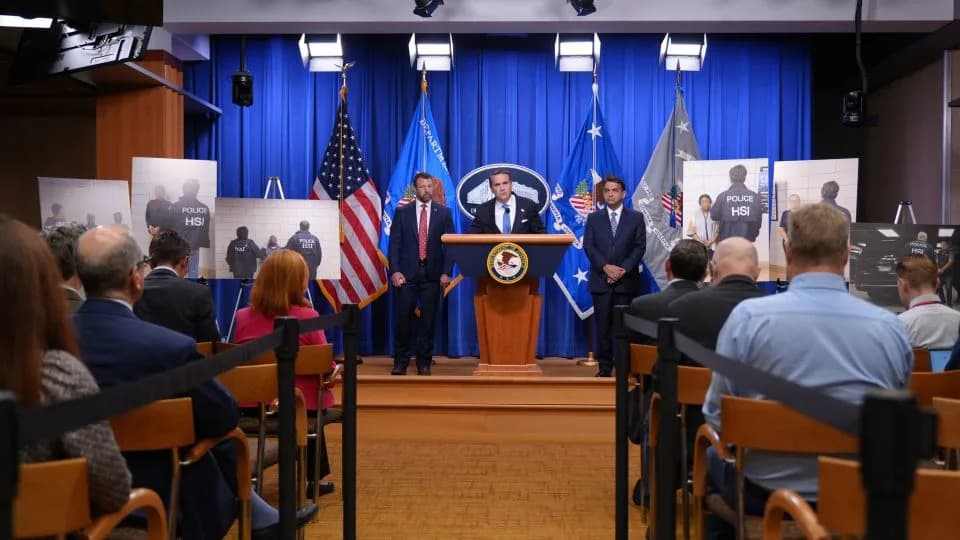
A Reuters review found the Justice Department filed criminal charges against at least 851 people accused of assaulting or impeding federal officers, and about 31% of completed cases in that dataset were dismissed — far above the typical 8% federal dismissal rate. Many prosecutions stemmed from immigration protests, where about 45% of completed cases were dropped. Defendants reported job losses, legal fees and online harassment even after charges were abandoned, and court records suggest internal pressure from Washington lowered prosecutors' threshold for bringing cases.
DOJ Filed 851 Assault Cases Against People Who Clashed With Federal Officers — Nearly One-Third Were Dropped
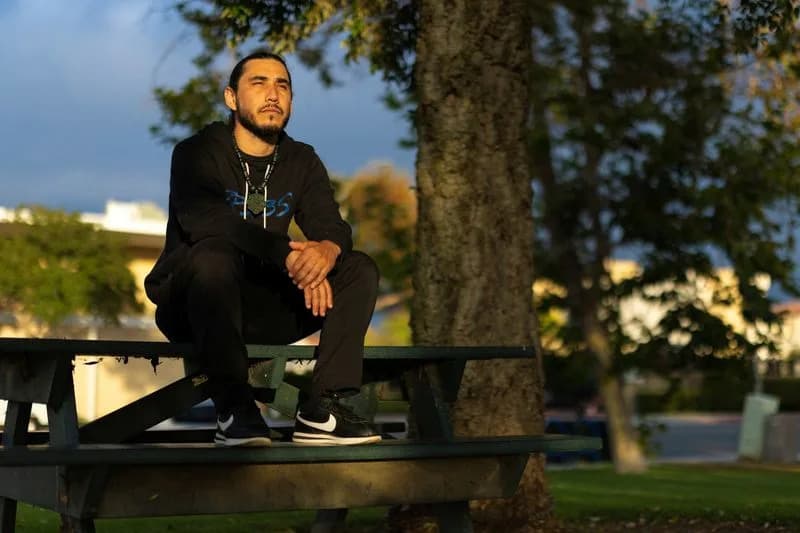
Christian Garcia, who was charged by the U.S. government following an immigration protest only to have all charges dropped, poses for a portrait at a park in Costa Mesa, California, U.S., June 17, 2026. REUTERS/Mike Blake
By Brad Heath, Kristina Cooke, M.B. Pell and Benjamin Lesser
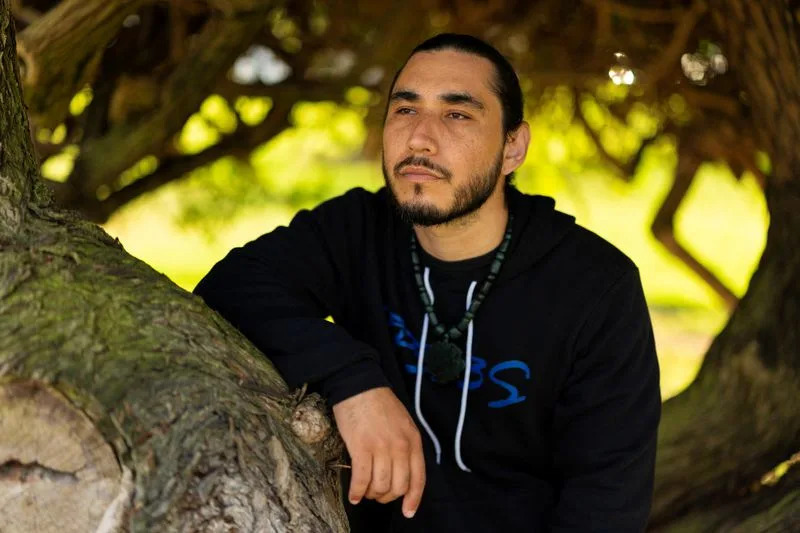
Christian Garcia, who was charged by the U.S. government following an immigration protest only to have all charges dropped, poses for a portrait at a park in Costa Mesa, California, U.S., June 17, 2026. REUTERS/Mike Blake
Christian Garcia says he tossed an empty plastic water bottle toward agents guarding a federal building near Los Angeles during an immigration protest last summer. The bottle, he says, hit no one — the wind blew it back and it struck him — yet agents arrested him, he spent three days in custody and he faced a charge that carried up to a year in jail. Garcia says he lost two jobs after investigators contacted his employers and that an agent never returned a seized phone. Prosecutors later dropped the case without a public explanation.
Christian Garcia, who was charged by the U.S. government following an immigration protest only to have all charges dropped, poses for a portrait at a park in Costa Mesa, California, U.S., June 17, 2026. REUTERS/Mike Blake
A Reuters review of federal court records found the Justice Department under the Trump administration filed criminal charges against at least 851 people accused of assaulting or impeding federal officers, only to abandon prosecutions at an unusually high rate. Of completed cases in that dataset, about 31% ended in dismissal — markedly higher than the roughly 8% dismissal rate typically seen across federal criminal cases, according to the Federal Judicial Center.
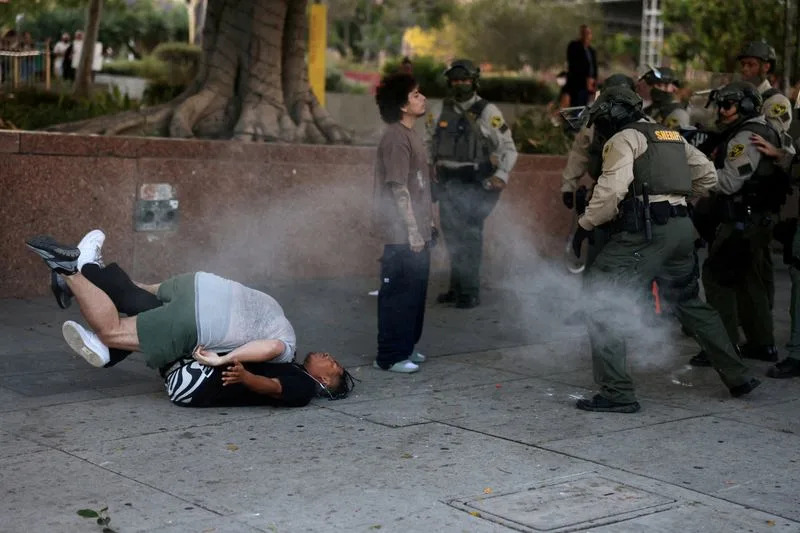
FILE PHOTO: Law enforcement officers and protestors clash during a protest against federal immigration sweeps, in Los Angeles, California, U.S., June 11, 2025. REUTERS/David Swanson/File Photo
Scope, Patterns and Outcomes
Reuters collected records on every person charged with assaulting or impeding federal officers between January 2025 and March (the period covered by the review) and followed the outcomes. Many prosecutions grew out of the administration's intensified immigration enforcement, while others involved assaults on postal workers and other federal employees. Prosecutors dropped roughly 45% of the 86 completed cases tied to immigration protests, Reuters found.
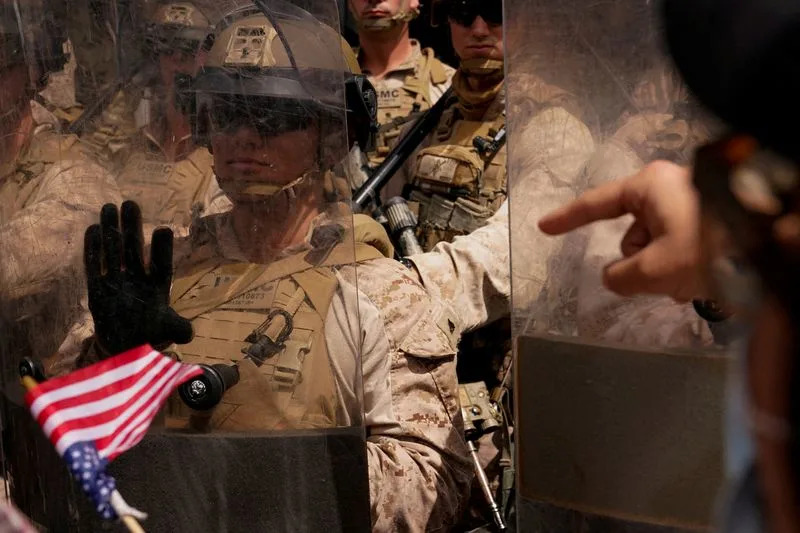
FILE PHOTO: A person gestures towards U.S. Marines as people protest against U.S. President Donald Trump's policies and federal immigration sweeps during a No Kings Day demonstration in Los Angeles, California, U.S., June 14, 2025. REUTERS/David Ryder/File Photo
Prosecutors secured convictions in 65% of the 481 completed cases Reuters examined; most of the non-convictions were dismissals initiated by prosecutors. The remaining cases in the 851-person set were still pending at the time of the review.
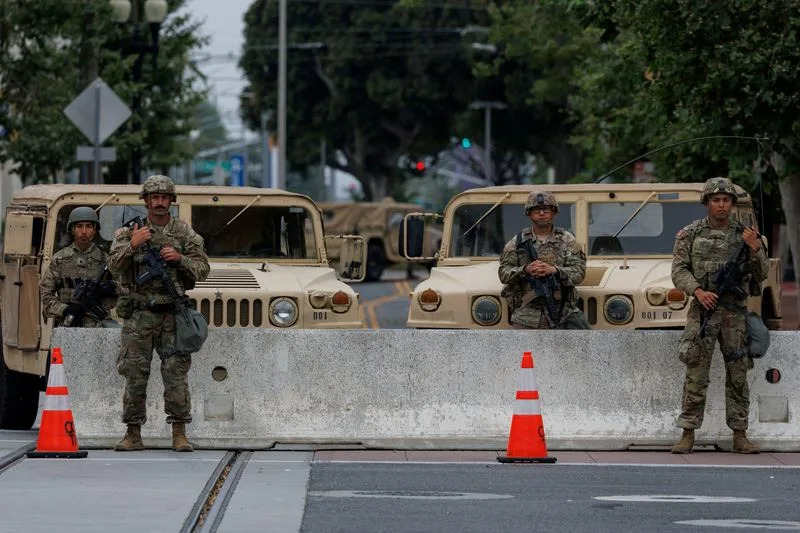
FILE PHOTO: U.S. National Guard troops are posted outside the Ronald Reagan Federal building in Santa Ana, California, U.S. June,12, 2025. REUTERS/Mike Blake/File Photo
Human Costs
Even when charges were dismissed, the federal arrests carried lasting consequences. Reuters interviewed multiple defendants who said publicized arrests led to job losses, legal bills and online harassment. Lizzie Rose, whose mugshot was posted by Homeland Security after she backed her car into an SUV carrying immigration agents in Minneapolis, says threats forced her to leave her home and send her children to live with their father. Garcia said, "My whole life changed in one day."
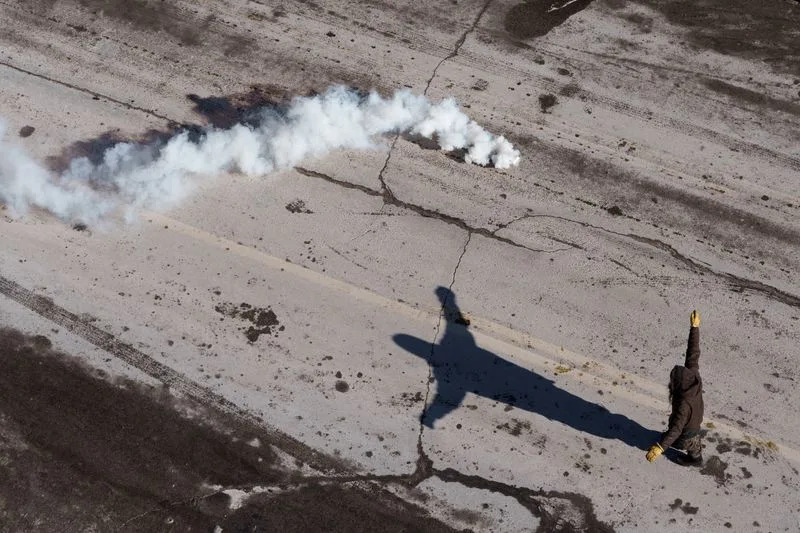
FILE PHOTO: Teargas drifts through the air as a demonstrator holds up his arms and shouts at federal agents near the site where a man identified as Alex Pretti was fatally shot by federal agents trying to detain him, in Minneapolis, Minnesota, U.S., January 24, 2026. REUTERS/Tim Evans/File Photo
Examples That Raised Questions
The review highlights a range of incidents — from violent assaults that would typically merit prosecution to low-level or disputed encounters that historically might not have. Examples include:
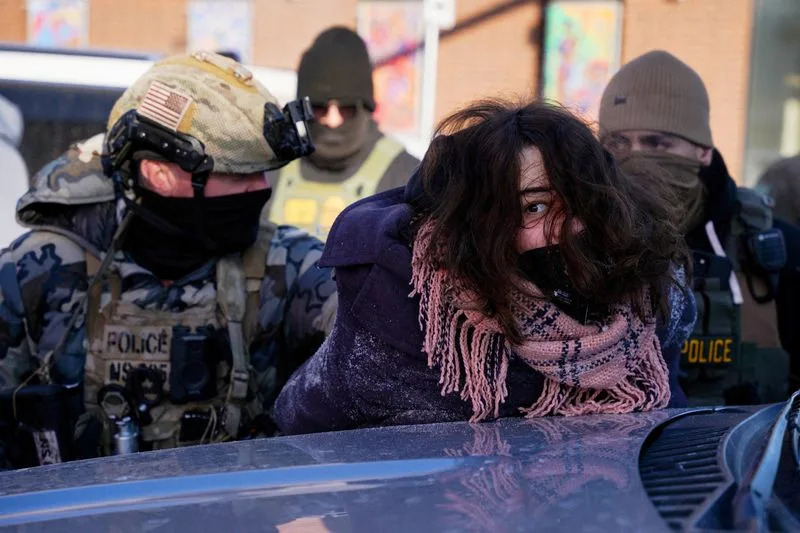
FILE PHOTO: A person is detained at the scene of a shooting involving federal immigration agents in Minneapolis, Minnesota, U.S., January 24, 2026. REUTERS/Seth Herald/File Photo
- a woman who reversed an SUV into an agent's vehicle at low speed;
- a man who challenged an agent to a boxing match but did not throw punches;
- a protester who jumped onto a Homeland Security vehicle;
- a man who threw a sandwich that bounced off an agent's body armor;
- a Minnesota case in which a woman is accused of biting off the tip of an agent's finger, an incident described as serious and likely prosecutable under any administration.
Pressure From Washington
Court records and interviews indicate the Justice Department lowered the threshold for bringing federal assault charges and pressured prosecutors to pursue more cases. Two officials familiar with internal guidance said prosecutors were told last year to notify Washington when they declined such matters, a requirement that officials said contributed to more filings. Acting U.S. Attorney General Todd Blanche told immigration officials in Arizona the department would prosecute any assault on an officer "no matter what."
Credibility And Courtroom Consequences
Prosecutors' aggressive filing strategy sometimes backfired when video or body-camera footage contradicted agents' accounts. In Chicago, prosecutors dropped assault charges against Luci Mazur after video evidence undercut an agent's affidavit. In another case, federal prosecutors were sharply criticized by a judge for how they handled a grand jury and jury selection in the case of Michael Rabbitt, a local official accused of obstructing an ICE vehicle. The judge said prosecutors had stacked the grand jury and improperly suggested jurors could rely on the prosecutor's credibility rather than evidence. The Justice Department later dismissed all charges and did not oppose a defense request for partial legal-fee reimbursement.
Former prosecutors and law enforcement officials warned that bringing weak or poorly supported cases risks eroding the credibility judges traditionally extend to government lawyers. "Moving so fast that they don't have time to do their job effectively" was one former prosecutor's assessment of the high dismissal rate.
What Officials Say
A Department of Homeland Security spokesperson said leadership has been clear that "anyone who assaults or obstructs law enforcement will be prosecuted to the fullest extent of the law." Justice Department spokesperson Kiersten Pels said prosecutors should hold people accountable but added that "if there are mitigating factors identified in a case, then prosecutors must also act appropriately to inform the court, and in some cases downgrade or drop charges."
"I do believe deeply in the presumption of regularity and that most government attorneys are doing the best they can... That trust has been broken." — Judge April Perry
Reporting for this article included Reuters' review of thousands of court files and interviews with more than 15 investigators, prosecutors and suspects. The reporting and review show a marked increase in federal filings for clashes with officers and underscore the personal and legal consequences for people whose cases were later dropped.
Help us improve.