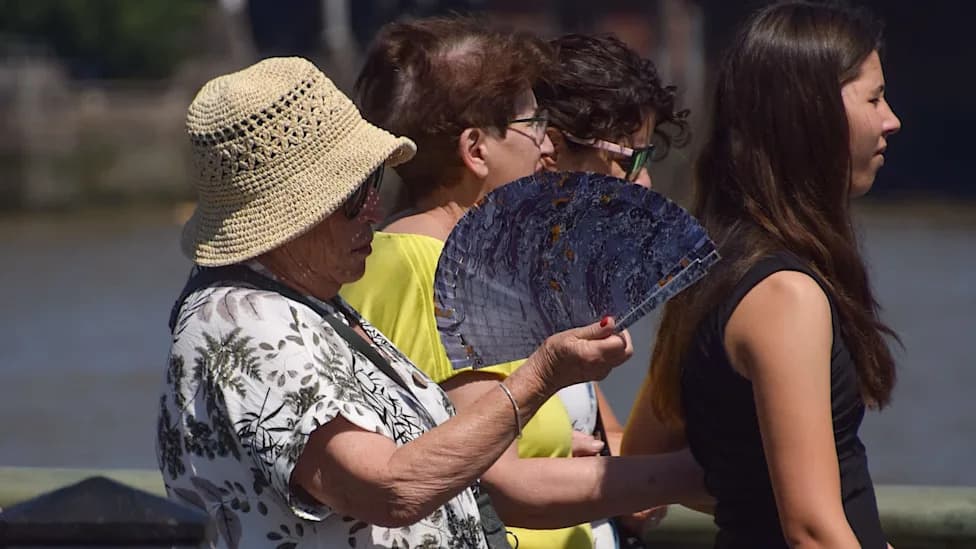
Elisabeth Moyer explains how long-predicted effects of fossil-fuel burning are now manifesting: overall warming that is more uniform (nights and winters warm faster), heavier but less frequent precipitation events, and increased wildfire risk as vegetation dries. Warmer air holds more moisture, driving intense downpours and longer dry spells between storms, while ocean thermal expansion guarantees some degree of sea level rise. Rapid change threatens infrastructure for billions, so coordinated adaptation and mitigation are urgent.
Warm Temperatures — Not Just Heat Waves — Are Sending a Clear Message
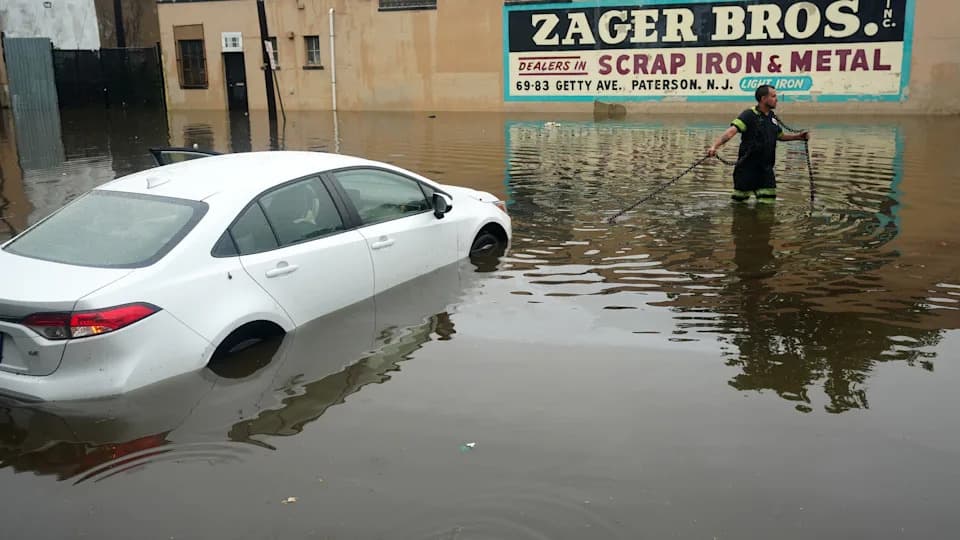
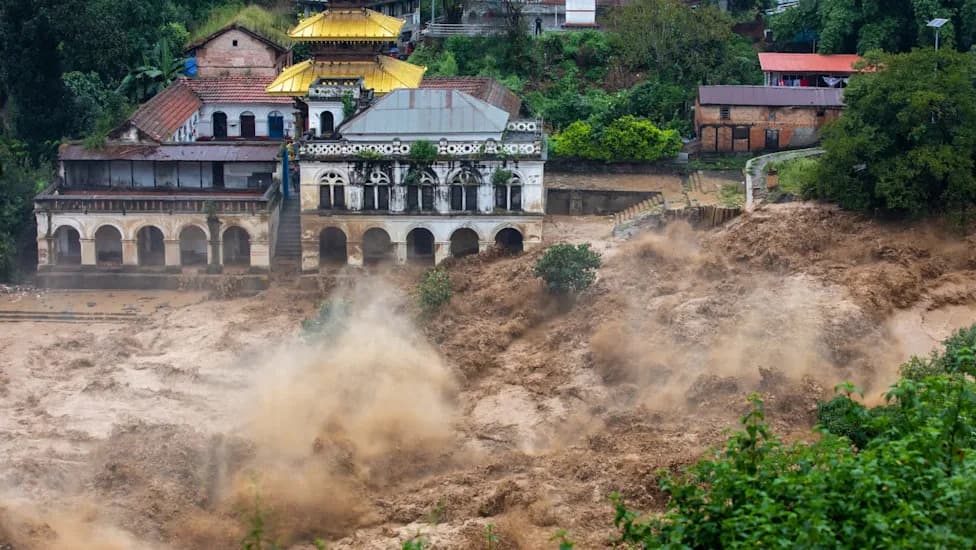
Pulling out a vehicle stuck in flood water on July 28, 2026, in Paterson, New Jersey.
In 1896 a Swedish scientist warned that burning coal would warm the planet. By 1912 Popular Mechanics even celebrated that rising carbon dioxide might bring “milder breezes” to future generations. By the 1970s public sentiment had shifted from optimism to concern, and now the changes forecast more than a century ago are arriving at scales people can feel.
Why Earth Is Not the Moon
When I teach a “Climate Foundations” course at the University of Chicago, I ask students: why isn’t Earth like the Moon? Both bodies receive roughly the same sunlight, yet the Moon swings from blistering daytime heat to frigid nights. Earth’s atmosphere—thin though it is—redistributes heat and contains greenhouse gases (mainly carbon dioxide and water vapor) that trap outgoing infrared radiation. That trapping changes how the planet sheds heat: rather than simply radiating energy to space, Earth loses much of its heat through evaporation and the movement of moist air.
Warming Makes Temperatures More Uniform
Adding more carbon dioxide makes Earth even less moon-like. Temperatures rise overall, but warming is not uniform: colder regions warm faster than warmer ones, nights warm faster than days, and winters warm faster than summers. These are long-term shifts rather than isolated cold snaps or brief heat waves that attract immediate attention. The result can lower some heating bills but it undermines winter recreation and natural ice formation in places that used to reliably freeze.
More Rain — But Also More Dryness
Warmer temperatures increase both evaporation and the atmosphere’s capacity to hold moisture (roughly 6–7% more water per degree Celsius). Climate models typically project global average precipitation to rise on the order of about 1–2% per °C of warming. The combination of faster evaporation and greater moisture capacity means precipitation events tend to be more intense when they occur, but there are often longer dry intervals between storms. That physics explains the apparent paradox of more frequent flash floods alongside drier soils and longer droughts.
Wildfires: Bigger, Hotter, and Farther Afield
Warmer air also dries vegetation more effectively, increasing forest flammability. Longer fire seasons, larger blazes, and fires in regions that historically were less prone to burning are becoming more common. For example, smoke from large fires in central Canada has reached metropolitan areas—Chicago, New York, Washington, D.C.—that once rarely experienced such air quality impacts. Recent summer fires in Western Europe, including large blazes near Bordeaux and in Spain, highlight how heat and drought combine to produce compound risks.
Sea Level Rise and Slow-Onset Changes
Some changes unfold slowly but are effectively locked in by physics. Warmer water expands, so oceans rise even in the absence of additional ice melt. That thermal expansion, together with melting ice, raises long-term risks for coastal communities and infrastructure. Planning for future generations means recognizing that certain places—beachfront lots in low-lying Florida, parts of New Orleans—face growing hazards.
What This Means for Society
These developments are alarming but not inevitable disasters. Earth has experienced higher CO2 and warmer conditions in its distant past, and life persisted. What is different now is the speed of change and the fragility of the human systems that feed and shelter more than eight billion people. Faster, coordinated planning and adaptation—alongside reductions in greenhouse gas emissions—will reduce harm and increase resilience.
Elisabeth Moyer is an Associate Professor in the Department of the Geophysical Sciences at the University of Chicago, a former director of the university’s Center for Robust Decision-making on Climate and Energy Policy, and a faculty affiliate of the Institute for Climate and Sustainable Growth.
Originally published at USA TODAY.
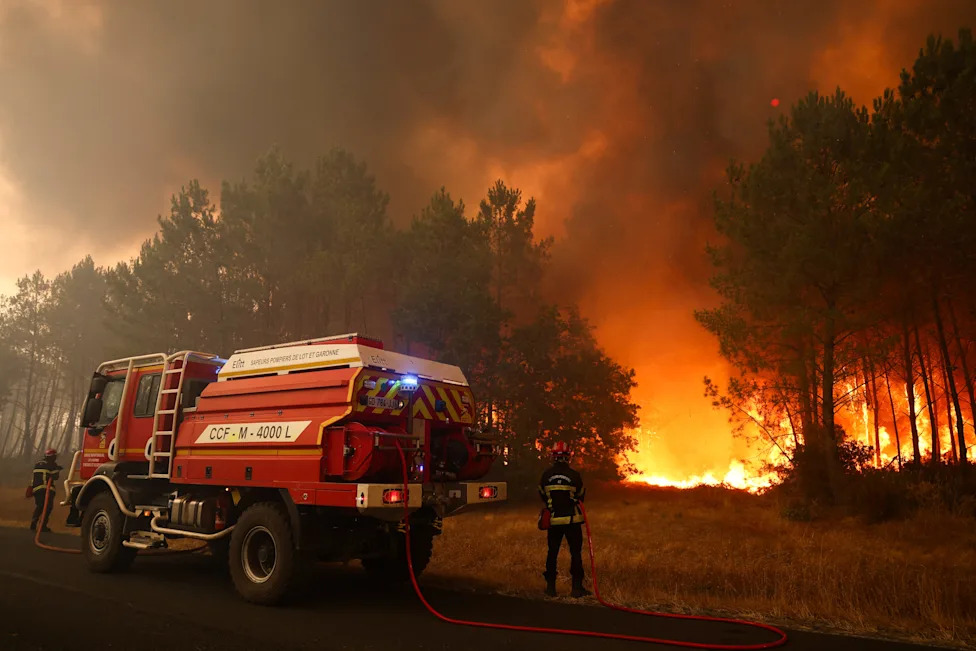
Firefighters continue to battlemassive wildfiresthreatening the French city of Bordeaux while crews in Spain struggled to control a series of forest blazes raging since last week, the result of a blisteringly hot and dry summer in Western Europe.Firefighters try to extinguishing fires burning trees using a wildland water truck near Le Porge, southwestern France on July 23, 2026.(ROMAIN PERROCHEAU, AFP via Getty Images)
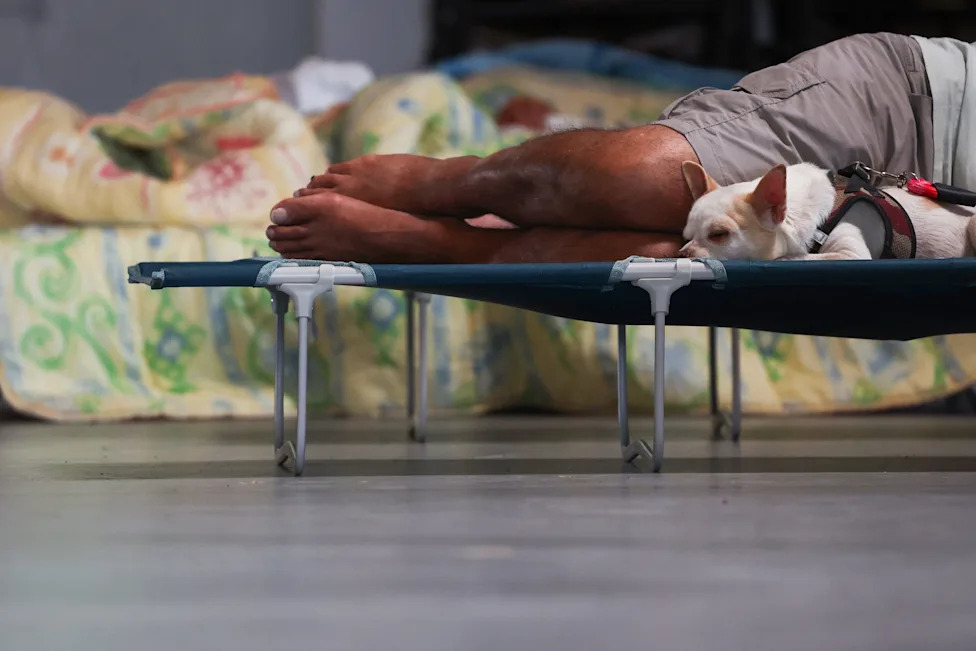
A person rests with its dog in a camp bed at the Gerard Blanc festival hall in Le Porge, southwestern France on July 23, 2026, following a wildfire and the evacuation of the residents.(ROMAIN PERROCHEAU, AFP via Getty Images)
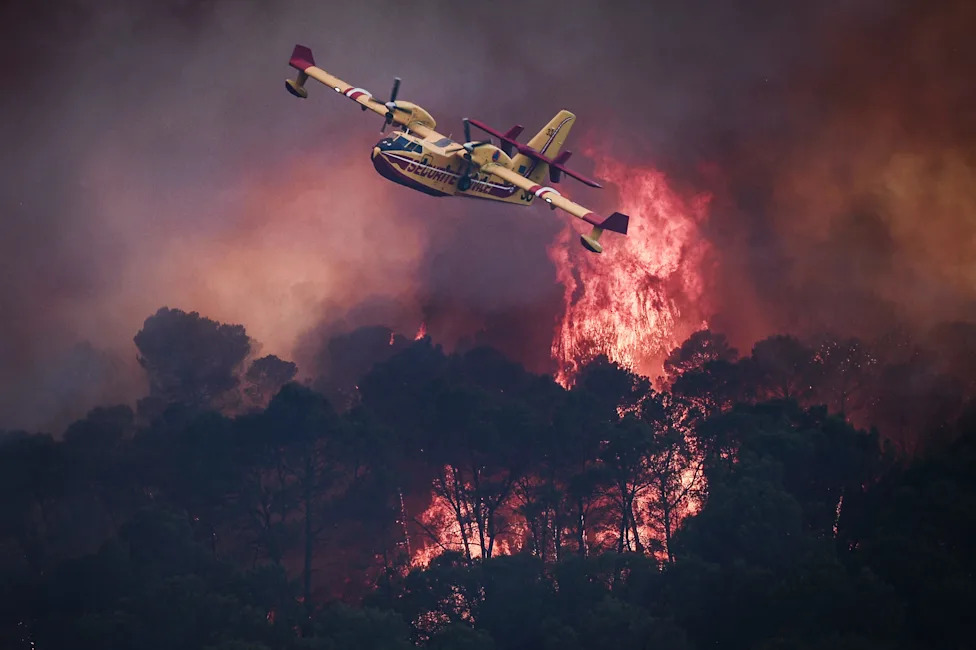
A French Civil Security Canadair CL-415 aircraft flies past flames burning a forest surrounding Cotignac, southeastern France on July 23, 2026 during a wildfire.(THIBAUD MORITZ, AFP via Getty Images)
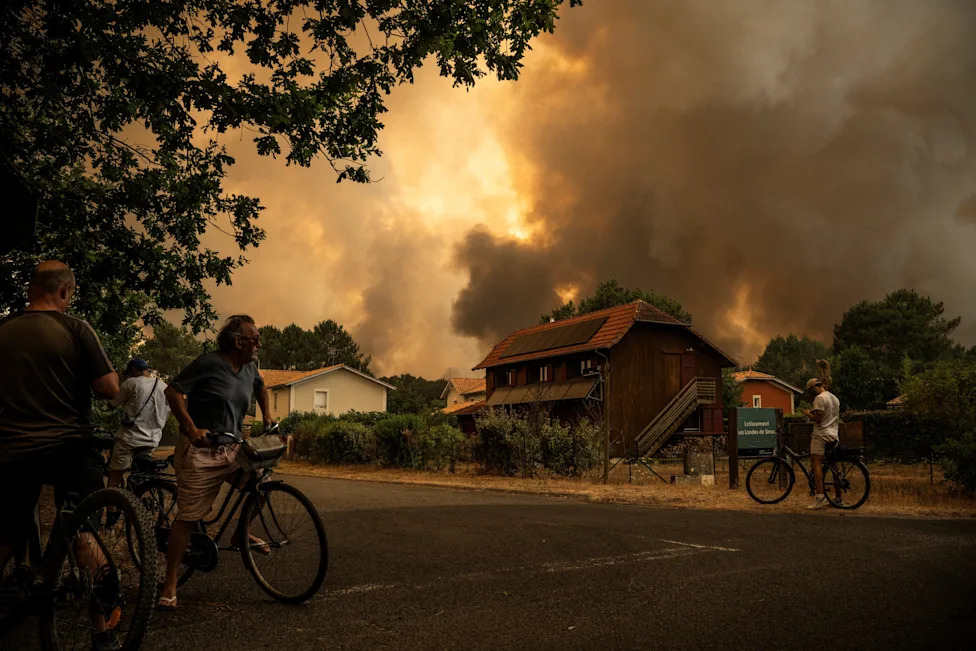
Residents look at smoke rising behind homes during a wildfire near Lege-Cap-Ferret, southwestern France on July 23, 2026.(AFP Contributor#AFP, AFP via Getty Images)
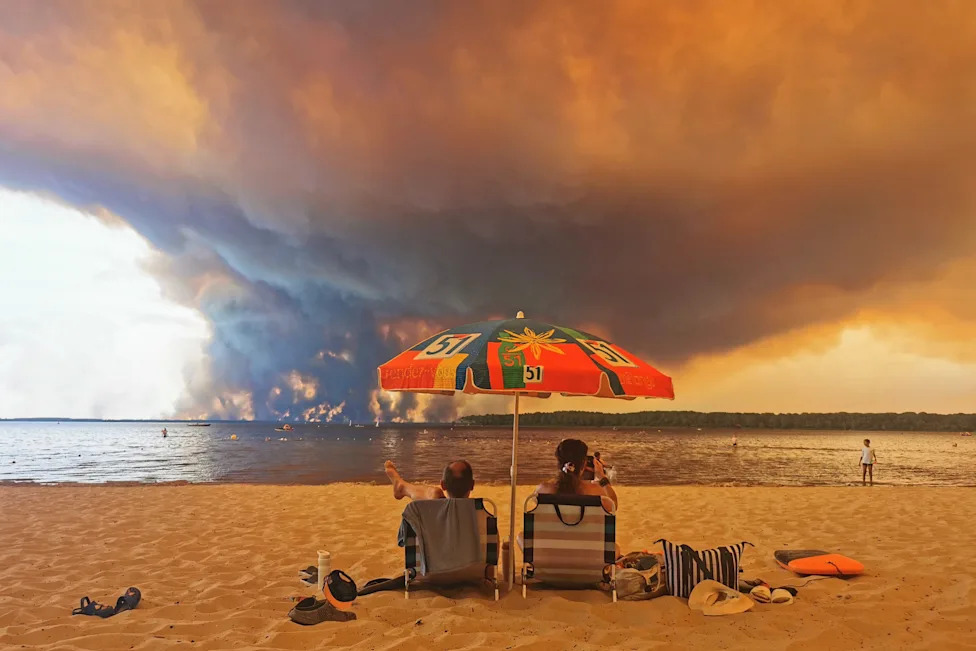
Beach goers sit on the beach of Moutchic in Lacanau, southwestern France on July 24, 2026, as clouds of smoke rise into the sky from a wildfire.(MAXIMILIEN LAMY, AFP via Getty Images)
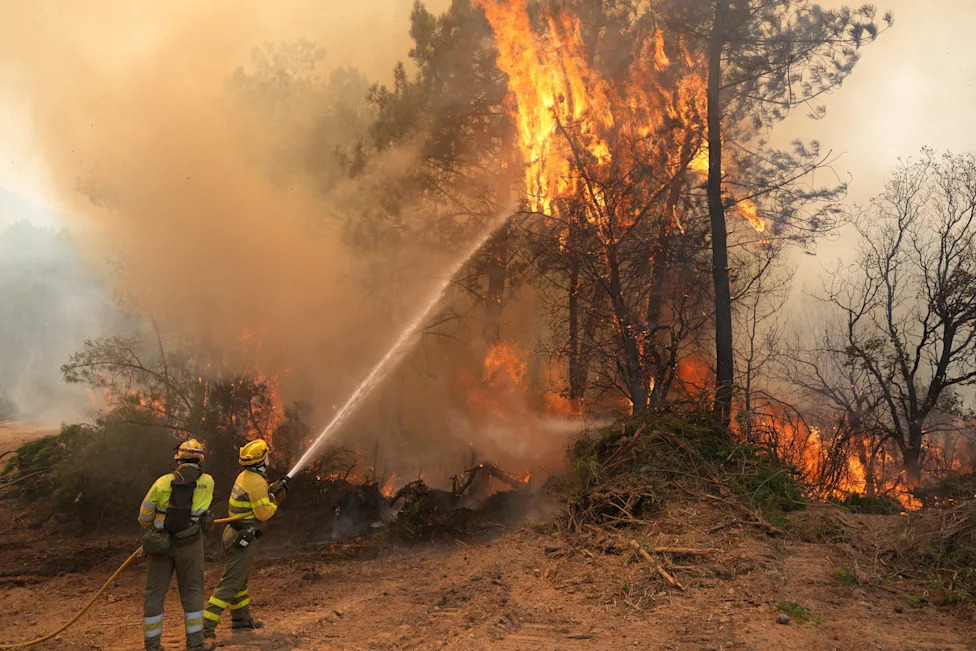
Firefighters battle a fire surrounding La Atalaya residential area in El Tiemblo, 80 kms west of Madrid, on July 25, 2026 amid wildfires that have burned up to 25,000 hectares.(CESAR MANSO, AFP via Getty Images)
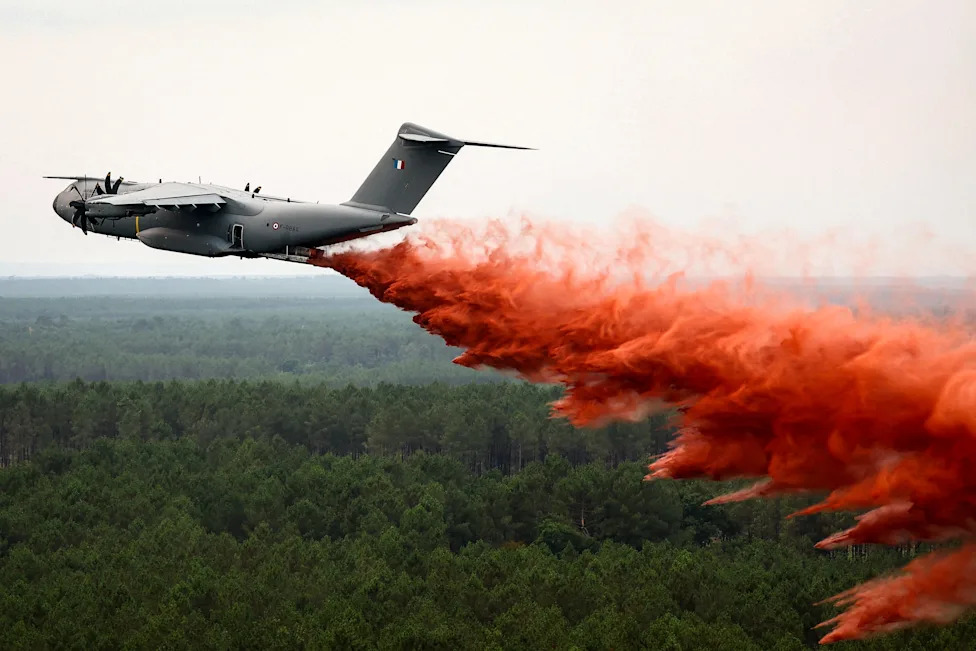
This photograph taken from the French Civil Security rescue coordination helicopter shows a French Air Force military transport A400M aircraft making its first-ever drop of fire retardant over the wildfire near Lacanau, southwestern France, on July 25, 2026. The plane, equipped with a dispensing kit that can release 20 tonnes of water or fire retardant, was deployed by the French government to help fight wildfires.(Pool photo by Abdul Saboor via AFP via Getty Images)
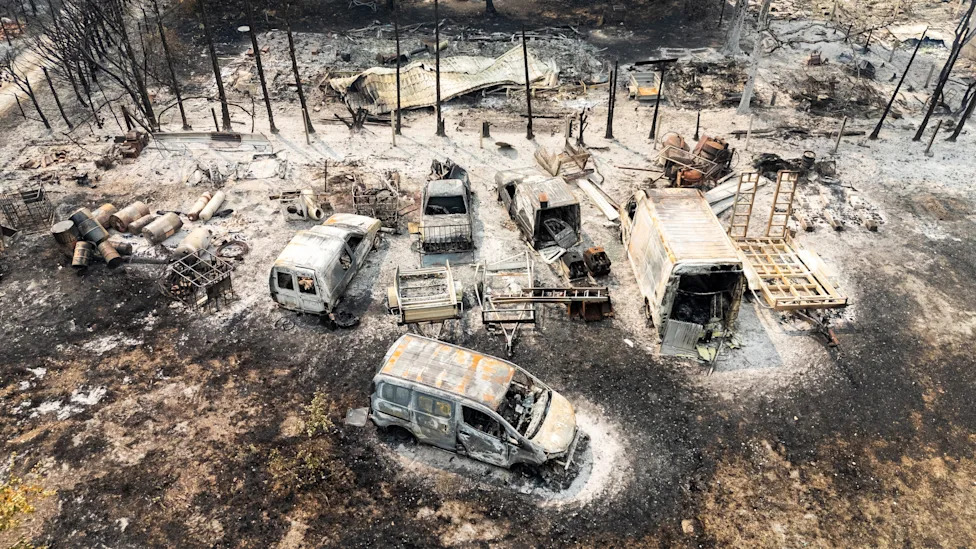
This aerial view shows burned cars following a wildfire in Le Porge, in the Gironde Department, south-western France on July 25, 2026.(FLORIAN PLAUCHEUR, AFP via Getty Images)
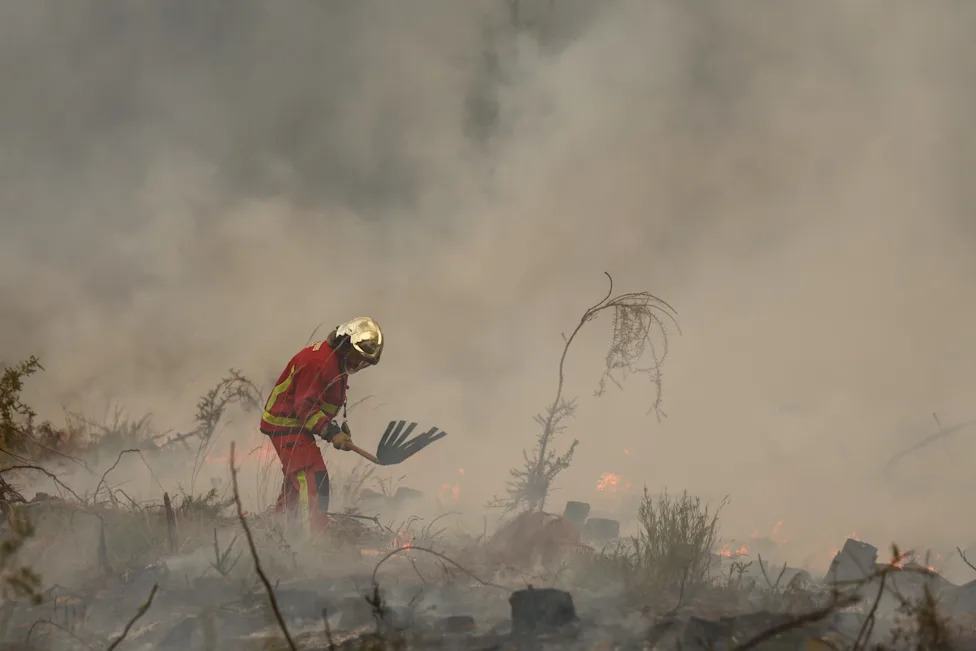
A firefighter of Paris Fire Brigade strikes the smoldering debris with a shovel in Marcheprime west of Bordeaux on July 26, 2026 as a wildfire has been ravaging the forest north of the Arcachon Basin (Gironde) since July 22.(ROMAIN PERROCHEAU, AFP via Getty Images)
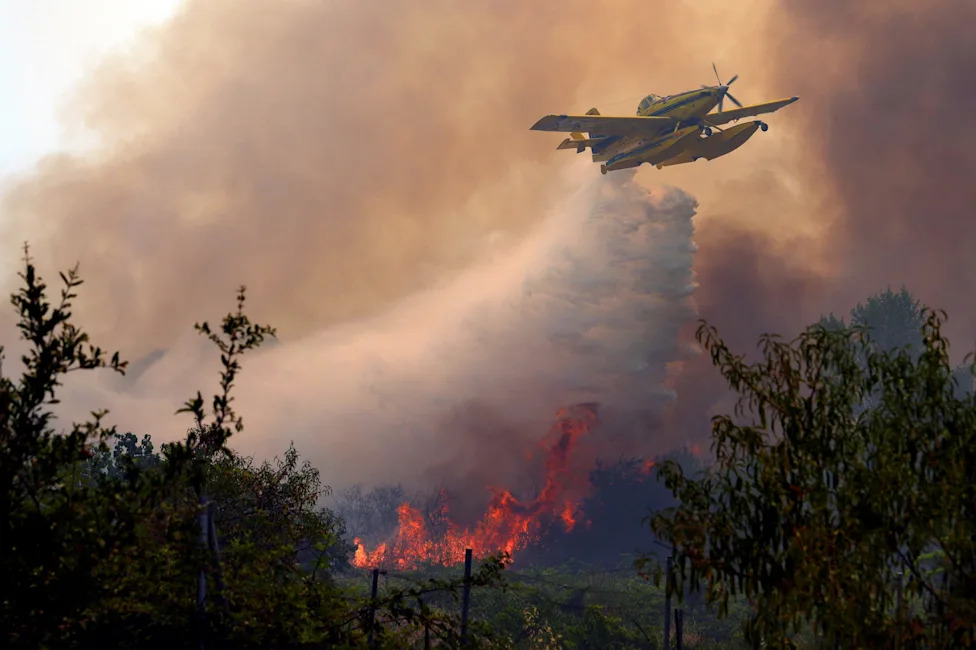
An Air Tractor AT-802F Fire Boss aircraft dumps water over a wildfire burning near San Martin de Valdeiglesias, about 70km west of Madrid, on July 26, 2026.(CESAR MANSO, AFP via Getty Images)
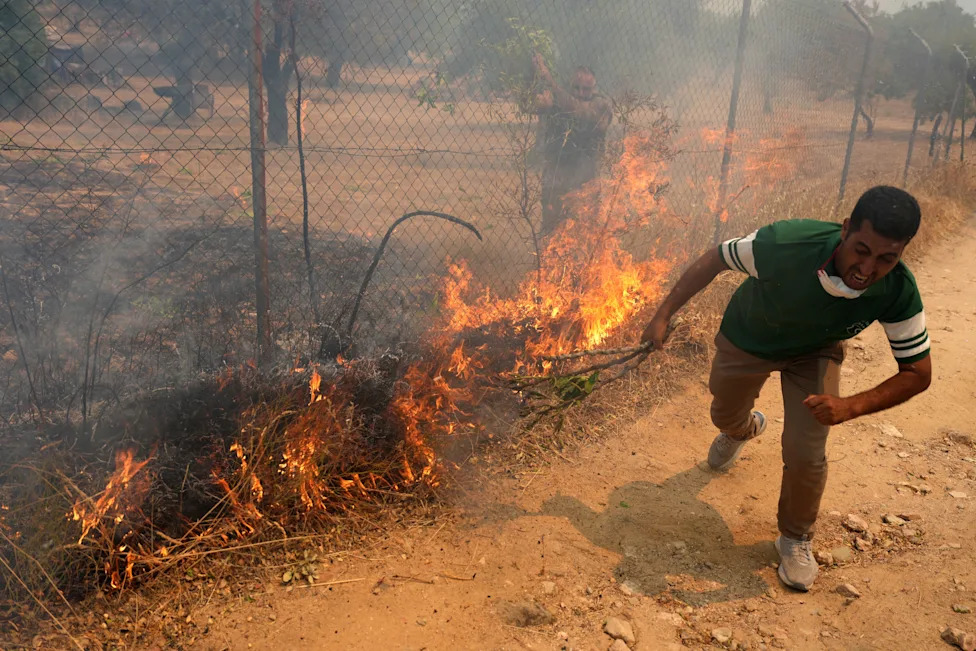
Residents try to put out a fire at their land during a wildfire near San Martin de Valdeiglesias, about 70 kilometers west of Madrid, on July 26, 2026.(AFP Contributor#AFP, AFP via Getty Images)
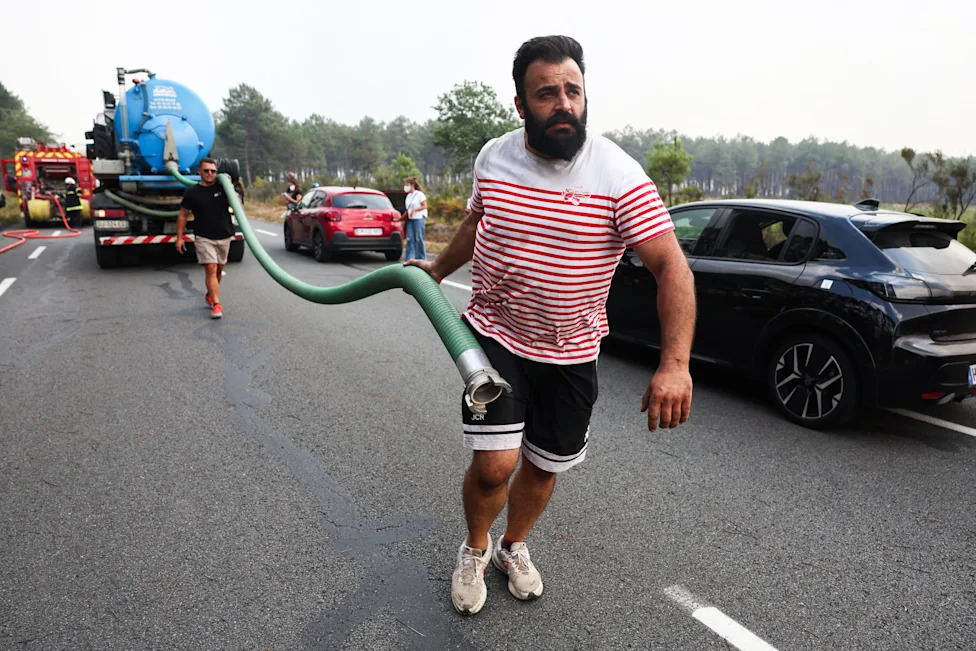
Volunteers hold a hose during a wildfire in a forest near Marcheprime, some 30km from Bordeaux, on July 26, 2026 as a wildfire has been ravaging the forest north of the Arcachon Basin in France.(ROMAIN PERROCHEAU, AFP via Getty Images)
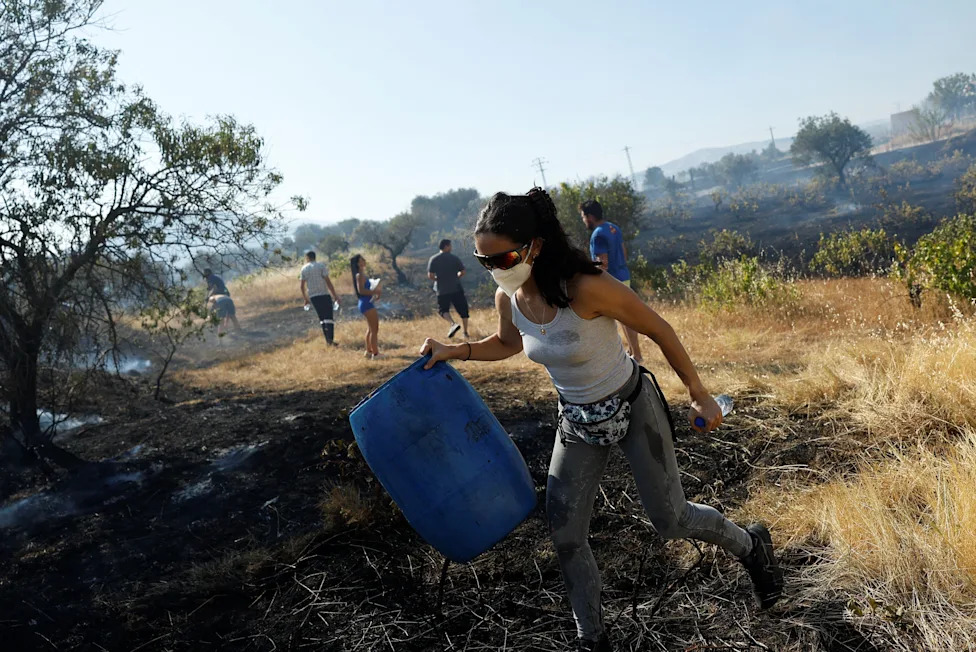
Residents help to water the soil as a fire started in an industrial area of San Martin de Valdeiglesias, about 70km west of Madrid, on July 26, 2026.(AFP Contributor#AFP, AFP via Getty Images)
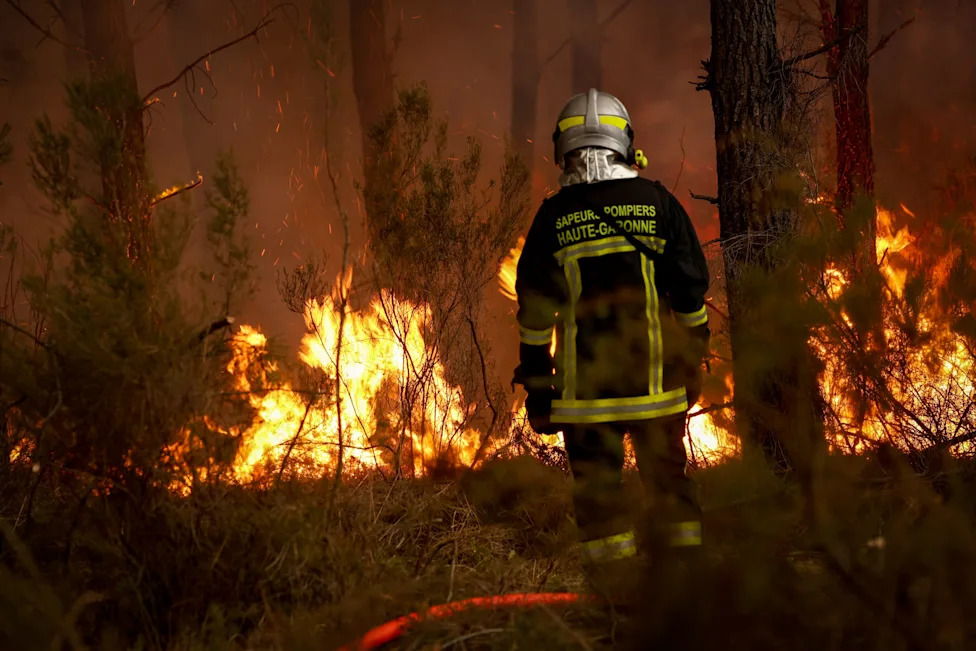
A firefighter stands before flames as a forest fire rages in Saint-Jean-d'Illac, some 30km from Bordeaux, on July 26, 2026 as a wildfire has been ravaging the forest north of the Arcachon Basin in France.(ROMAIN PERROCHEAU, AFP via Getty Images)
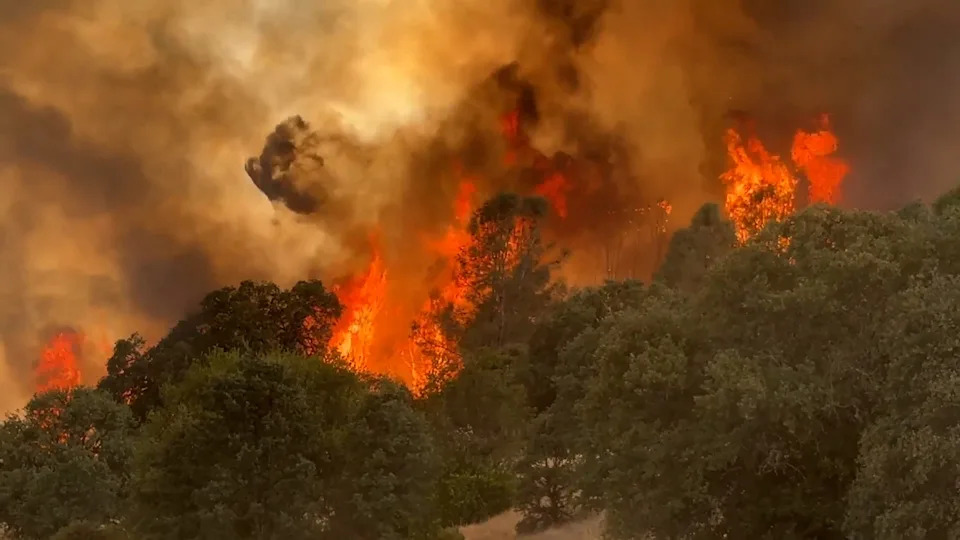
Ground crews worked quickly to suppress the wildfire, named the Rumsey Fire. Around 175 people were assigned by CAL FIRE to fight the blaze.
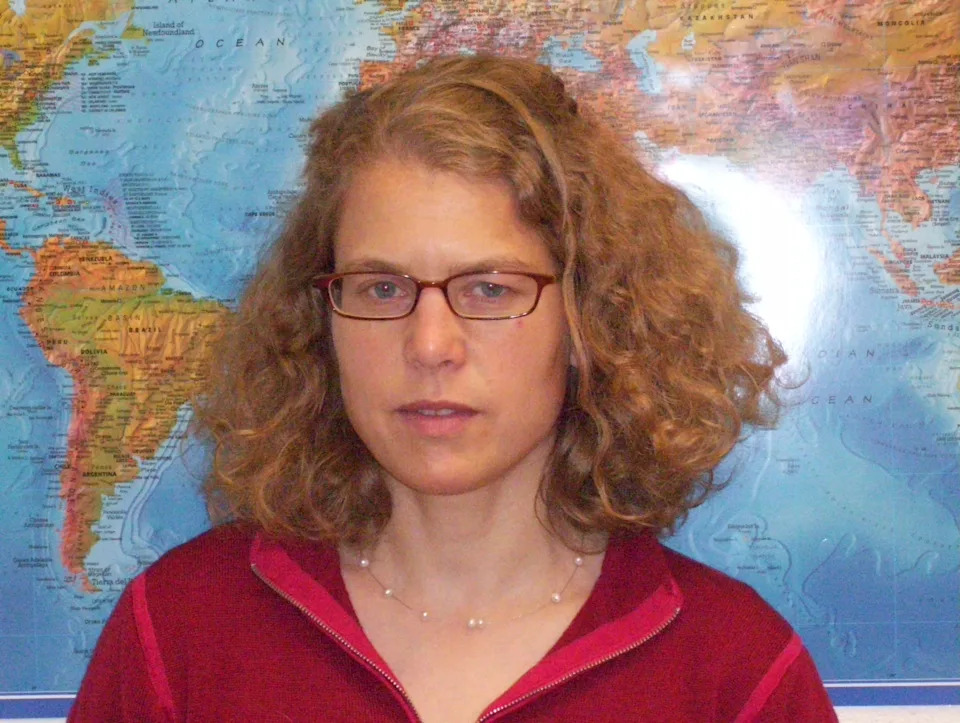
Elisabeth Moyer is an associate professor in the Department of the Geophysical Sciences at the University of Chicago.
Help us improve.