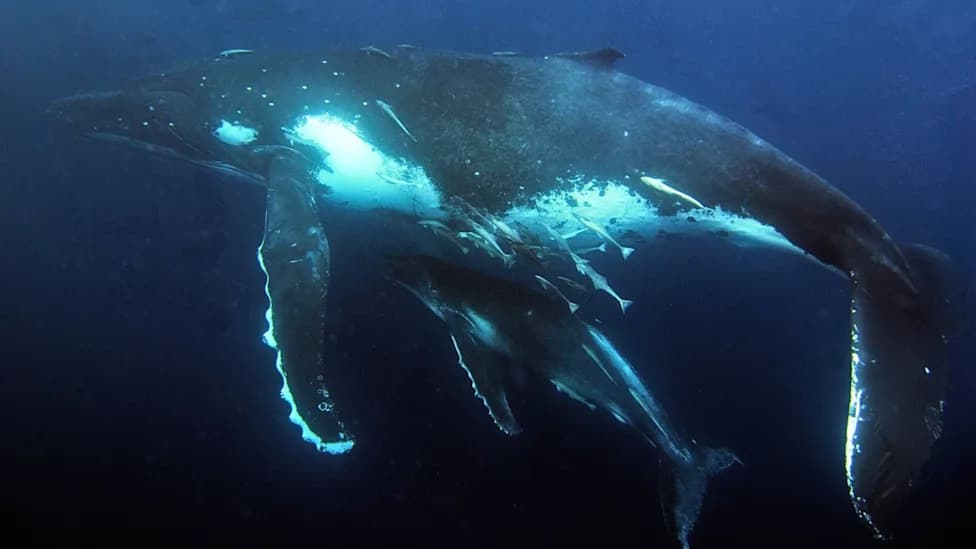
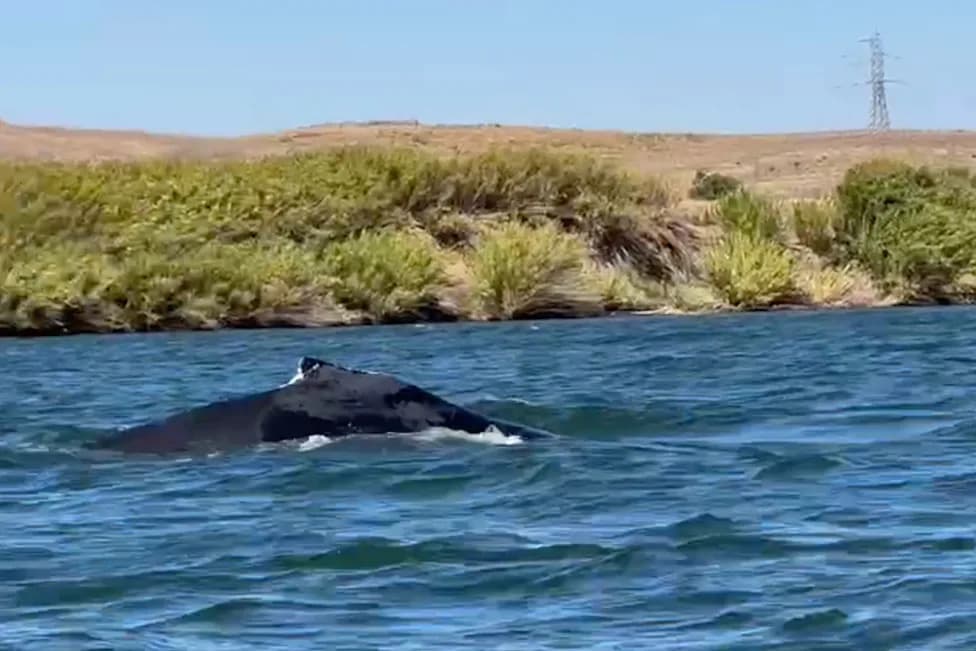
Nearly 300 humpback whales were observed feeding together off South Africa's west coast in a potential record "supergroup" of 299 individually identified animals. Photographs of each whale's tail fluke were used to verify identities, and Happywhale says this aggregation appears to be the largest recorded. Scientists celebrate the sighting as evidence of humpback recovery since the 1986 whaling moratorium, but warn that ship strikes, fishing entanglement and climate change remain serious threats.
Nearly 300 Humpbacks Form Possible Record 'Supergroup' Off South Africa — A Stunning Sign of Recovery
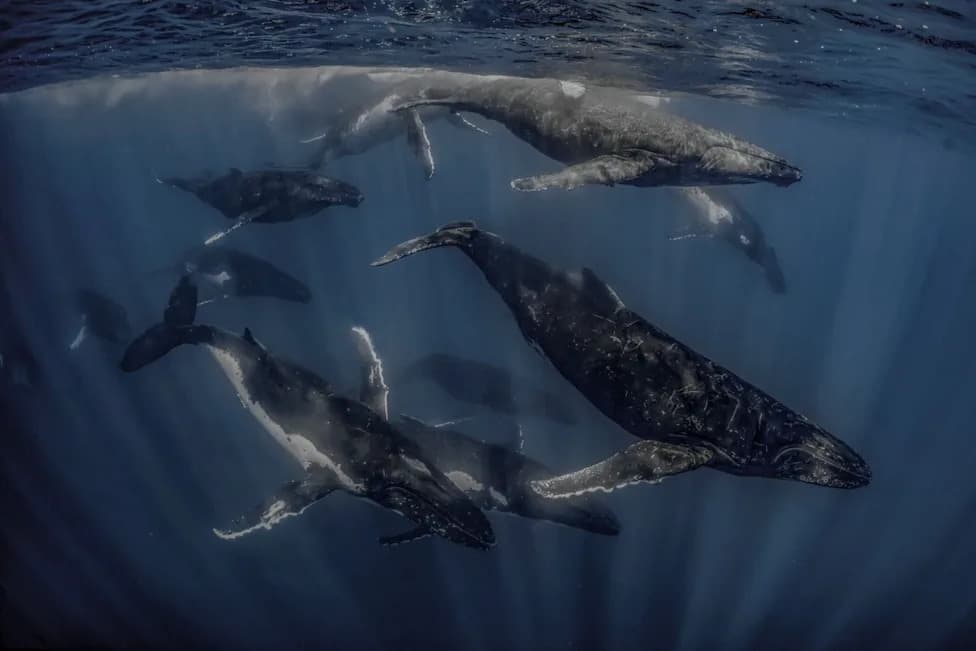
Photo Credit: iStock
Nearly 300 humpback whales feeding together off South Africa's west coast have given scientists and wildlife observers an extraordinary glimpse of marine recovery. The aggregation, observed last December by wildlife photographer Chris Fallows and author-naturalist Monique Fallows, was documented as a single, concentrated feeding event of 299 individual animals.
To avoid double-counting, the observers photographed each whale's uniquely patterned tail fluke and used those images for identification. After analysing the photos and data, Alex Vogel, Africa coordinator for the whale-identification group Happywhale, said the sighting appears to be the largest recorded "supergroup" of humpbacks.
Chris Fallows described the scene to the Associated Press: the blow plumes created what he called a "Manhattan skyline" of whale breath. Humpbacks are more commonly seen alone or in small pods, which made this dense gathering particularly remarkable.
A Conservation Success — With Continued Risks
Scientists view the supergroup as a clear sign of recovery for Southern Hemisphere humpbacks. After decades of commercial whaling, numbers in the Southern Hemisphere rose from fewer than 10,000 at the height of the hunt to more than 100,000 following the 1986 international moratorium on commercial whaling.
While the rebound of humpbacks is celebrated as one of the marine environment's strongest conservation success stories, not all great whale populations have recovered equally. The International Union for Conservation of Nature (IUCN) still lists seven of the 14 great whale species as Endangered or Vulnerable.
Ongoing Threats and Local Concerns
Marine mammals continue to face persistent dangers, including entanglement in fishing gear, ship strikes and the long-term effects of climate change. Citizen scientists and researchers are increasingly important in tracking whale recovery: Happywhale, for example, relies on public photo submissions to verify sightings and identify individuals.
Scientists are also monitoring new pressures in South African waters. Els Vermeulen, chief scientist at the University of Pretoria's Whale Unit, told the AP that ship traffic around the southern tip of Africa has risen sharply as vessels reroute to avoid conflict zones in the Red Sea and instability near the Strait of Hormuz. That heavier traffic raises the risk of deadly collisions.
Gregg Oelofse, Cape Town's coastal and environmental manager, described the impact: "We'll see the propellor strike often through the whale's body. So, it's like these big cuts in the whale's body."
Vermeulen and colleagues are advocating for formal ship speed limits near the South African coast to give crews more time to spot whales and reduce fatal strikes.
Despite those threats, the recent supergroup underscores the positive impact of conservation measures and continued monitoring. Events like this offer a hopeful reminder that concerted protection efforts can produce dramatic recoveries — while also highlighting the need for ongoing vigilance to protect marine life.
Help us improve.