After the fall of the al-Assad regime in December 2024, thousands of diaspora Syrians — about 1.5 million by some estimates — have returned to help rebuild their homeland. One family from Mississauga moved permanently to Damascus in July 2025 and opened a climbing gym in Mezzeh that runs youth and community programmes. While many returnees are optimistic, Syria faces enormous reconstruction and humanitarian needs — the World Bank pegs rebuilding costs at $216 billion and roughly 15.6 million people still need assistance — and experts warn returns must be gradual to avoid social friction.
From Toronto To Damascus: A Syrian Family Returns To Rebuild — And A Community Follows
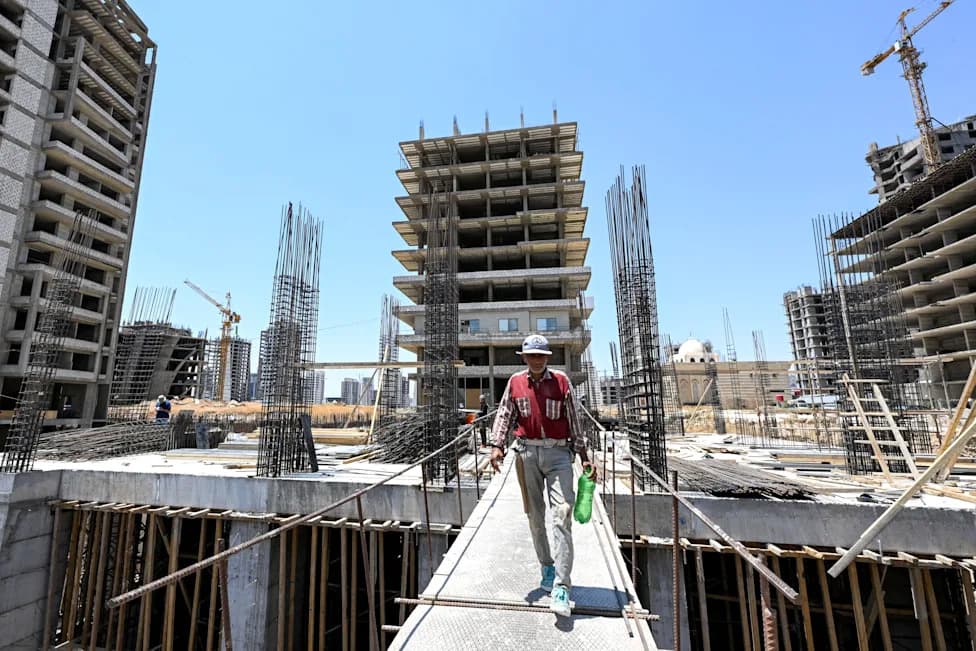
A worker walks at a construction site in Marota City, a new mixed-use development project near the Umayyad Square in Damascus on July 22, 2026 [AFP]
Damascus, Syria — When the al-Assad regime collapsed in December 2024, Yasseen Tasabehji and his family did not expect to return to Syria. The Tasabehjis had emigrated to Mississauga, near Toronto, in 2010 and built what Yasseen calls a "quite good" life in Canada.
Returning After a Turning Point
That changed in late 2024, when a rebel offensive retook Aleppo and advanced toward Hama and Homs. Within days, members of the al-Assad family left Damascus for Moscow and opposition forces celebrated the capital's apparent liberation. The events prompted the Tasabehjis to rethink their plans.
In April 2025 the siblings visited Damascus for a month to see relatives and to test the idea of opening a climbing gym — several of them are passionate climbers. By July the family had moved permanently and opened a gym in the Mezzeh neighbourhood. The facility now runs programmes aimed at helping young Syrians build self-esteem and form local community ties.
"We saw a country that needs everything, and we felt like any addition will make a huge difference," Yasseen said. "It became a goal of ours to make Syria more attractive to young people so they can see a future here."
Daily Reality: Hope and Hardship
Thousands of returnees bring optimism — but they also face serious obstacles. The World Bank estimates Syria's reconstruction will cost at least $216 billion, and roughly 15.6 million Syrians (about two-thirds of the population) still require humanitarian assistance. Energy prices are rising and basic services remain strained.
Returnees are a diverse group: some come from neighbouring states such as Turkey and Lebanon, others from Europe, North America or the Gulf. According to the International Rescue Committee (IRC), roughly 400,000 Syrians recently returned from Lebanon related to the fallout from Israel's war, and some may go back if conditions improve there.
Social Reintegration: A Major Challenge
Beyond physical reconstruction, experts warn that rebuilding social trust will be critical. "Civilians are learning how to live with each other again," said Tariq Azeez of the IRC, cautioning that returning populations may bring different wartime experiences, norms or political views that could heighten tensions. Uneven access to services between communities could further erode trust.
Institutional capacity remains limited. While Syria's new government, led by President Ahmed al-Sharaa, has lobbied for sanctions relief and foreign investment, pledges have not always translated quickly into concrete rebuilding. Aid groups and analysts say returns should be gradual and carefully sequenced so services and infrastructure can absorb newcomers.
Small Projects, Local Impact
The Tasabehjis acknowledge that a single climbing gym cannot heal deep social and sectarian divides. Still, their Mezzeh gym aims to be an inclusive space that brings young people together across identities. Yasseen's sister teaches children's classes, and the family runs community programmes designed to foster interaction and create safe places for youth.
"We're trying to really introduce people to each other so that they can live together and build the future of this country," Yasseen said.
As Syria begins the long work of reconstruction, stories like the Tasabehjis' illustrate both the promise and fragility of return: families and individuals who choose to come back can be engines of local renewal, but nationwide recovery will require large investments, careful planning and attention to social cohesion.
Help us improve.