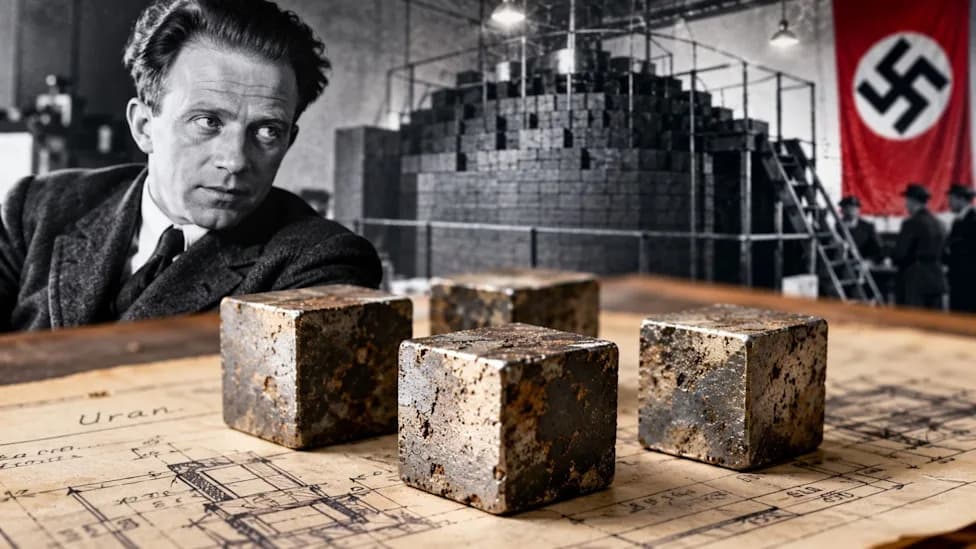
Researchers analysing microscopic glass spherules called Hiroshimaites from Hiroshima Bay report a previously unknown iron‑rich alloy preserved in debris formed by the 6 August 1945 atomic airburst. The spherules formed when the explosion vaporised local materials and cooled rapidly; metal inclusions comprise roughly 3% of the glassy spheres. One grain was unusually uniform at ~63% Fe, 15% Cr, 9% Ni and 7% Si. The findings, published in Science Advances, illuminate how matter behaves under extreme temperatures and could point to novel material classes.
Scientists Identify Previously Unknown Alloy Hidden in Hiroshima Bay Sands
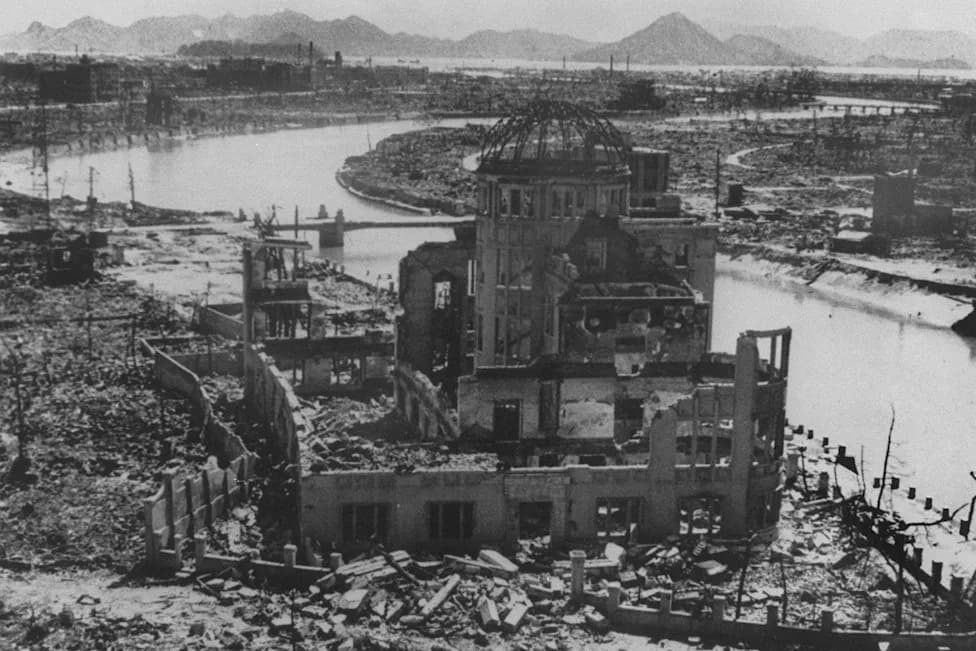
Strange never-before-seen material found at Hiroshima atomic bombing site
Nearly 81 years after the atomic airburst over Hiroshima on 6 August 1945 — an event that instantly killed tens of thousands — researchers have identified a previously unreported alloy preserved inside microscopic glass spherules recovered from Hiroshima Bay sands.
These tiny spherules, nicknamed "Hiroshimaites," formed when the fireball generated by the explosion vaporised building materials, metals, soil, glass and water. Vapours condensed into molten droplets that cooled rapidly and fell back to the ground, where many remain embedded in beach sediments today.
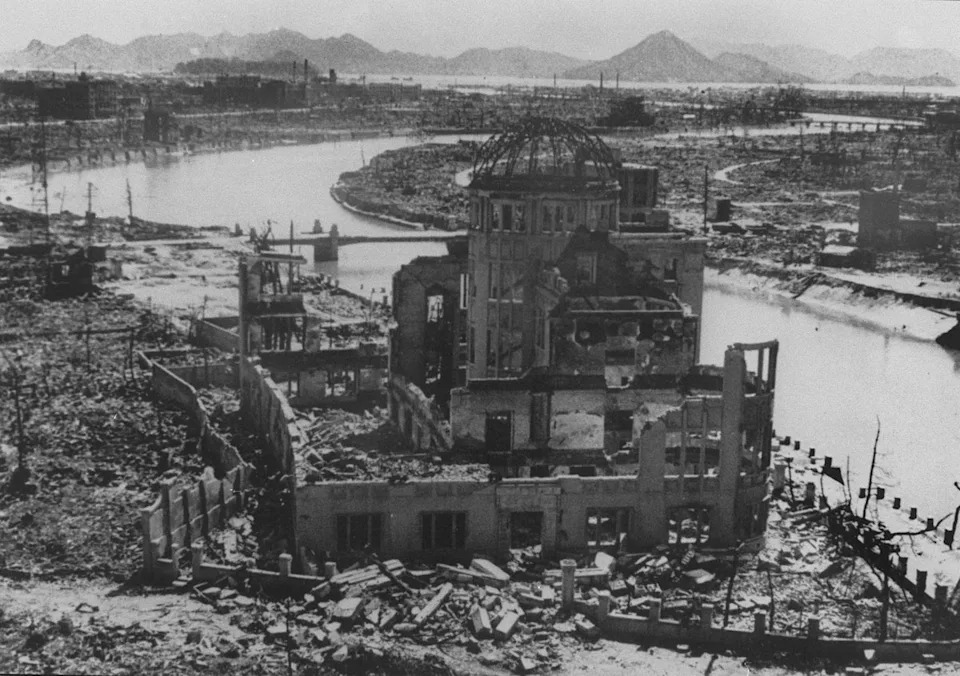
Prefectural Industry Promotion Building after the bombing of Hiroshima (AFP via Getty Images)
What the Study Found
The team, publishing in Science Advances, examined Hiroshimaite particles with reflected-light microscopy and scanning electron microscopy. They report that most spherules are calcium–aluminium–silicon glass formed at temperatures above ~1,800°C, but a newly identified class of Hiroshimaite materials formed at far higher peak temperatures — in excess of several thousand degrees Celsius.
Embedded within roughly 3% of the glassy spheres are tiny metal inclusions: iron‑rich alloys dominated by iron and chromium with variable nickel, manganese and molybdenum. These inclusions appear as rounded droplets, irregular grains, or clustered particles distributed through the glass.
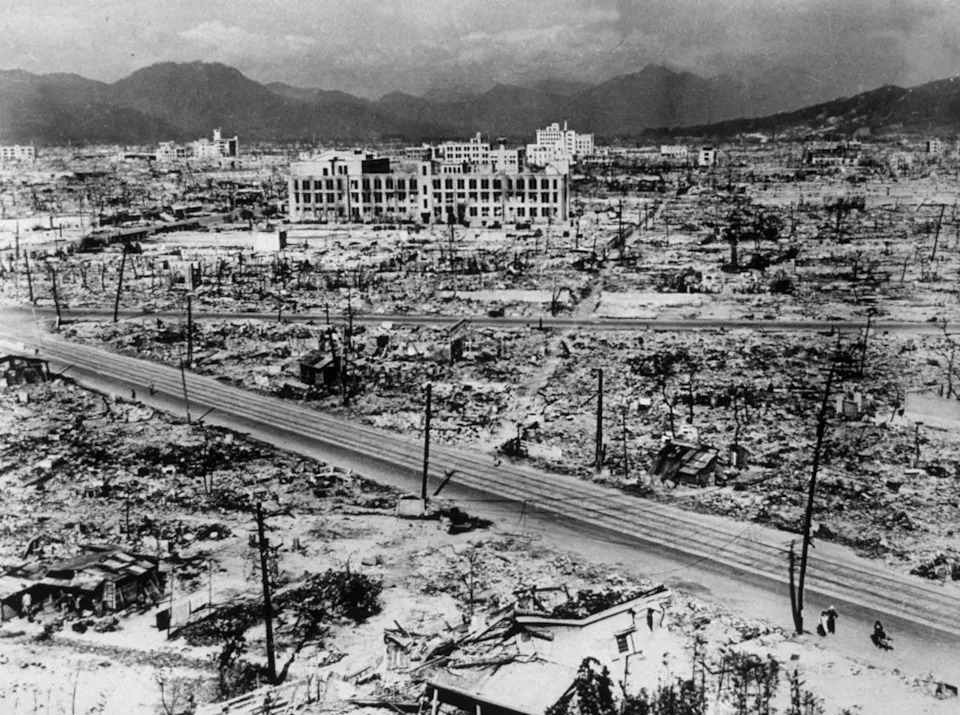
Atomic bomb damage in Hiroshima (Getty Images)
"We report the discovery of a previously unknown alloy preserved within a Hiroshimaite spherule recovered from beach sands of Hiroshima Bay, formed during the 6 August 1945 atomic airburst," the authors write.
One particle in particular stood out for its unusual composition and internal uniformity. That grain contained about 63% iron, 15% chromium, 9% nickel and 7% silicon and appears to have crystallised from a single molten droplet that cooled extremely rapidly. Such homogeneous crystals are not expected under ordinary conditions.
Methods and Significance
Researchers embedded the spherules in resin, polished them, and analysed them under reflected-light microscopes before conducting higher-resolution analysis with scanning electron microscopy. The combined observations provide a snapshot of the local metal inventory at the instant of the blast and reveal how matter behaves under some of the highest temperatures and pressures ever produced on Earth.
Beyond historical and forensic interest, the discovery could inform materials science by showing how extreme, transient conditions can produce unusual alloys and microstructures that are difficult to reproduce in conventional laboratories.
Context and Caution
These results do not change the historical facts of the bombing but offer a new window into the physical processes that followed. The researchers emphasise that the metal droplets make up a small fraction of the spherules and that interpretations rely on careful micro-analytical work.
Help us improve.