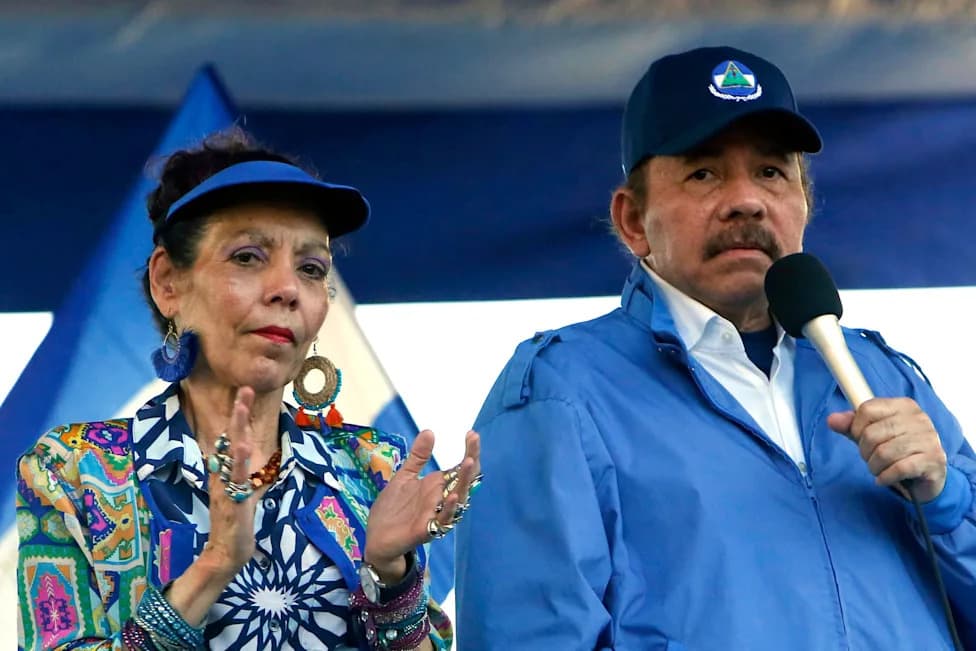
A draft constitutional reform in Nicaragua would bar people labelled as "traitors" or "coup-plotters" from running in future elections and extend the presidential term from six to seven "renewable" years, officials say. National Assembly President Gustavo Porras previewed the proposal, which is expected to pass in September. Critics say the changes build on a 2024 amendment and are designed to cement the Ortega-Murillo family's hold on power amid international criticism and sanctions following a 2018 crackdown.
Ortega's Draft Reform Would Ban 'Traitors' From Running and Extend Presidential Term to Seven Years
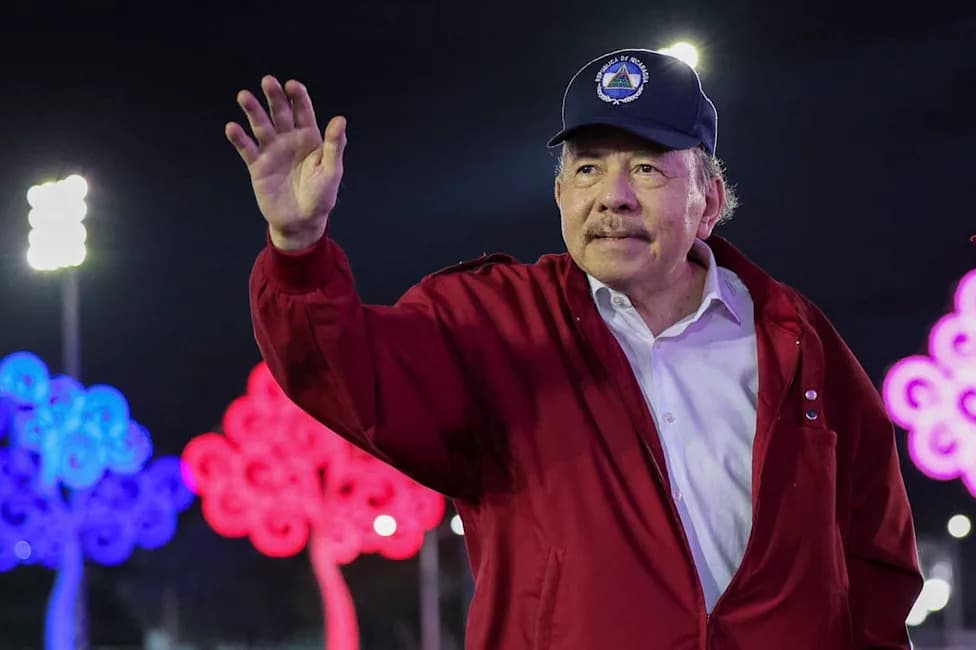
Nicaragua's President Daniel Ortega waves during an event to commemorate the 47th anniversary of the Nicaraguan Revolution on July 19 [Cesar Perez/El 19 Digital via AFP]
A draft constitutional reform sent to Nicaragua's National Assembly would bar opposition figures labelled as "traitors" or accused of "plotting coups" from standing in future elections, while also increasing the presidential term from six to seven "renewable" years, according to official previews and media reports.
National Assembly President Gustavo Porras publicly outlined elements of the proposal on Tuesday but provided few specifics. Lawmakers who back the package say it aims to strengthen the government's control; critics argue it is intended to further restrict political competition and entrench the ruling family.
"Our system of government, under the presidency of the people, proposes to be organised with an effective term of seven renewable years," Porras said as he read elements of the draft.
Context and Recent Changes
The draft follows a 2024 constitutional amendment that already lengthened the presidential term from five to six years and elevated Rosario Murillo, President Daniel Ortega's wife and then-vice-president, to the role of co-president. That earlier change also delayed planned elections until late 2027.
Observers expect the current proposal to be approved in September. Supporters frame the measures as stability reforms; opponents and many international observers view them as steps to consolidate authority and limit the opposition's ability to compete.
Political Fallout and International Response
Daniel Ortega, a former Marxist rebel who helped topple the Somoza dictatorship in the late 1970s, returned to power in 2007 and is now the longest-serving leader in the Americas. He began his fourth consecutive presidential term in January 2022 after winning the November 2021 election, a vote that drew criticism and sanctions from the United States, the European Union and other international actors.
Nicaragua has been in a prolonged political crisis since April 2018, when authorities' response to antigovernment protests included a crackdown that human rights groups say resulted in more than 300 deaths. Those events and subsequent arrests of opposition figures have led critics to warn that further constitutional changes could erode democratic checks and deepen Nicaragua's international isolation.
What To Watch
Key questions going forward include how "traitor" or "coup-plotter" would be defined legally, whether such provisions would be applied retroactively, and how international governments and institutions will respond if the reform is enacted. The Assembly's timetable points toward a likely approval in September unless procedural or political obstacles emerge.
Help us improve.