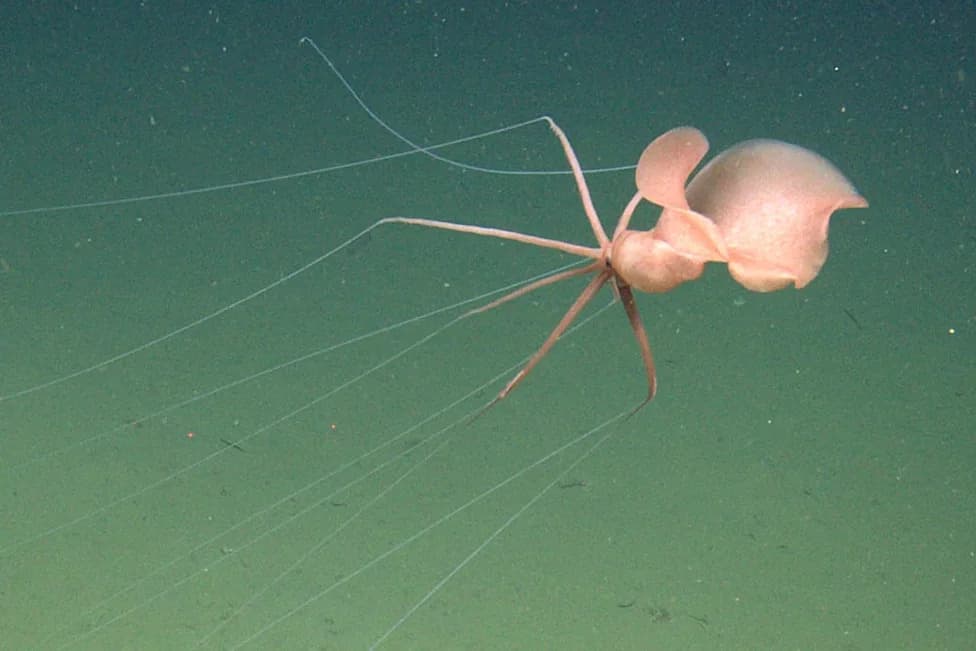
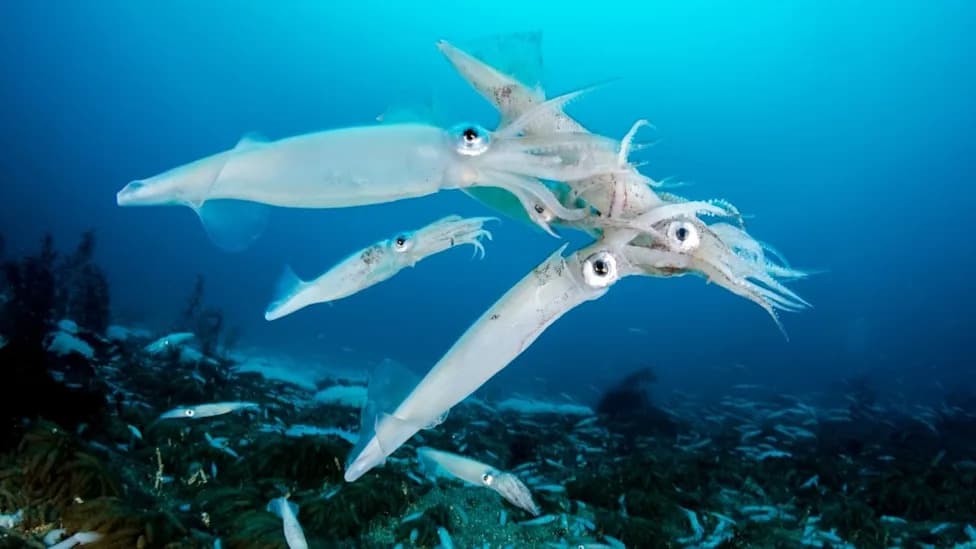
New footage from a Japanese fishing boat recorded a healthy giant squid at the surface — an exceedingly rare event that adds valuable scientific data. Giant squid can reach up to about 42 feet long and normally live 1,000–3,300 feet deep, so surface sightings are unusual and often involve sick or dead animals. Scientists think cold winter currents may sometimes push deep squid shallower, and genetic studies suggest a single global population. Each live encounter helps researchers learn more about the species’ size, behavior, and ecology.
Why a Live Giant Squid at the Surface Is an Extraordinary Ocean Rarity

New Giant Squid Footage Filmed in Japan • Live Architeuthis dux Encounter© Deepsea Oddities via YouTube — used under fair use
New footage shot from a Japanese fishing boat has captured an exceptionally rare sight: a healthy giant squid drifting at the ocean’s surface in daylight. The animal appeared active and uninjured, hovering next to a fishing lure. Encounters like this are extremely uncommon, and each bona fide video provides valuable data toward solving one of the deep sea’s enduring mysteries.
How Big And Where They Live
Giant squid are among the largest invertebrates on Earth. Mature females can reach up to about 42 feet (13 meters) long when their long feeding tentacles are included — roughly the length of a full‑size city bus — while males are generally a bit smaller. These cephalopods typically inhabit the deep, aphotic zone of the ocean, most often between roughly 1,000 and 3,300 feet (300–1,000 meters) below the surface.

Giant squid are among the largest animals without a backbone on Earth.©Deepsea Oddities via YouTube — used under fair use –Original/License
Why Surface Sightings Are So Rare
Because giant squid live so deep and can move quickly, photographing or filming them alive in their natural habitat proved elusive until the 21st century. The first clear photograph of a live giant squid in deep water was taken off Japan in 2004, the first deep‑sea video followed in 2012, and researchers documented another rare live sighting in U.S. waters (the Gulf of Mexico) in 2019.
Historically, most giant squid recovered near the surface have been sick, injured, dead, or recovered from the stomachs of sperm whales. An intact, healthy adult floating at the surface is so unusual that marine biologists closely study each report. Several recent surface encounters have been recorded near Japan, including a well‑known 2015 Toyama Bay incident when a diver swam alongside a giant squid.
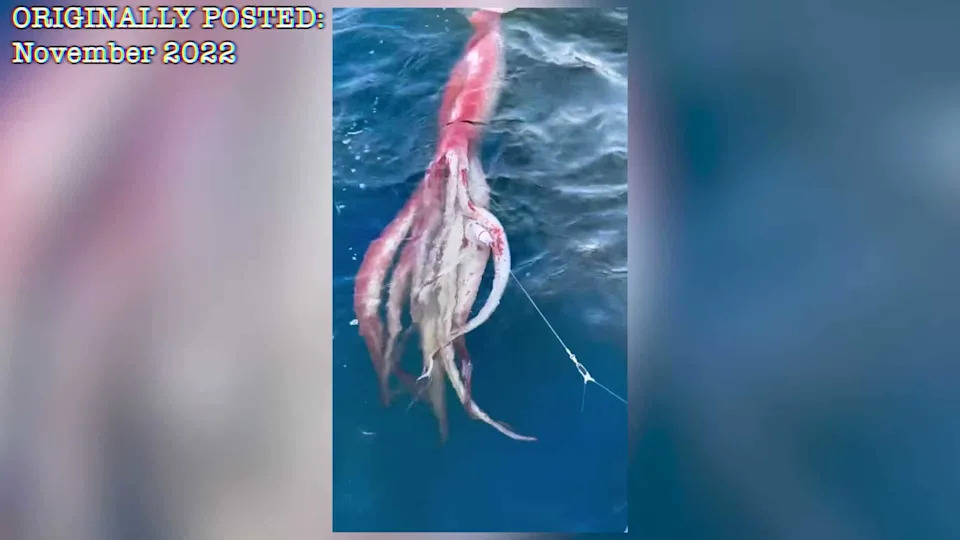
Giant squid are sneaky hunters that wait to launch surprise attacks.©Deepsea Oddities via YouTube — used under fair use –Original/License
What The Recent Video Shows
The squid in the new video displays the classic features of the species: eight shorter arms plus two much longer feeding tentacles tipped with toothed suction cups, a streamlined mantle, and enormous eyes. Those eyes are among the largest in the animal kingdom — roughly 10–11 inches (25–28 cm) across — and are thought to have evolved to detect faint bioluminescence caused when predators such as sperm whales approach in the dark.
Feeding, Predators, And Evidence
Giant squid hunt by ambush. Stomach‑content studies and tissue analyses show they eat deep‑sea fish and other squid. They extend their long feeding tentacles to snatch prey and pull it toward a hard, parrot‑like beak. That beak resists digestion and is often recovered intact from sperm whale stomachs, making it one of the most common physical traces scientists use to document giant squid presence.
Myths Versus Reality
Myth: Giant squid attack ships.
Fact: There is no solid evidence that giant squid deliberately attack boats. Historical reports likely describe wounded animals acting defensively or sailors embellishing their stories.
Myth: Giant squid Are Aggressive Monsters.
Fact: The recent footage in which the squid snaps at a lure demonstrates a feeding reflex, not targeted aggression toward the vessel or crew.
Myth: Kraken Legends Were Pure Fantasy.
Fact: Legends about the Kraken were almost certainly inspired by real sightings of giant squid or their larger relatives, the colossal squid, rather than supernatural beasts.
Why This Matters
Each authenticated live sighting advances scientific understanding of giant squid: where they live, how large they grow, how they behave near the surface, and how they may respond to changing ocean conditions. Genetic analyses so far show remarkably similar DNA among giant squid worldwide, suggesting a single, broadly distributed population, but most genetic samples still come from strandings or accidental bycatch rather than from living animals. A clear, healthy giant squid filmed off Japan therefore offers a rare and valuable glimpse of a creature that spends nearly its entire life beyond easy human reach.
Scientific Hypotheses: Researchers suspect that strong cold winter currents pushing into shallower waters may occasionally lift deep‑sea squid toward the surface, but the exact mechanisms and frequency of such events remain subjects of active study.
Help us improve.