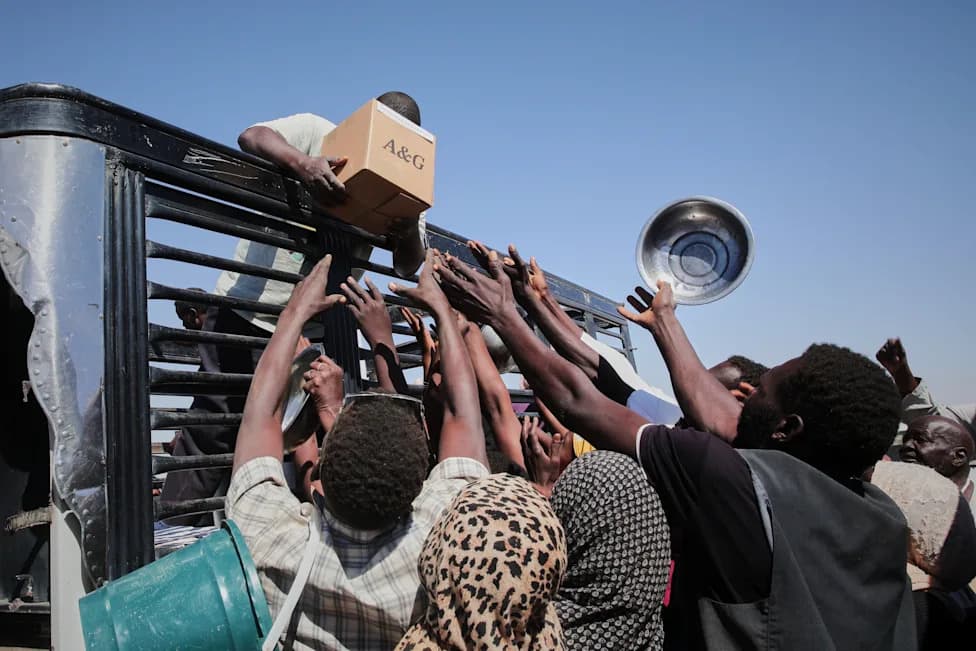
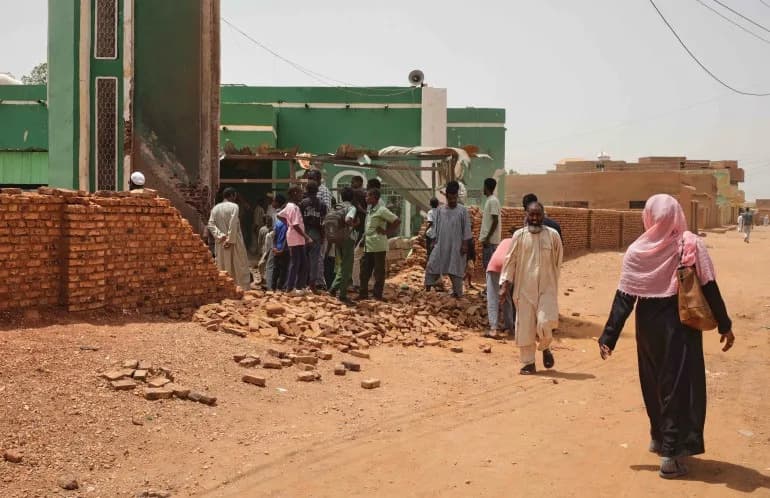
Sudan’s civil war, which began in April 2023, has triggered one of the world’s largest humanitarian emergencies: more than 14 million people are internally displaced and nearly 34 million need assistance. The U.N. estimates about 19.5 million people face acute hunger and 4.5 million have fled the country. Reports document widespread atrocities—including sexual violence, abductions and ethnically targeted attacks—and both the SAF and RSF have been accused of war crimes. Humanitarian agencies warn urgent scale-up of aid and international engagement are essential to prevent further catastrophe.
Sudan's Overlooked War: Millions Face Hunger and Displacement as Global Focus Shifts
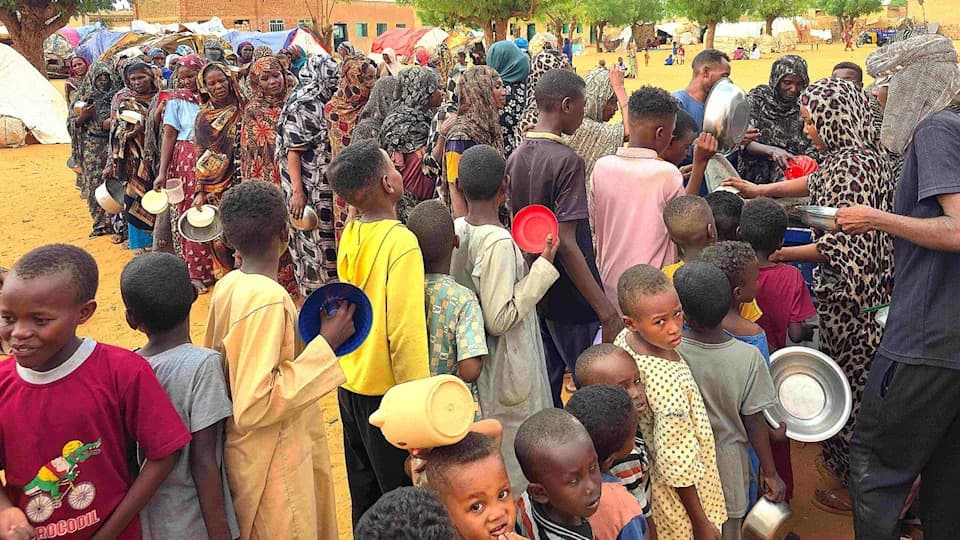
Women and children queue to receive free food being distributed in al-Mohayra camp for displaced people, near the city of El-Obeid in the southern Kordofan region, on June 29, 2026.
Sudan's civil war, which erupted in April 2023, has produced one of the world’s largest and most underreported humanitarian disasters. Fighting between the Sudanese Armed Forces (SAF) and the paramilitary Rapid Support Forces (RSF) has displaced millions, devastated towns and crops, and left tens of millions dependent on emergency aid.
Humanitarian Toll
Displacement and Need: More than 14 million people have been displaced inside Sudan since the conflict began, and nearly 34 million—about 10% of global humanitarian needs—require assistance, according to the International Rescue Committee.
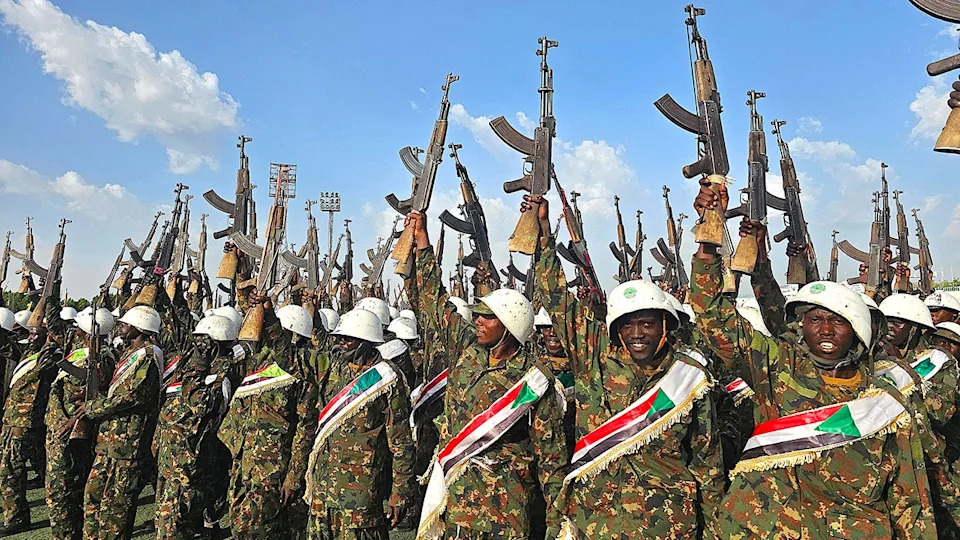
Members of Sudanese Armed Popular Resistance Force take part in a military parade for fresh graduates, in Al-Qadarif state, in eastern Sudan on May 20, 2026.
Hunger and Flight: The United Nations estimates roughly 19.5 million people are experiencing acute hunger and about 4.5 million have fled the country.
Hotspots and Atrocities
El-Obeid in North Kordofan has become a focal point of the hunger crisis, with more than 100,000 displaced people living in camps across the city and severe food shortages reported. Humanitarian agencies say food and logistics must be scaled up urgently to avert mass starvation.
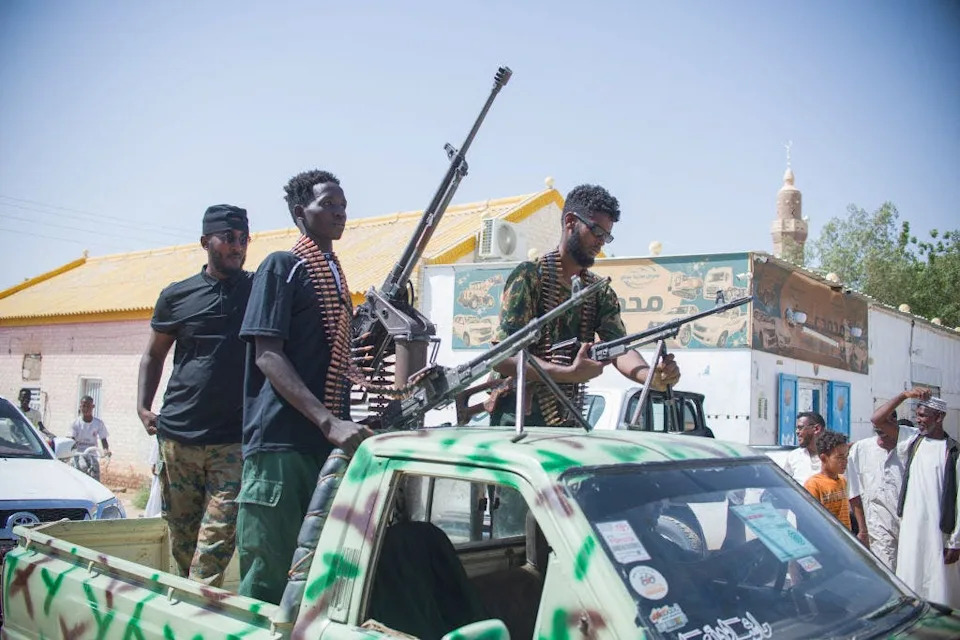
Members of the Sudanese army's Special Mission Forces batallion in the Northern State hold a parade in Karima city on May 19, 2024. Sudan has been in the throes of conflict for over a year between the regular army led by de facto ruler Abdel Fattah al-Burhan and the RSF led by his former deputy Mohamed Hamdan Daglo.
El Fasher in Darfur was seized by the RSF in October 2025; U.N. and other reports say the initial siege and subsequent violence killed thousands. A July report from the Office of the U.N. High Commissioner for Human Rights documented widespread sexual violence against women and girls, including mass and gang rapes, and described abduction and other grave abuses.
"The war in Sudan has caused the world's largest humanitarian crisis and has escalated into a regional war," said Alan Boswell, Project Director for the Horn of Africa at the International Crisis Group. "Despite this, world leaders continue to ignore the conflict."
Allegations of War Crimes and Possible Genocide Components
U.N. investigations and human rights organizations have accused the RSF of ethnically targeted attacks and concluded that several legal components consistent with genocide have been met, including deliberately inflicting conditions of life intended to destroy a group in whole or in part. The U.N. also found that the Sudanese Armed Forces have committed war crimes, documenting attacks on civilians and civilian infrastructure. Both sides have been accused of executions, torture and sexual violence.
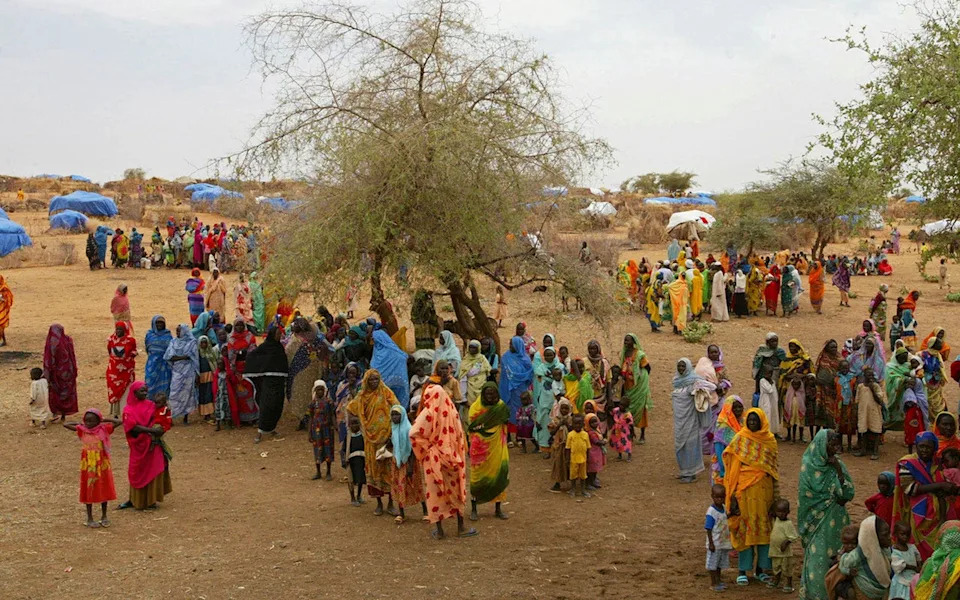
Sudanese displaced people gather at the Zam Zam refugee camp outside the town of El-Fashir in the Darfour region of Sudan, during a visit by U.N. officials, on July 1, 2004. The U.N. humanitarian aid and refugee agencies appealed Wednesday, Feb. 7, 2024, for $4.1 billion in international support for embattled civilians in Sudan amid signs that some may be dying of starvation after nearly a year of war there between the forces of rival generals.
The U.S. imposed additional sanctions on the Sudanese Armed Forces in response to allegations that chemical weapons were used in 2024. Sudan’s government denies those allegations. International humanitarian organizations continue to call for independent accountability and greater protection for civilians.
Humanitarian Response And Needs
Humanitarian leaders warn that current aid levels are insufficient. "What we need to do is really now to plan for the scale-up beyond the 100,000 people that we have been supporting," said Abdallah Alwardat, World Food Programme Sudan Country Director, referring to operations in El-Obeid.
Even as other global crises absorb headlines and diplomatic attention, agencies say urgent action is needed to deliver food, medical care and protection to millions of vulnerable civilians across Sudan and to scale up responses in key flashpoints like El-Obeid and Darfur.
What Comes Next
Humanitarian organizations and legal bodies are pressing for increased funding, humanitarian access, independent investigations into alleged atrocities, and stronger international engagement to protect civilians and support a political solution. Without a major scale-up of aid and meaningful pressure to end the fighting, the humanitarian and protection crises in Sudan are likely to deepen.
Help us improve.