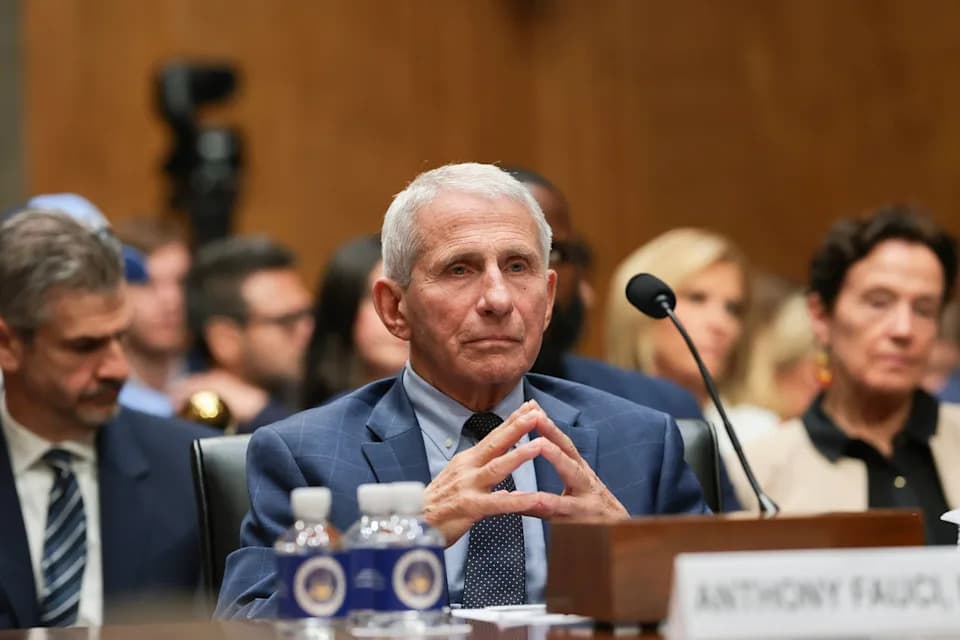
Dr. Anthony Fauci invoked his Fifth Amendment rights during a Senate hearing after diary excerpts were released, reviving scrutiny of his role in the COVID-19 response. As NIAID director for nearly four decades, Fauci helped grow the agency's budget roughly twentyfold and shaped federal infectious-disease research priorities. Public trust declined during the pandemic—KFF reported about a 10-point drop in trust in Fauci in 2020, and a PLOS analysis found a 26% fall in trust in the CDC from Feb 2020 to June 2022. The episode highlights that clear communication, transparency and institutional reforms are essential lessons for future public-health leaders.
What Fauci’s Senate Testimony Reveals About Public-Health Leadership — Lessons On Trust, Communication And Legacy
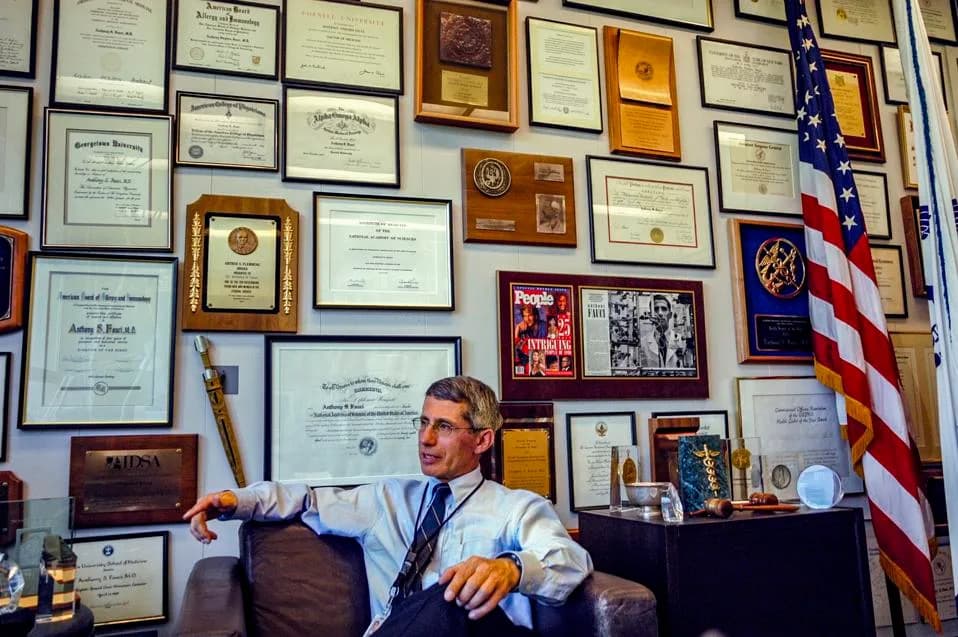
View of American scientist & physician Dr Anthony Fauci, Director of the National Institute of Allergy and Infectious Diseases of the National Institutes of Health (NIH), in an armchair in his office, Bethesda, Maryland, 2003. (Photo by Michael Geissinger/LOC/PhotoQuest/Getty Images)Getty Images
Dr. Anthony Fauci invoked his Fifth Amendment rights during a Senate committee hearing soon after Senator Rand Paul published excerpts from Fauci’s diaries. The testimony and diary passages reignited debate about personality, decision-making and accountability during the COVID-19 pandemic.
Fauci’s nearly 40-year tenure as director of the National Institute of Allergy and Infectious Diseases (NIAID) made the institute a central hub of U.S. infectious-disease research. Under his leadership the NIAID budget grew roughly twentyfold, positioning the agency to direct billions in federal research dollars and to influence scientific priorities across academia, industry and government.
Science, Communication And Public Trust
Science is an iterative process of testing, revision and correction. During the pandemic, Fauci’s public communications frequently emphasized confident, concise messages early on, with more nuance following as evidence evolved. That approach helped many Americans but arguably contributed to growing skepticism among others. A 2020 KFF poll found roughly a 10-point decline in public trust in Fauci between April and September 2020. A separate analysis published in PLOS Global Public Health reported a 26% decline in public trust in the CDC from February 2020 to June 2022.
Public trust is itself a public-health asset: vaccination campaigns, emergency guidance and outbreak responses depend on citizens believing officials are transparent and acting in their interest.
Confusing or contradictory guidance, the spread of misinformation, partisan conflict, and inconsistent federal messaging all contributed to eroded confidence. Restoring that trust is time-consuming and requires sustained institutional effort.
Lessons For Future Public-Health Leaders
Whether judged by budgets, scientific advances, or public fame, public-health leadership must be measured against its ability to preserve trust. The Fauci era offers both powerful examples of institutional growth and stark reminders of vulnerabilities that can undermine effective crisis response. Key lessons include:
- Prioritize Clear, Transparent Communication: Lead with what is known, acknowledge uncertainty, and explain how guidance may change as evidence accumulates.
- Invest In Trust-Building: Make data, rationale and conflicts of interest accessible to the public to reduce suspicion and resist misinformation.
- Strengthen Independent Review: Create mechanisms for third-party evaluation of pandemic decisions to bolster credibility.
- Support The Frontline Workforce: Recognize and resource health-care workers whose actions were critical in crisis response.
- Balance Central Coordination With Local Engagement: Combine national scientific leadership with stronger local partnerships to tailor responses and build community buy-in.
Fauci’s legacy will be a mixture of significant scientific achievements, expanded institutional capacity at NIAID, and renewed demands for reforms in communication and governance. If the next generation of public-health leaders studies both the successes and the missteps of this era and implements durable reforms, the long-term legacy may be strengthened institutions and renewed public confidence.
Help us improve.