
New research in Nature measured the carnassial tooth across 250 living and extinct species and used 3D‑printed replicas to test function. The study found a strong trade-off: fewer than 1% of species perform well at both slicing and crushing. This mechanical conflict explains repeated convergent evolution on two dental designs and shows how extreme specialization can raise extinction risk.
Why Carnivore Teeth Must Choose: The Slice‑Or‑Crush Evolutionary Trade‑Off
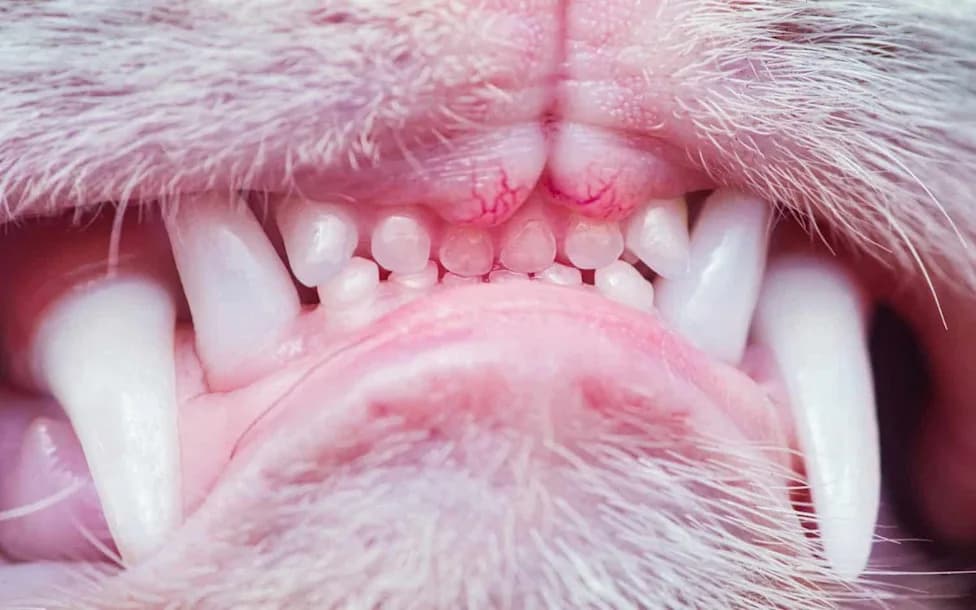
Dog mouth opened showing sharp canine teeth, small incisors and clean pink gums — healthy dentition close-up portrait. Thailand photography, no generative ai© Pawich Sattalerd/Shutterstock.com
Evolution favors solutions that are good enough, not perfect. A new study in Nature shows that carnivores almost always evolve teeth specialized either for slicing flesh or for crushing and grinding — but rarely both. That mechanical trade-off has repeatedly driven unrelated predators toward the same two dental designs.
What the Researchers Did
The team, led by paleontologist Narimane Chatar of the University of California, Berkeley, measured the shape of the carnassial — the lower shearing tooth crucial for cutting meat — in 250 living and extinct carnivore species. To link shape with performance, the researchers produced exact replicas of representative carnassials, 3D-printed those models, and pressed them into materials that mimicked different food textures.
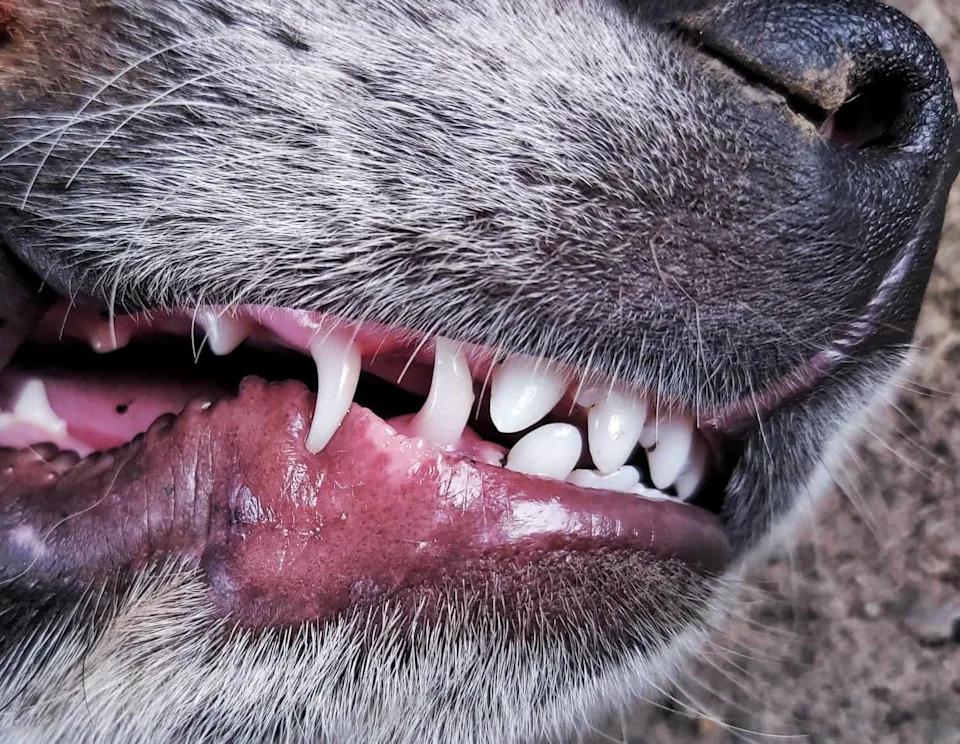
Dogs and bears have more teeth designed for grinding, which reflects in their more varied diets.©Bogdan Vacarciuc/Shutterstock.com
Key Findings
Two distinct carnassial designs repeatedly emerged: a narrow, blade‑like form typical of obligate meat-eaters (for example, many cats), and a broader, more robust form used by generalists (such as dogs and bears) that also crushes and grinds. Computer models and physical tests showed a strong mechanical trade-off: fewer than one in a hundred species performed well at both slicing and crushing.
Physical tests confirmed that every tooth shape that excelled at one task (slice or crush) performed poorly at the other.
Why This Matters
The narrow morphological gap between the two solutions means small developmental shifts can move a lineage from one strategy to the other, which explains repeated convergent evolution across unrelated groups. But extreme specialization can be risky: lineages that commit to pure slicing lose grinding surfaces that provide dietary flexibility. The extinct creodonts are one example — their extreme slicing teeth likely limited their ability to adapt when environments changed.
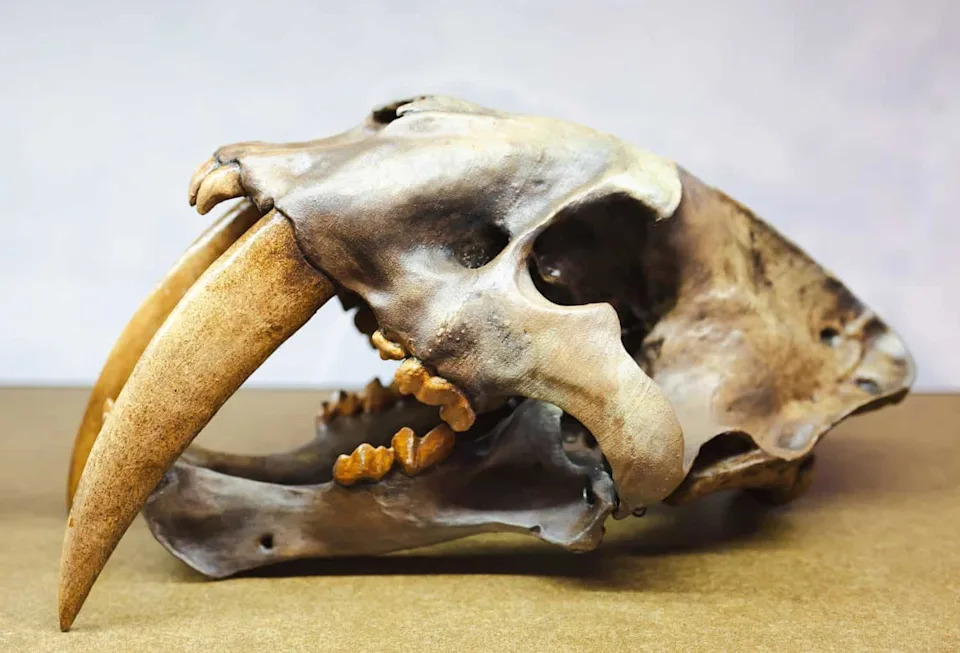
Extinct creodonts like saber-toothed cats likely went extinct because conditions changed but their teeth couldn't.©Sarbinaz/Shutterstock.com
Broader Context
Tooth-like structures first appeared deep in vertebrate history, probably in the posterior pharynx of jawless fishes more than 500 million years ago. While later innovations, such as the multitasking tribosphenic molar in some mammals, can combine functions, the new study provides the first direct physical evidence quantifying the slice-versus-crush conflict across carnivores.
In short, natural selection repeatedly navigates the same mechanical compromise, producing similar dental outcomes in unrelated predators and shaping both ecological roles and extinction risk.
Help us improve.





















