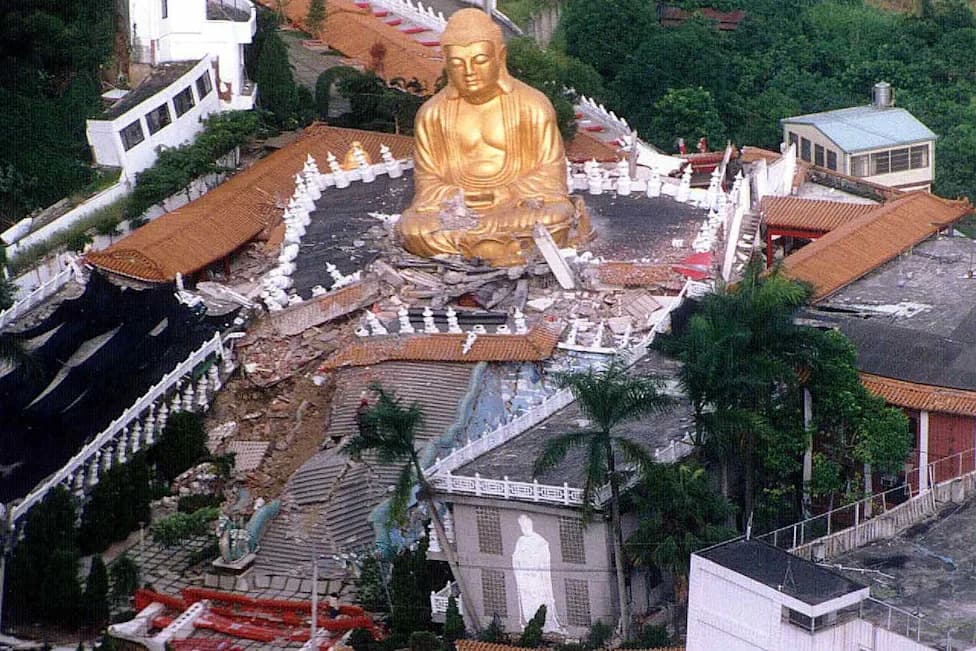
Japan's relatively low death toll from a recent magnitude 6.8 quake reflects decades of investment in earthquake-resistant building codes, advanced structural technologies and community preparedness. The 1981 code revision and the use of base isolation and dampers have markedly reduced building collapse. Regular drills and a national early-warning system add crucial seconds to protect lives, though older homes and an aging population remain vulnerable.
How Japan's Buildings Withstand Devastating Earthquakes — Engineering, Codes and Community Preparedness
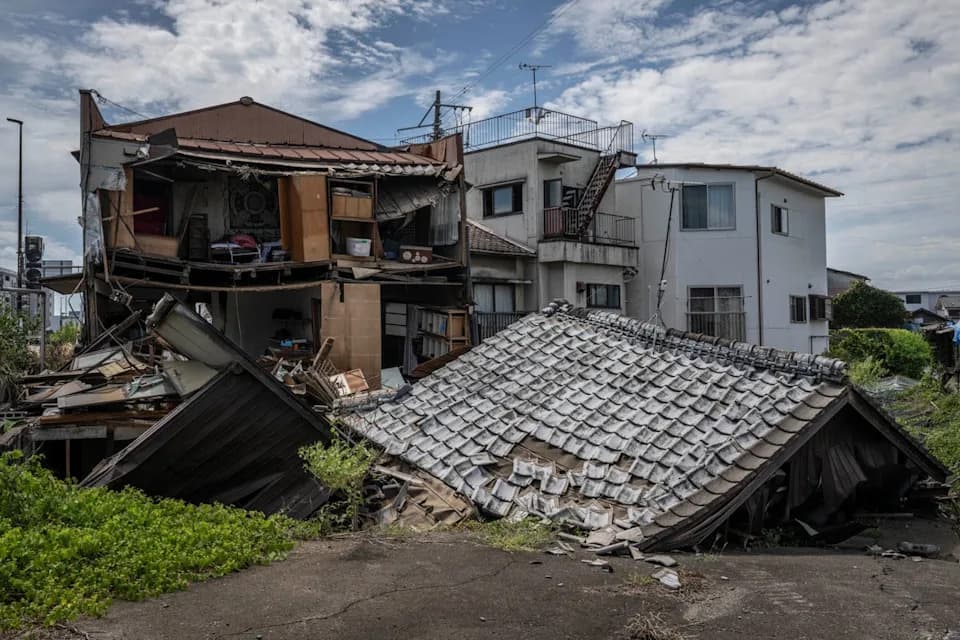
A house lies collapsed in Yatsushiro, Kumamoto prefecture (AFP/Getty)
A magnitude 6.8 earthquake struck southwestern Japan on Tuesday, causing part of a shopping mall to collapse, damaging a historic shrine and leaving at least 18 people dead. Rescuers continued to search through rubble as officials warned the death toll could rise.
Why Japan Sees Fewer Building-Related Deaths
While every loss of life is tragic, the relatively low death toll from this relatively shallow, land-based quake highlights a broader pattern: Japan consistently records far fewer fatalities from similar-strength quakes than many other countries. Experts attribute this largely to decades of sustained investment in earthquake-resistant design, building codes and community preparedness.
Engineering and Stronger Building Codes
The backbone of Japan’s resilience is its building code, which has been tightened after major disasters. A major revision in 1981 required larger buildings to remain intact in moderate quakes and to deform and absorb energy without collapsing in stronger events. Research shows the change made a measurable difference: after the 1995 Kobe earthquake, only 5.8% of buildings built after the 1981 code suffered medium-to-large damage or collapsed, compared with 12.5% of earlier structures, according to a 2019 study by Jiro Takagi and Akira Wada.
Newer buildings are designed to sway with seismic forces rather than remain rigid. That flexibility prevents catastrophic foundation separation and collapse — the primary cause of most earthquake fatalities.
Advanced Structural Technologies
For critical facilities and larger structures, engineers often go further to decouple the building from ground motion:
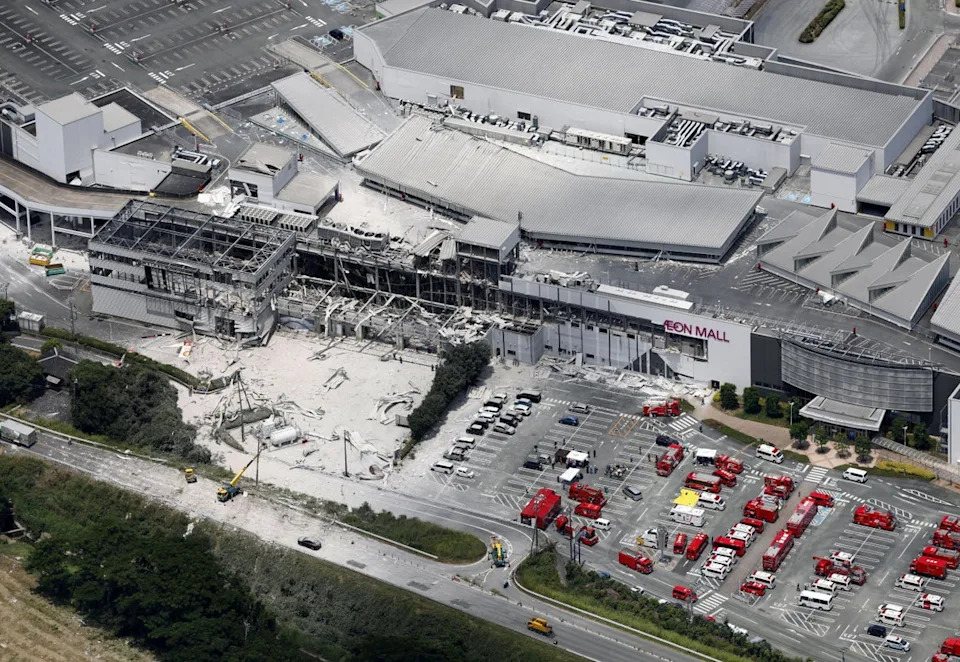
A view of Aeon Mall shopping centre, after an explosion occurred following an earthquake with a preliminary magnitude of 7.1 struck Japan's southern Kumamoto prefecture, in Kashima Town, Kumamoto Prefecture, Japan (Reuters)
- Base Isolation: Buildings rest on flexible bearings (layers of rubber and steel) that absorb much of the ground motion. By 2016, more than 4,000 base-isolated buildings had been constructed in Japan, mainly hospitals, large warehouses and high-rise housing.
- Passive Dampers: Devices installed between floors soak up seismic energy; most new high-rises now include these dampers.
Prepared People and Early Warnings
Technology is only part of the story. Japan’s widespread public preparedness complements engineering measures: schoolchildren routinely practice earthquake evacuations, residents receive first-aid and firefighting training, and an early-warning system can broadcast alerts via phone, TV and radio seconds to tens of seconds before shaking arrives — often enough time to stop trains, pause factories or seek cover.
Persistent Vulnerabilities
Despite these protections, Japan is not immune. Advanced systems like base isolation and dampers are expensive and mainly prioritized for hospitals, offices and essential infrastructure, not ordinary homes. Older, non-engineered wooden houses and aging concrete structures remain the most likely to fail. Connection failures in older wooden homes were responsible for more than 90% of deaths in the Kobe quake, and similar failures contributed to damage in the 2016 Kumamoto quake.
An aging population also increases risk: elderly residents are often less able to evacuate quickly, and some of those hurt in the recent quake were in a care home. Daniel Aldrich of Northeastern University, who studies disaster recovery, has shown a strong correlation between national investment in safety systems and lower earthquake death tolls. He cautions that eliminating all earthquake fatalities is unrealistic — "you can't retrofit every building" — but the contrast between a few dozen deaths and the tens of thousands reported in other disasters shows how much effective policy and engineering can achieve.
Comparative Context
To illustrate scale: a magnitude 7.8 quake in Turkey and Syria killed more than 50,000 people and damaged roughly 185,000 buildings; a 7.6 quake in Pakistan in 2005 killed at least 86,000. Japan’s 2011 magnitude 9.0 quake caused about 18,000 deaths, most from the tsunami that followed rather than collapsing buildings — underscoring that building resilience can dramatically reduce fatalities even when shaking is extreme.
Bottom line: Japan’s mix of stricter codes, modern engineering (base isolation and dampers), routine preparedness and early-warning systems significantly reduces earthquake deaths, but older housing stock, retrofit costs and an aging population remain serious challenges.
Help us improve.