A partial lower jaw from Wadi Moghra, northern Egypt, has been described as a new Early Miocene ape species, Masripithecus moghraensis, dated to about 17–18 million years ago. The mandible shows a distinctive mix of dental and mandibular traits and suggests a flexible, mainly fruit-based diet. Bayesian phylogenetic analyses and biogeographic modeling place the species closer to the lineage of modern apes than known East African contemporaries, highlighting northern Africa and the Middle East as potential centers for early ape diversification. Researchers caution the result is based on a single fragment and call for more fieldwork to confirm these findings.
New Ape Jaw from Northern Egypt Could Rewrite Early Ape Evolution
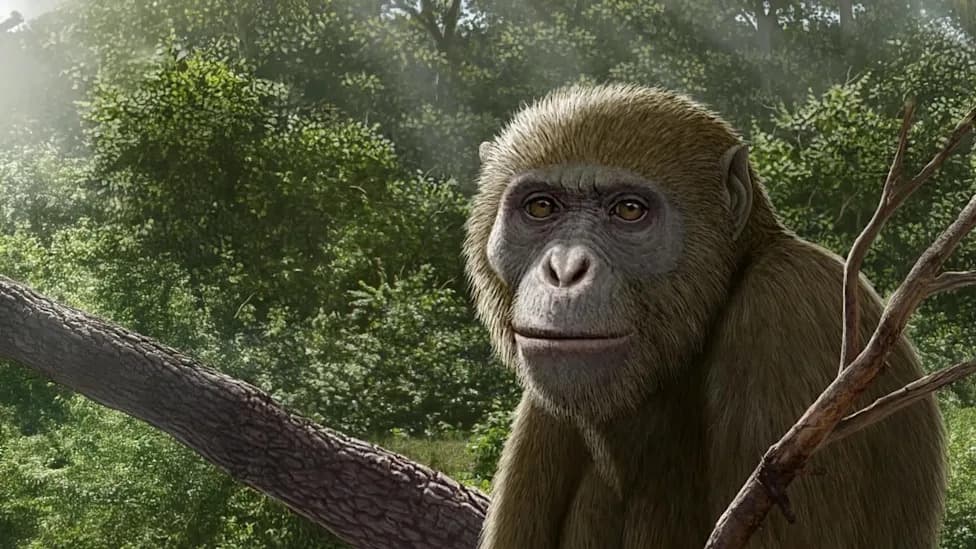
Photo Credit: Hesham Sallam
A partial lower jaw unearthed at Wadi Moghra in northern Egypt has been identified as a new Early Miocene ape, Masripithecus moghraensis, dated to roughly 17–18 million years ago. Though the specimen is limited to a mandibular fragment, its distinctive dental and jaw features make it an important new data point for understanding early ape evolution.
What the Fossil Shows
The mandible preserves a unique combination of traits: relatively large canines and premolars, rounded and heavily textured molars, and a more robust jaw than those seen in similarly aged East African apes. These anatomical signals suggest a mainly frugivorous diet with the capacity to process harder items like nuts or seeds, indicating dietary flexibility that may have helped the species persist as northern Africa and Arabia became more seasonal.
Analyses and Implications
The research team used Bayesian phylogenetic methods that integrated fossil ages, comparative anatomy of living and extinct primates, and DNA data from living apes to estimate relationships and divergence times. They also ran biogeographic models testing where the common ancestor of living apes most likely lived. Their results place Masripithecus closer to the branch leading to modern apes than any currently known Early Miocene species from East Africa.
Hesham Sallam, senior author and paleontologist at Mansoura University, said: "We spent five years searching for this kind of fossil because, when we look closely at the early ape family tree, it becomes clear that something is missing — and North Africa holds that missing piece."
If the phylogenetic placement holds, the long-standing idea that the common ancestor of living apes lived in or near East Africa becomes less certain. Instead, northern Africa and the Middle East emerge as plausible crossroads where changing sea levels and tectonic shifts periodically opened routes between Africa and Eurasia.
Limits and Next Steps
Researchers emphasize caution: the referral rests on a single jaw fragment, and phylogenetic positions based on limited material can change with new discoveries. The team calls for more fieldwork across North Africa and the Middle East to uncover additional fossils that can confirm and refine the picture of early ape diversification.
Bottom line: Masripithecus moghraensis is an intriguing, potentially pivotal discovery that highlights northern Africa and the Middle East as important regions in the story of early apes, while also underscoring how much remains to be found in the fossil record.
Help us improve.