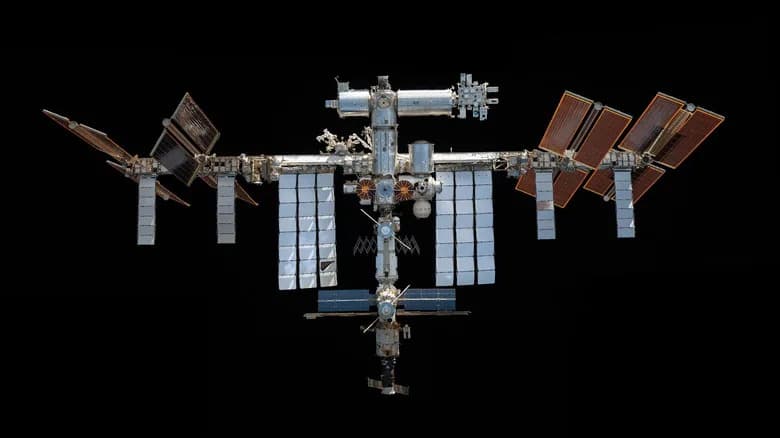
An astrophotographer in Edmonds, Washington, captured the ISS appearing beside Venus in daylight on July 18, 2026. Using a 9.25-inch Celestron Schmidt‑Cassegrain, a ZWO ASI662MC camera, and a UV/IR filter, A.J. Smadi achieved the image through precise timing and stable atmospheric conditions. The ISS orbits at about 4.6 miles/sec (7.5 km/sec), and Venus was roughly 84 million miles (135 million km) away at the time, making the alignment a challenging feat. Smadi’s earlier Venus+ISS photo was selected by NASA as an Astronomy Photo of the Day.
Stunning Daylight Shot: ISS Passes Beside Venus Captured by A.J. Smadi
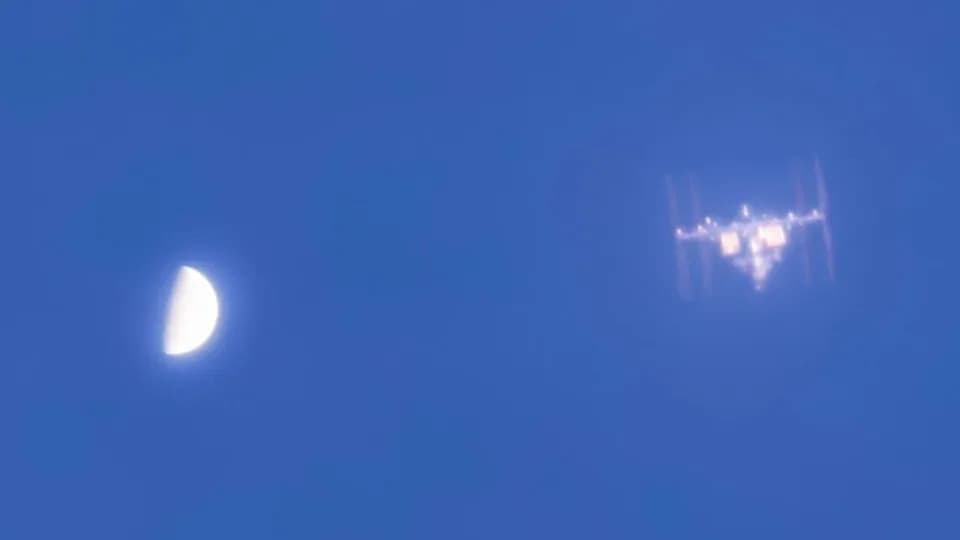
Venus beside the International Space Station as captured by photographer A.J. Smadi from Edmonds, Washington on July 18, 2026. | Credit: AJ Smadi
An astrophotographer near Seattle captured a remarkable daylight scene on July 18, 2026: the International Space Station (ISS) appearing to pass beside the planet Venus. The image, taken from a park in Edmonds, Washington, was photographed by A.J. Smadi and highlights both the skill and planning required for bright‑sky astrophotography.
How the Shot Was Made
Smadi set up a 9.25-inch (23.5 cm) Celestron Schmidt‑Cassegrain telescope paired with a ZWO ASI662MC camera and an ultraviolet/infrared (UV/IR) filter. That combination helps cut scattering and boost contrast in daylight, making faint or distant targets more distinguishable against the blue sky. Precise timing, stable air (good seeing), and fast tracking were all essential to freeze the ISS as it swept across the frame.
“The thing that inspired me to capture Venus with the ISS is the fact that nobody has done it before,” Smadi told Space.com. “After having realized this in April 2025 following my first time capturing the pair together, I was determined to best my own achievement.”
Why This Is Difficult
Photographing a planet and the ISS together in daylight is unusually demanding. The ISS orbits Earth at roughly 4.6 miles per second (7.5 km/s), so exposures must be carefully timed and tracking must be precise to avoid motion blur. Meanwhile, Venus was on the order of tens of millions of miles away from Earth at the time (roughly 84 million miles / 135 million kilometers as reported), meaning the apparent alignment is a matter of timing and perspective rather than physical proximity.
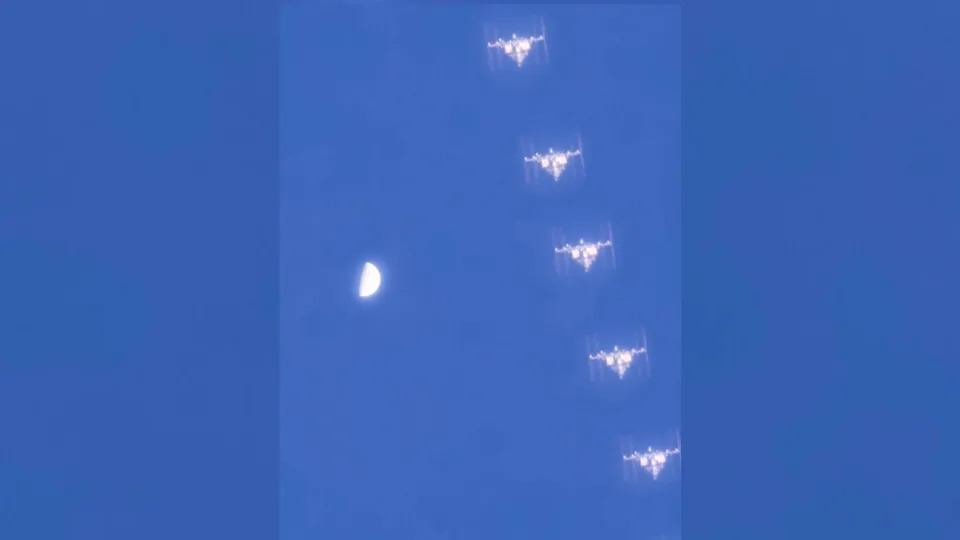
A timelapse photo of Venus passing beside the International Space Station as captured by photographer A.J. Smadi from Edmonds, Washington on July 25, 2026. | Credit: AJ Smadi
Smadi has produced other striking captures of the ISS — including transits of the Sun and Moon and close passes by Saturn — and one of his earlier Venus+ISS images from 2025 was selected by NASA as an Astronomy Photo of the Day.
Additional Media
A timelapse version of a similar capture was recorded on July 25, 2026, further illustrating the fleeting alignment as the station transited near Venus. For more of Smadi’s work, including additional ISS transits and planetary passes, see his Instagram gallery (photographer credit below).
Credit: A.J. Smadi
Help us improve.