Mumia Abu-Jamal, 72, has filed a petition with the UN Working Group on Arbitrary Detention asking for an independent review of his 1982 conviction and decades of appeals. His legal team alleges racial bias in jury selection, judicial misconduct by the trial judge, and newly disclosed evidence that calls the prosecution's key eyewitness into question. The petition also argues that life without parole constitutes "death by incarceration," and Abu-Jamal hopes a UN finding could strengthen calls for a retrial or commutation. Despite severe health problems and vision loss, he continues to write and pursue legal and political avenues for redress.
Mumia Abu-Jamal Appeals to UN, Saying Life-Without-Parole Amounts to 'Death by Incarceration'
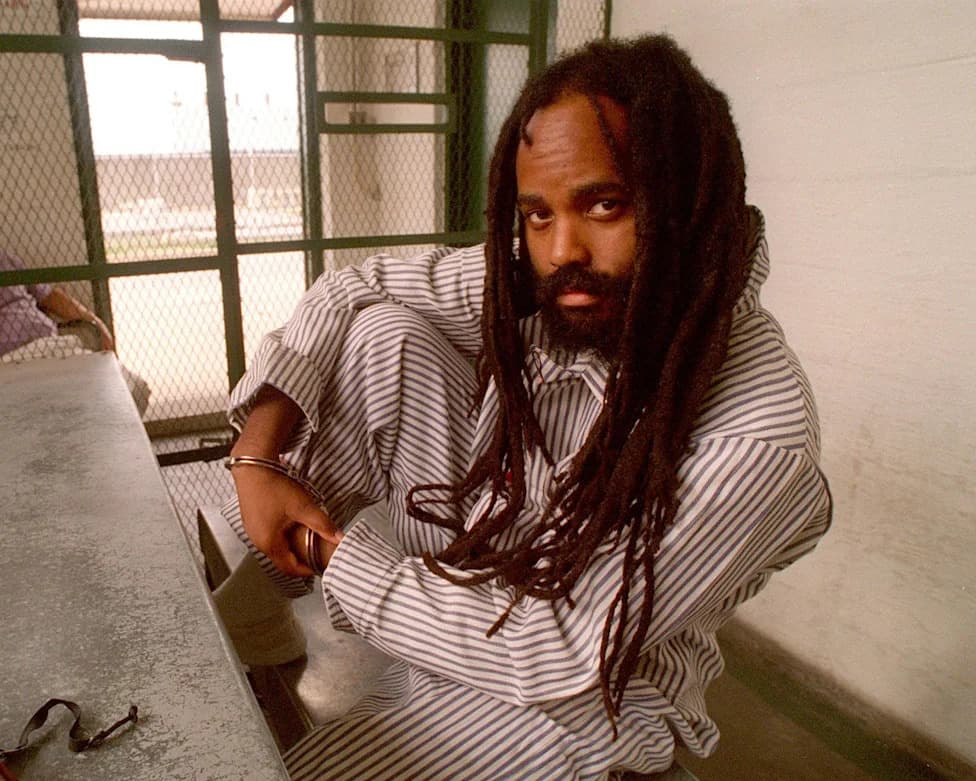
Former Black Panther Mumia Abu-Jamal, seen in this undated file photo.Photograph: April Saul/April Saul / Philadelphia Inquirer
Mumia Abu-Jamal, the 72-year-old former Black Panther and prolific author, has taken his decades-long fight over his 1982 conviction to the United Nations in Geneva. On Tuesday he filed a petition with the UN Working Group on Arbitrary Detention asking international experts to review what his legal team describes as multiple breaches of international law in his trial and subsequent appeals.
The UN Petition
Abu-Jamal is serving life without the possibility of parole at Pennsylvania's Mahanoy Correctional Institution. His lawyers — led by Bret Grote of the Abolitionist Law Center and joined by the ACLU and the Center for Constitutional Rights — say they have exhausted domestic remedies and seek an independent UN finding that could bolster calls for a retrial or commutation.
Allegations of Racial Bias and Judicial Misconduct
The petition catalogues several alleged injustices from the original 1982 trial. It cites notes from the prosecutor that marked jurors with the letters "B" and "W" and alleges that 71% of potential Black jurors were struck compared with 20% of non-Black candidates, leaving a 12-member jury with only two Black jurors in a county that was nearly 40% African American.
The filing also highlights the conduct of trial judge Albert Sabo, who the petition notes presided over numerous capital cases that ended in death sentences and quotes an alleged off-the-record remark attributed to him shortly before the trial.
Newly disclosed material provided to Abu-Jamal's defense in 2018 is also cited. His team says it raises questions about the credibility and motives of the prosecution's principal eyewitness, Robert Chobert.
Life Without Parole: "Slow Death Row"
A central claim in the petition is that Abu-Jamal's sentence of life without parole constitutes arbitrary detention under international standards. Abu-Jamal has described his punishment as "death by incarceration" or "slow death row," arguing that a system which excludes consideration of rehabilitation, age, or health effectively seals a prisoner's fate.
He contrasts the U.S. reliance on long or permanent life terms — more than 200,000 people in the U.S. are serving life sentences — with penal approaches in some other advanced countries where maximum terms are reviewable.
Health, Family and Writing
Abu-Jamal spent 28 years on death row before a court in 2011 converted his sentence to life without parole after finding the original capital sentence unconstitutional. He has endured serious health problems in custody, including diabetes, hepatitis C, congestive heart failure and severe vision loss. Prison records and his own accounts include protracted battles for medical care, delayed treatment for hepatitis C, and difficulties getting cataract surgery.
Reading and writing have been central to Abu-Jamal's survival. He has authored numerous books and continues to work on a scholarly project — a study of Frantz Fanon and The Wretched of the Earth — which he is submitting as part of a PhD. He remains active politically and retains international supporters; he is an honorary citizen of Saint-Denis, France, and has said he would like to visit Ghana and Saint-Denis if ever released.
What a UN Finding Could Mean
The UN Working Group on Arbitrary Detention can issue opinions and recommendations but has no direct enforcement power in the United States. Abu-Jamal's legal team, however, believes a strong, independent finding could provide political weight for domestic efforts seeking retrial, commutation, or other relief — and it would allow experts who are not subject to local political pressures to review the case.
"Hope is an element of struggle, is it not," Abu-Jamal told the Guardian. "As we used to say in the old days, 'La luta continua'."
This petition is the latest chapter in a long legal and political battle that remains deeply polarizing: to some he is a symbol of political imprisonment and racial injustice; to others he remains a convicted cop killer. The UN review will test whether international scrutiny can change the public and legal calculus for a case that has attracted global attention for decades.
Help us improve.