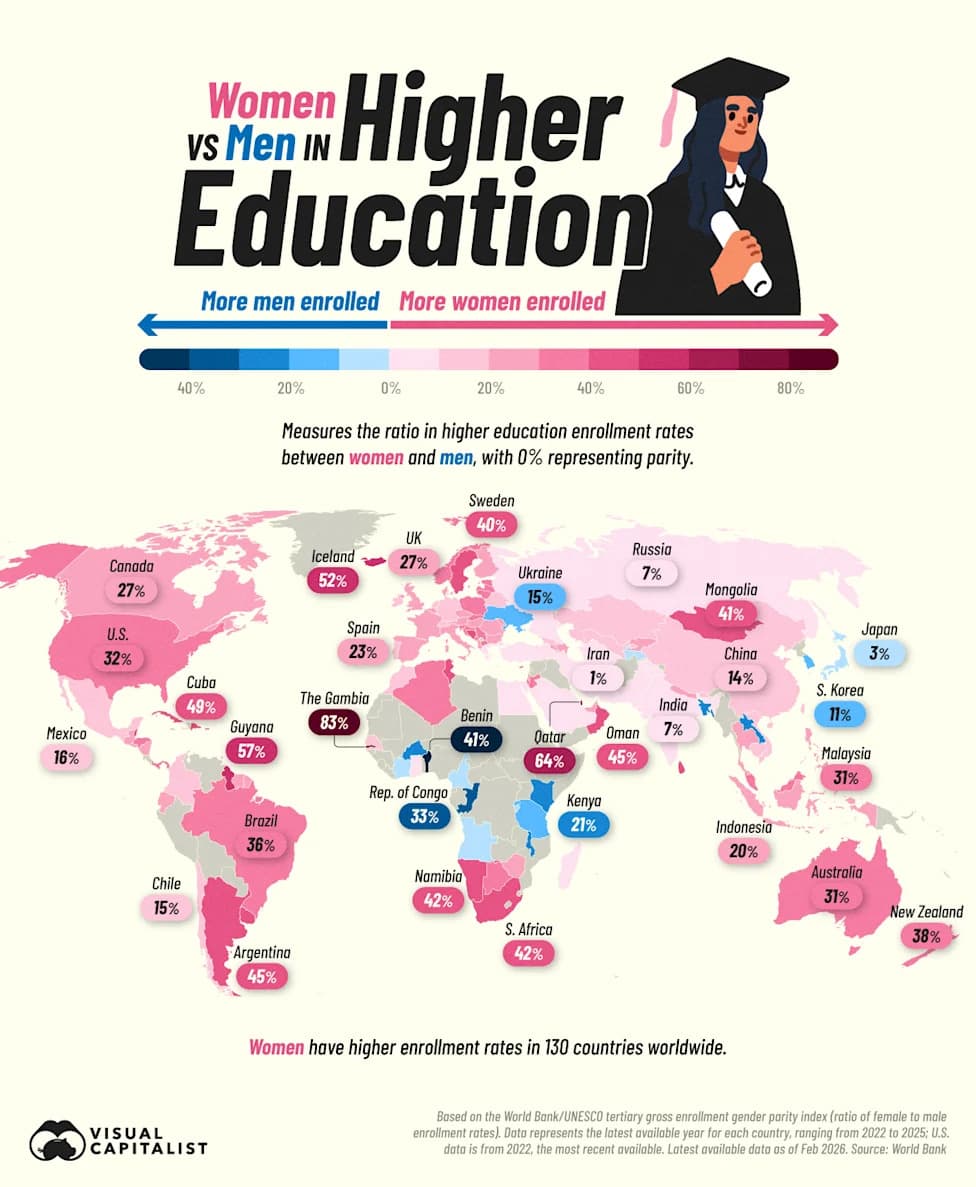
The National Bureau of Economic Research finds about 1.6 million more women than men attend four‑year colleges, shifting the composition of the marriage market for millennials and Gen Z. College‑educated women are increasingly partnering with high‑earning men without degrees, which reduces the pool of degree‑holding or high‑earning men available to non‑college women. Experts warn this trend could lower marriage rates among women without degrees and raise retirement risks, since women live longer but typically retire with substantially less saved. Policymakers may need stronger retirement and labor‑market supports for vulnerable women.
Study: 1.6 Million More Women Than Men Attend College — What That Means For Marriage And Retirement

Some 1.6 million more women than men are going to four-year colleges, a chasm that will have serious long-term effects on millennial and Gen Z marriages and financial stability (AFP/Getty)
A new analysis from the National Bureau of Economic Research (NBER) finds that roughly 1.6 million more women than men are currently enrolled in four‑year colleges — a shift that is already reshaping partnership patterns and could have lasting effects on household finances for millennials and Gen Z.
Key Findings From The NBER Analysis
The researchers report that college‑educated women have largely sustained traditional marriage rates by forming partnerships with high‑earning men who do not have college degrees. That trend, the study argues, effectively reduces the pool of college‑educated and high‑earning men available to women who did not attend college.
"College‑educated women have maintained stable marriage rates by partnering with high‑earning non‑college men, shrinking the pool of economically viable partners available to non‑college women," the study says.
Academic Performance And Enrollment Patterns
The analysis highlights widening differences in academic outcomes: boys are now about twice as likely as girls to fall into the bottom 10% of high‑school GPAs, a pattern linked to lower college enrollment among men. Over time, these educational shifts alter the composition of the marriage market.
Financial And Retirement Implications
Economists warn that these pairing patterns may have long‑term financial consequences. A 2026 Morgan Stanley report noted that women in the United States live roughly five years longer than men but retire with about 39% less in savings on average — a gap that leaves single and low‑income women particularly exposed to retirement insecurity.

Female college graduates who want to get married have a waning group of college-educated men to choose from, and are turning to those without degrees who are also high earners (AFP/Getty)
Research from financial services firm Farther also finds that married women tend to earn more than women who never marry, which can amplify the financial disadvantage for women who remain single or who partner with lower‑earning men.
What This Could Mean Going Forward
If current trends persist for Gen Z and millennials, the marriage rate among women without college degrees may decline, leaving many single or economically vulnerable in later life. Higher lifetime health‑care costs for women and the persistent gender pay gap could compound those risks.
Implications: Policymakers and employers may need to consider stronger supports for retirement saving, affordable health care, and workforce opportunities targeted at women — especially those without college degrees — to reduce growing financial insecurity.
Sources: National Bureau of Economic Research (NBER) analysis; Morgan Stanley, 2026; Farther financial‑services analysis.
Help us improve.