UK Research and Innovation has withdrawn funding for Jodrell Bank, putting scientific operations at the UK's largest radio telescope at risk within two years. The University of Manchester must secure new funding before 2028 to avoid suspending work and risking up to 28 jobs. Jodrell Bank — home to the 250 ft Lovell Telescope and linked to the e‑MERLIN network — has been central to discoveries from black holes to galaxy formation, and experts warn the cut could weaken the UK's role ahead of the international SKA project.
Jodrell Bank at Risk: Funding Cut Could Halt UK’s Largest Radio Telescope by 2028
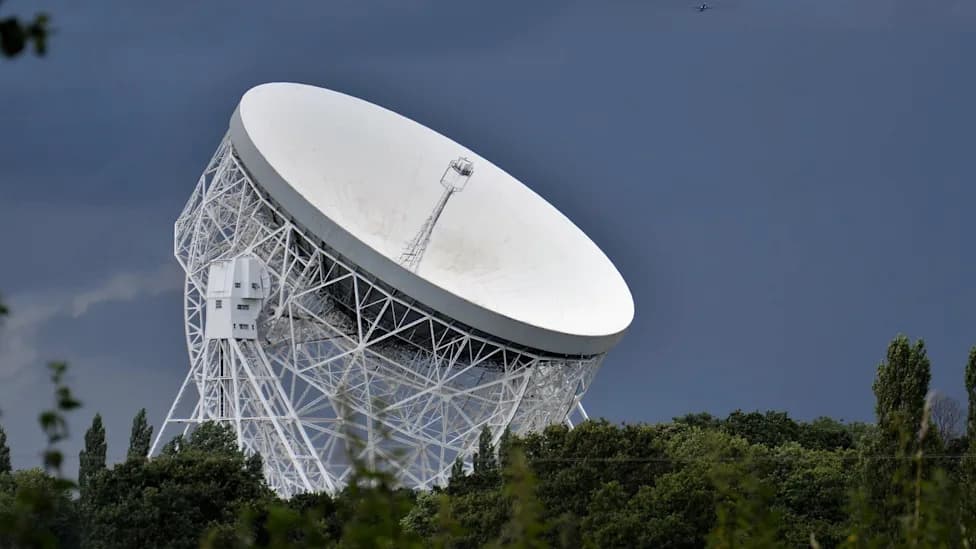
The Lovell Telescope on the Jodrell Bank site was the largest in the world when it was built in 1957 [Getty Images]
The future of Jodrell Bank Observatory — home to the UK's largest radio telescope — is uncertain after UK Research and Innovation (UKRI) announced it will withdraw funding, leaving the University of Manchester to find alternative support before 2028.
Why Jodrell Bank Matters
Jodrell Bank, a UNESCO World Heritage Site in rural Cheshire, occupies under one square mile and is dominated by the 250 ft (about 76 m) Lovell Telescope. The campus also includes control rooms, the Mark II radio telescope and a visitor centre. The observatory links into the UK e‑MERLIN network — a distributed array of radio dishes spanning roughly 125 miles — to increase resolution and sensitivity.
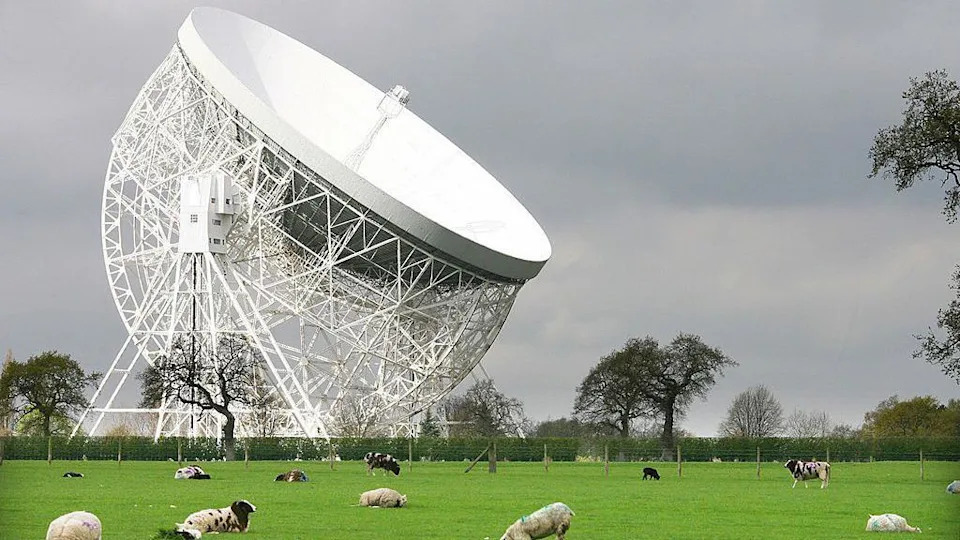
The rural Cheshire location was chosen as a quiet spot to listen to the stars [Getty Images]
History and Scientific Role
Pioneering radio astronomer Sir Bernard Lovell chose the remote, flat fields in 1945 for their low radio interference and began building what would become a leading centre for radio astronomy. The Lovell Telescope, completed in 1957, was then the largest steerable radio dish in the world and has been continually modernised to remain scientifically valuable.
Radio telescopes collect radio-frequency emissions from stars, galaxies and planets and convert them into scientific data and images. The Lovell’s large dish helps detect extremely weak signals, while the Mark II and other instruments broaden the facility’s capabilities.
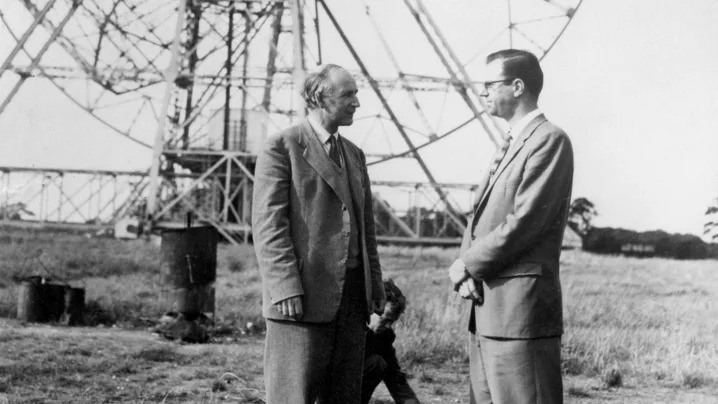
Sir Bernard Lovell (left) was a pioneering radio astronomer [PA Media]
Contributions and Impact
Over decades Jodrell Bank has contributed to identifying supermassive black holes, discovering new galaxies, tracking spacecraft and advancing our understanding of planet and star formation. Thousands of researchers rely on its data, and the site also plays a vital role in training early-career scientists.
What the Funding Cut Means
University officials warn that losing UKRI support could force a suspension of scientific operations within two years unless new funding is found. The university estimates up to 28 jobs could be at risk if alternative finance is not secured.
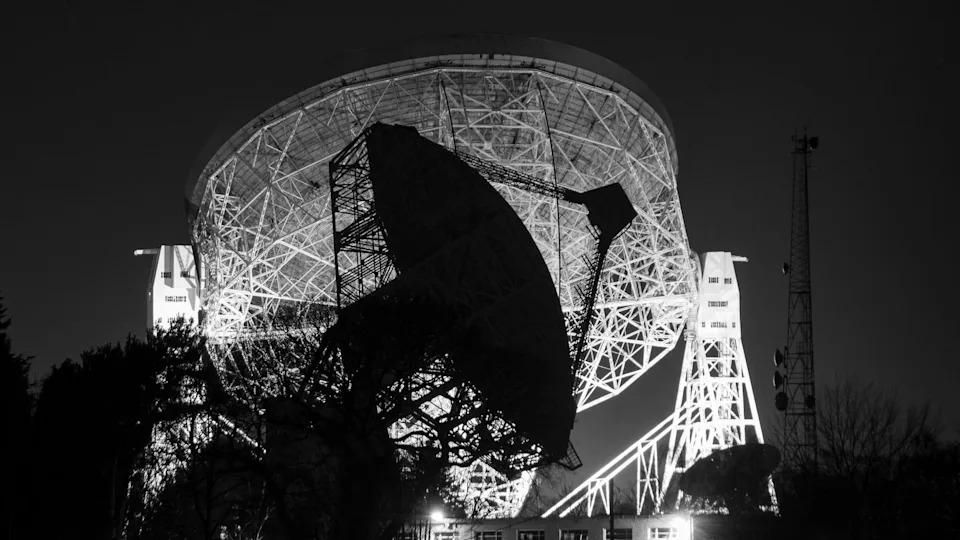
The smaller Mark II telescope works in tandem with the Lovell Telescope, previously referred to as Mark I [Getty]
The UKRI decision comes while construction continues on the international Square Kilometre Array (SKA) in South Africa and Australia, a next‑generation radio observatory expected to begin collecting data in the coming years. Critics argue that reducing support for Jodrell Bank now would weaken the UK’s capability and readiness to participate fully in SKA science.
Professor Philip Diamond, former director of Jodrell Bank and the SKA Organisation, warned: "Removing this support is removing the science capability which is essential for the long-term health of UK radio astronomy and the SKA. It would have a severe impact on the training and careers of young researchers."
Next Steps
The University of Manchester is urgently seeking alternative funding sources and partnerships to keep the observatory operational. The broader UK research community and international collaborators are watching closely, given Jodrell Bank's historical importance and ongoing scientific contributions.
Help us improve.