The Mexican Caribbean is experiencing a record invasion of sargassum seaweed, with Quintana Roo expecting about 119,000 tons this year, surpassing last year's 96,000 tons. Authorities report 92.5% of beaches had excessive sargassum in late June, and removal efforts are costing the region hundreds of millions annually. Decomposing mats threaten marine biodiversity, may release heavy metals, and have caused health complaints among cleanup crews. The government and navy have deployed ships, barriers and drones while scientists call for satellite-linked forecasting and earlier interventions.
Record Sargassum Invasion Smothers Mexico's Caribbean Beaches, Threatens Tourism and Marine Life
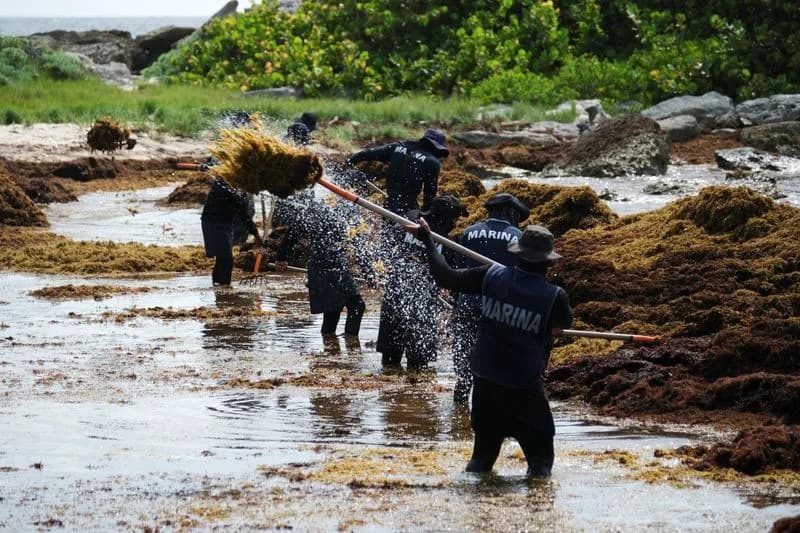
Members of the Mexican Navy collect sargassum seaweed from a beach in the hotel zone in Tulum, Mexico, July 22, 2026. REUTERS/Paola Chiomante
Tulum, Mexico — A record surge of brown, foul-smelling sargassum seaweed is inundating beaches along Mexico's Caribbean coast, forcing closures at major tourist destinations and inflicting mounting economic and environmental damage.
This unprecedented mass of drifting brown algae — which forms vast mats across the Atlantic and is pushed toward Caribbean shorelines by currents each spring — has prompted the federal government to prepare an emergency response plan.
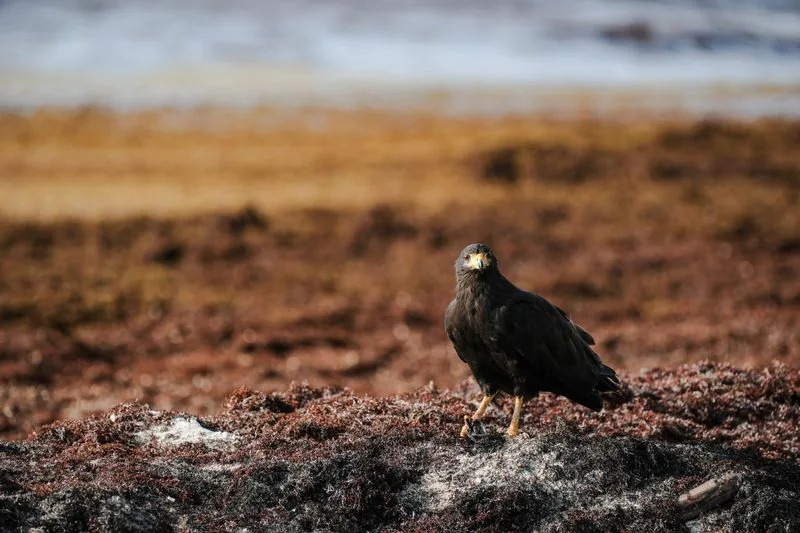
An eagle perches on sargassum seaweed covering the shoreline of a beach in the hotel zone in Tulum, Mexico July 22, 2026. REUTERS/Paola Chiomante
Scale and Local Impact
In the eastern state of Quintana Roo, home to popular resorts such as Cancun, Playa del Carmen and Tulum, authorities now estimate roughly 119,000 tons of sargassum will wash ashore by the end of the year, surpassing last year's record of 96,000 tons. A late-June monitoring report found 92.5% of the state's beaches registered "excessive" sargassum levels.
Economic Costs
Quintana Roo Governor Mara Lezama estimated that managing the influx costs the state roughly 11% of its GDP — about $2 billion annually — while the Riviera Maya hotel association puts annual removal and mitigation expenses at around $150 million. Tulum councilman Eugenio Barbachano said the decline in visitors has pushed the low season into a critical economic period for many businesses.
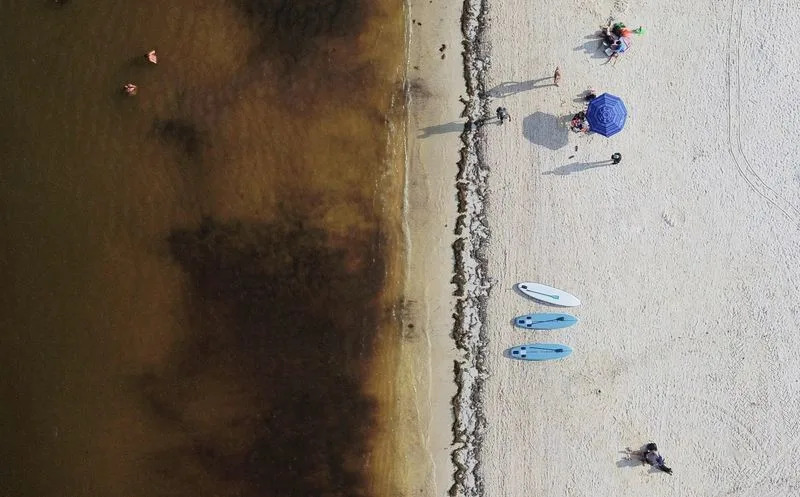
A drone view shows tourists on the shoreline as sargassum seaweed discolours the waters along Mexico's Caribbean coast, where growing accumulations linked to climate change are driving visitors away and threatening businesses that depend on tourism, in Puerto Morelos, Mexico, July 24, 2026. REUTERS/Paola Chiomante
Health and Environmental Concerns
Once stranded on beaches, sargassum decomposes rapidly and emits a sulfurous odor often compared to rotten eggs. Scientists warn decomposing mats can blanket seagrass and coral, block sunlight, reduce biodiversity and deplete oxygen in nearshore waters. Laboratory analysis and published research also suggest degrading sargassum can release arsenic and other heavy metals into sand and nearshore sediments.
"Warmer temperatures are going to give you more sargassum," said Brian Barnes, a research assistant professor at the University of South Florida's College of Marine Science, noting elevated nutrients and longer sunlight hours also contribute to blooms.
Workers who have spent long hours removing sargassum in prior seasons report symptoms including itchy, burning skin, headaches, fatigue and nausea, according to a 2025 scientific study.
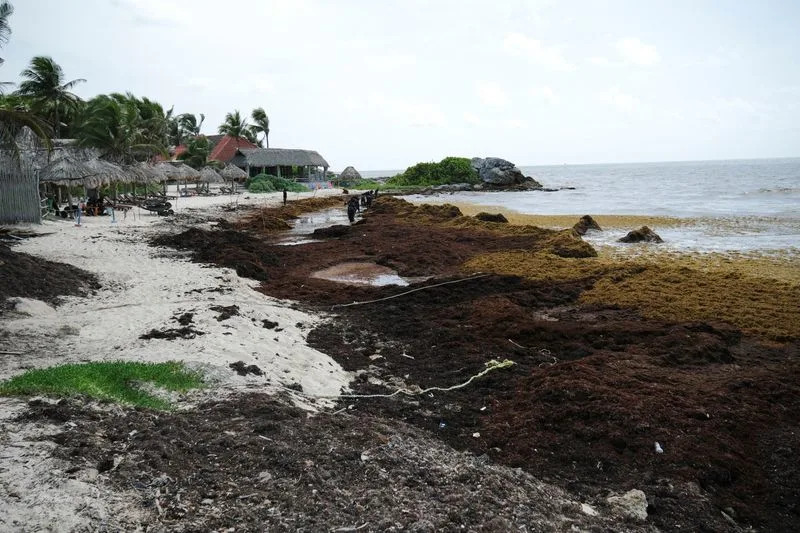
Sargassum seaweed covering the shoreline of a deserted beach in the hotel zone in Tulum, Mexico July 22, 2026. REUTERS/Paola Chiomante
Government Response
The Mexican Navy has deployed a sargassum response fleet including 11 specialized coastal ships, an amphibious sargassum collector, 18 support boats, two barges and four drones. Authorities have also installed more than 9,000 meters (about 29,500 feet) of containment barriers to protect key beaches. The federal government is due to present a revised response plan on July 30 to bolster coordination and mitigation efforts.
Experts such as Brian Lapointe of Florida Atlantic University's Harbor Branch Oceanographic Institute urge an integrated early-warning system that links satellite observations and forecast models with targeted, pre-emptive interventions before sargassum reaches the shore.
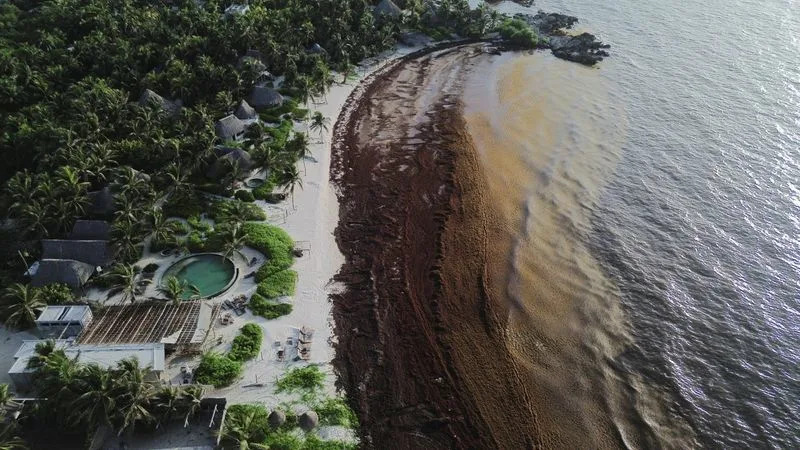
A drone view shows sargassum seaweed covering the shoreline of a deserted beach in the hotel zone in Tulum, Mexico, July 22, 2026. REUTERS/Paola Chiomante
On the Ground
Along the Riviera Maya, crews shovel and scoop knee-deep sargassum to clear stretches of shoreline in demanding, repetitive work. Despite the heavy mats, some tourists still enter the water. "I went swimming today," said Wendy, a Swedish visitor. "I expected worse."
What Happens Next: Scientists warn that seasonal and climate-driven factors may mean more severe sargassum events in coming years, increasing urgency for coordinated regional monitoring, forecasting and cleanup strategies that limit economic, health and ecological harm.
Help us improve.