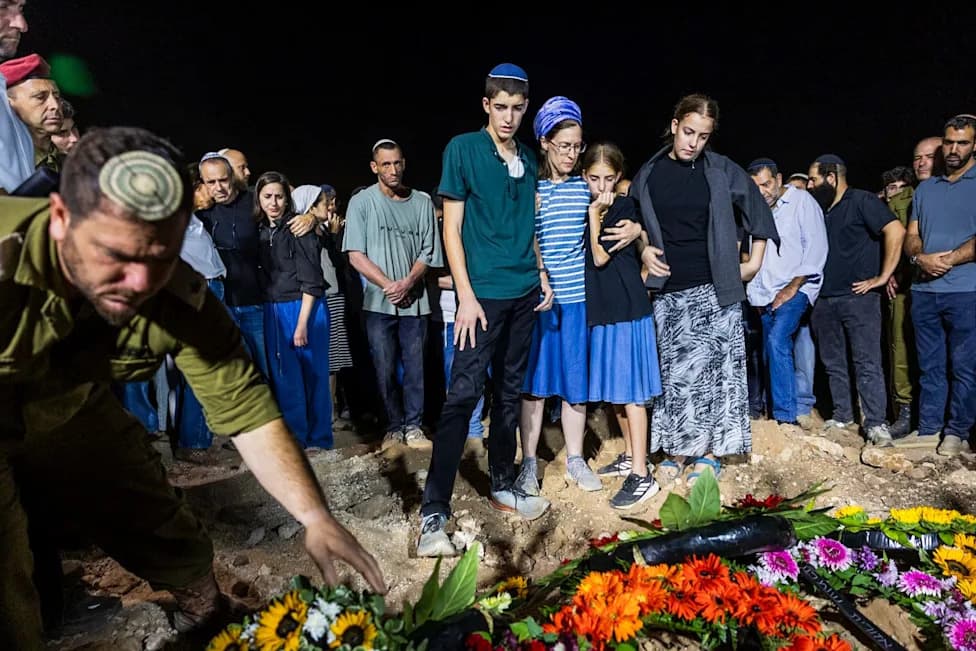
Majdal Shams dedicated a memorial park at the site where a rocket fired from Lebanon killed 12 children and wounded 34 others two years ago. Architect Zvika Pasternak worked closely with bereaved families and the community to preserve the impact crater and incorporate a surviving stone wall into the design. A rusted‑steel depression replicating the 1.65m crater sits at the centre of a rectangular enclosure ringed by 12 engraved slabs in Hebrew, Arabic and English. The park also includes a soccer field and an amphitheatre to combine remembrance with everyday community life.
Majdal Shams Unveils Memorial Park Honouring 12 Children Killed in Rocket Strike
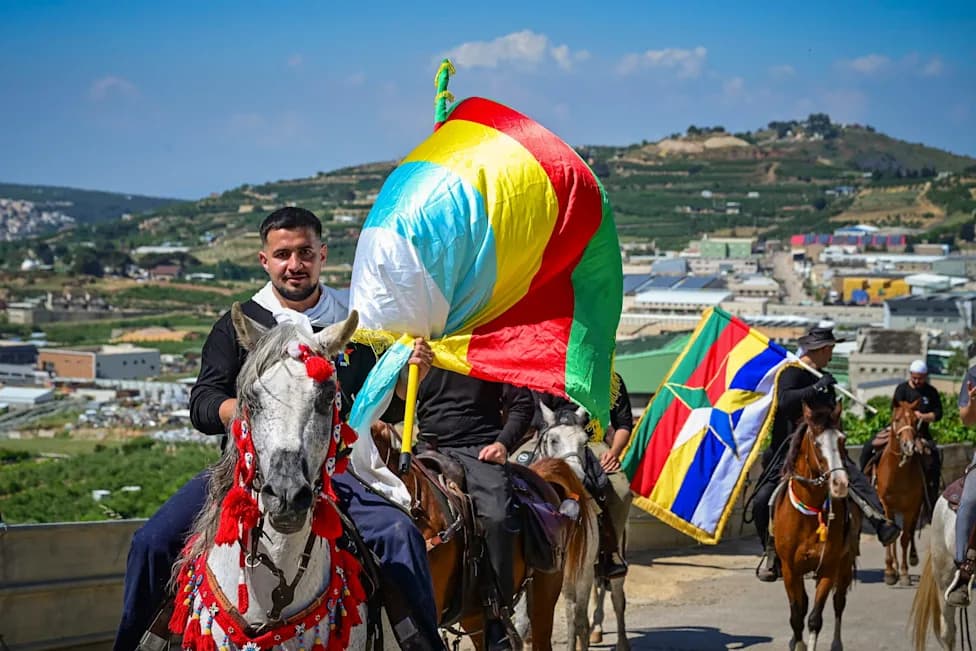
Druze horsemen and cattle growers from the four Golan Heights Druze villages of Majdal Shams, Ein Qiniyye, Buq'ata and Mas'ade parade through the Golan Heights ahead of the Eid al-Adha festival this week, in Majdal Shams, Golan Heights, May 23, 2026. (photo credit: MICHAEL GILADI/FLASH90)
A memorial park was officially dedicated in Majdal Shams on Monday evening to honour the 12 children killed when a rocket struck the village two years earlier. The strike, fired from Lebanon, killed children aged 10 to 16 and wounded 34 others. The blast site became a place of pilgrimage for visitors wishing to express solidarity with the bereaved families and the local Druze community.
Remembrance Designed Around Community Needs
The local council leader initiated the park to pair remembrance with everyday life. Situated around the original impact site, the park includes a soccer field and an amphitheatre intended for commemorative events and community gatherings. The central design challenge was how to mark the precise point of impact while preserving the emotional and physical integrity of the place.
Design: The Crater, The Wall and The Names
Architect Zvika Pasternak, who previously created memorial installations including "Ktav VaShem" at Kibbutz Kfar Aza and the "Bibas Footprints" at Tze'elim, led the project after close consultation with bereaved families and the Majdal Shams community. Pasternak said the guiding principle was to preserve the crater and convey, in a restrained and empathetic way, the force of the impact.
"I knew that the impact crater would occupy only a small area, while a much larger memorial park would surround it," Pasternak told Walla. "My aim was to preserve the crater and, through it, convey the moment of impact in a restrained, clear and empathetic way."
The focal point is a rusted-steel depression replicating the original crater, measuring 1.65 metres in diameter. The depression sits at the centre of a rectangular enclosure: one side is formed from the surviving section of a stone wall that partially collapsed in the blast and is credited with sheltering and saving lives; the other three sides consist of concrete slabs engraved with the victims' first names and ages in Hebrew, Arabic and English.
Initially the team planned to remove the damaged wall, but during a site visit the bereaved father of one victim insisted the wall remain as the only tangible remnant of the strike. The design was revised to make that surviving stone wall the architectural anchor around which the installation was built.
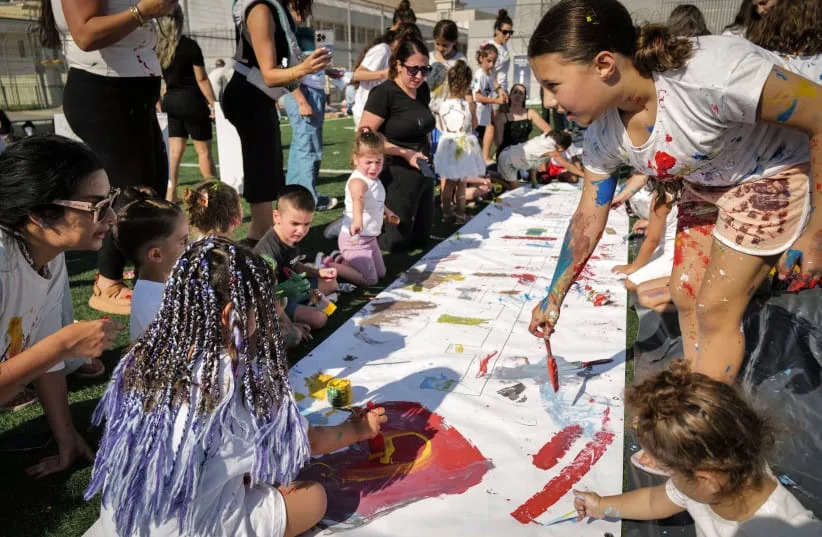
World-renowned Druze artist Sam Halaby creates his signature style, splashing paint to create art with and for the children of Majdal Shams at their football field, organised by NGO ''Hamal Ezrahi'' and ''Nirlat paints'' in Majdal Shams, Golan Heights on July 30, 2025. (credit: Michael Giladi/ Flash90)
Materiality and Making
Pasternak chose rusted steel for the crater as a material echo of the metal from which the rocket was made. The head of the council selected a finish composed of many small welded metal pieces, producing a surface of interlocking geometric fragments. At a metal workshop in Aniam, in the Golan Heights, dozens of triangular steel plates were cut and welded into the three-dimensional depression. Once approved, the completed structure was transported on a trailer to Majdal Shams and installed on a poured concrete platform surrounded by the 12 engraved slabs.
Each slab bears the child's first name and age in Hebrew, Arabic and English, preserving the exact point of impact within a public space for remembrance, reflection and community life.
Responses and Resonance
Even before the park's formal dedication, many visitors had come to the site. Different people found different meanings in the work: the council head saw fracture and mending in the welded metal; a bereaved father recognized the preserved wall as the last remnant of the strike; mothers described the crater as the hole left in their hearts. A local guide likened the rusted depression to a Druze proverb about a copper tray, observing that a touch on one part resonates throughout—a metaphor for how the tragedy became shared mourning across communities.
The memorial park now stands as a restrained, contemplative installation that integrates a preserved remnant of the strike, a metal replica of the crater, public facilities for life and remembrance, and multilingual inscriptions to honour the children who were killed and those who were wounded.
Photo caption: World‑renowned Druze artist Sam Halaby worked with children at the Majdal Shams football field in a community arts project organized by local NGOs (credit: Michael Giladi/Flash90).
Help us improve.