Iran-linked militias in Iraq have resumed drone-and-rocket attacks on Saudi Arabia and the Kurdistan Region while threatening Jordan, Syria, Israel and US forces. Many of these militias grew from post-2003 Shiite factions and were strengthened after 2014 under the Popular Mobilization Forces; several retain close ties to Iran’s IRGC Quds Force. Iraqi Prime Minister Ali al-Zaidi has pledged to place weapons under state control, but hard-line groups such as Kataib Hezbollah appear unlikely to disarm, and Iran can continue to operationalize its proxies via drones and other means.
Disarming Iraq’s Militias Won’t Stop Iran’s Proxy Campaign Across the Middle East
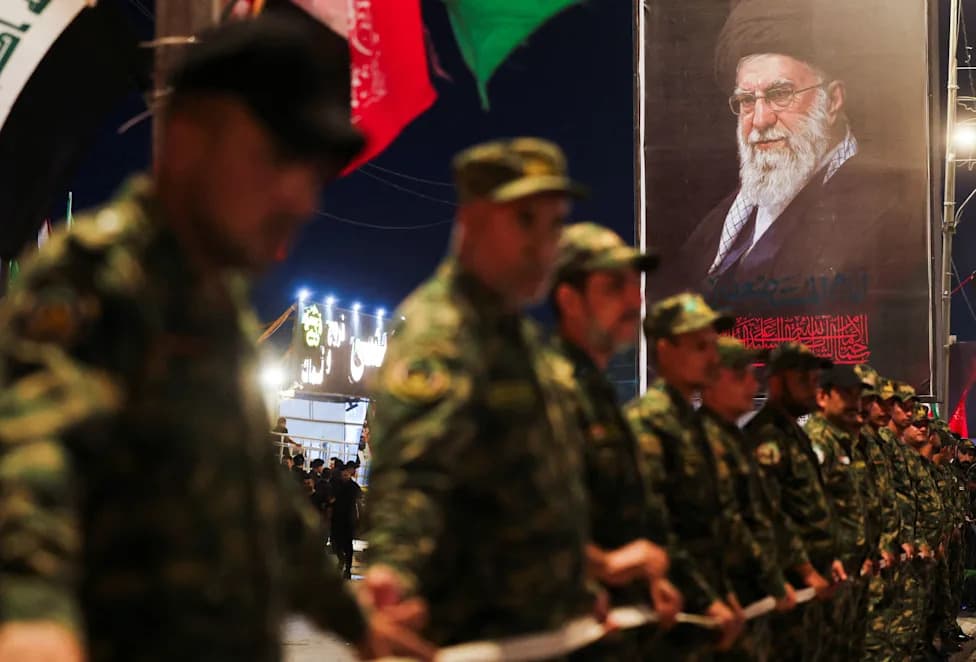
Security personnel stand guard on the day of a funeral procession for Iran
Iran-linked militias based in Iraq have again been used to project violence beyond Iraq’s borders — launching drones and rockets at targets in Saudi Arabia and the Kurdistan Region, and issuing threats against Jordan, Syria, Israel and US forces. Recent incidents over Monday and Tuesday underline a persistent pattern: Iran operationalizes Iraqi proxies to advance regional objectives while denying direct attribution.
Who Are These Militias?
Many of the groups involved trace their roots to Shiite armed factions that fought US and coalition forces after the 2003 invasion. Some predate that era — Badr, for example, has origins stretching back to the 1980s. After the rise of ISIS in 2014, numerous Shiite militias mobilized under the Popular Mobilization Forces (PMF) umbrella. Although the PMF was subsequently folded into Iraq's formal security structure, several factions retained close ties to Tehran and built substantial political and economic influence.
Iran’s Role
The Islamic Revolutionary Guard Corps (IRGC), particularly its Quds Force, has provided funding, weapons, training and operational support to many Iraqi militias. Groups such as Kataib Hezbollah and Asa'ib Ahl al-Haq have benefitted from that support, evolving into potent actors capable of long-range strikes and cross-border operations.
Recent Attacks And Patterns
Monday and Tuesday’s incidents reportedly included drone strikes on Saudi and Kurdish areas, and anti-aircraft responses in Syria that suggest activity beyond Iraqi airspace. Jordanian authorities reported intercepting and shooting down a drone that breached their airspace, while the Israel Defense Forces reported intercepting unmanned aerial vehicles near the Jordanian border; both militaries said the origin of those launches was under review.
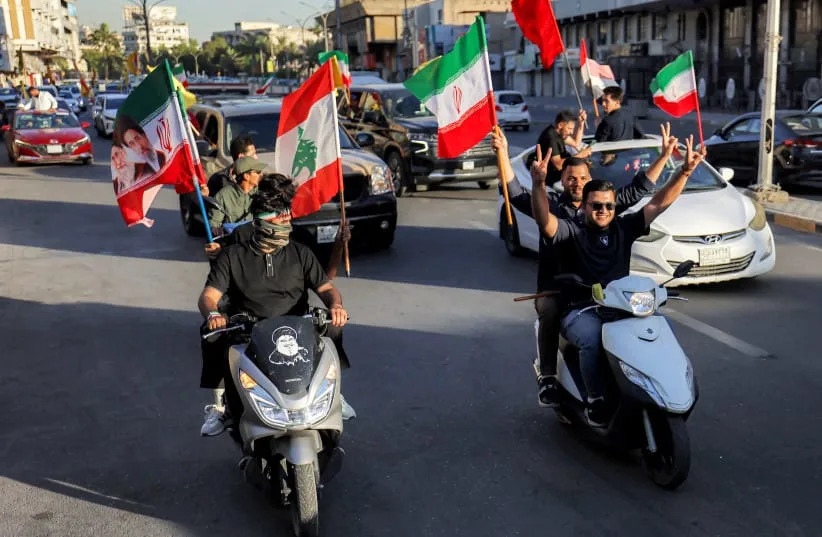
Youths ride vehicles while waving flags of Iraq, Iran, Lebanon and Hezbollah in Baghdad on June 15, 2026, during celebrations following the announcement of a deal to end the war between Iran and the US. (credit: AHMAD AL-RUBAYE / AFP via Getty Images)
"The Royal Jordanian Air Force intercepted and shot down a drone that breached Jordanian airspace early Tuesday," Petra quoted Jordanian forces as saying. The IDF said a UAV was intercepted near the Jordan border and did not enter Israeli territory.
Kataib Hezbollah has historically been linked to more sophisticated and long-range drone attacks, and has deployed fighters into Syria in past years. Other groups under the loose banner of the "Islamic Resistance in Iraq" have claimed responsibility for numerous strikes on US forces in Iraq and Syria since October 2023, framing themselves as part of Iran’s broader "Axis of Resistance."
Local Dynamics: Nineveh Plains And The PMF
The Nineveh Plains near Mosul — home to Christian, Yazidi and other minority communities — also host Iran-linked militias. The PMF’s 30th Brigade, associated with the Shabak community and linked to Badr, has consolidated influence in and around Mosul. Historically, militias operating from the area used Bongo trucks equipped with 122mm rockets to strike Erbil; in recent months those launches have increasingly used drones, reflecting a six-year trend of Iranian drone transfers to proxies.
Disarmament Push And Likely Outcomes
Iraqi Prime Minister Ali al-Zaidi has announced plans to place all weapons under state control — an effort intended to disarm militias. Yet many factions will claim they are already part of the state through PMF incorporation, and hard-line elements have signaled resistance to any enforced disarmament. Kataib Hezbollah and similar groups remain well armed and have repeatedly demonstrated a willingness to threaten neighbouring countries when directed by Tehran.
What This Means Regionally
The recent strikes illustrate that disarmament on paper will not automatically remove Iran’s capacity to use Iraqi proxies regionally. Even if Baghdad reasserts formal control over weapons, Tehran’s embedded influence, the militias’ political power inside Iraq and the growing use of drones create resilient pathways for proxy operations. As long as those dynamics persist, attacks from Iraqi soil — whether directed at Saudi Arabia, the Kurdistan Region, Jordan, Syria, Israel or US forces — are likely to continue.
Key Facts: The US has designated several Iraqi militias as terrorist organizations or specially designated global terrorists, including Kataib Hezbollah, Asa'ib Ahl al-Haq, Harakat al-Nujaba and Kataib Sayyid al-Shuhada. High-profile figures such as Abu Mahdi al-Muhandis — killed in 2020 alongside IRGC Quds Force commander Qasem Soleimani — underscore the historical depth of Iran-militias ties.
Help us improve.