The Georgetown University Medical Center study found that intensive practice can reconfigure brain processing so some tasks bypass the prefrontal cortex and are handled by posterior regions, enabling more effective multitasking. Using fMRI and EEG, researchers measured 11 participants who completed over 30,000 car-categorization trials and observed processing shift to the temporal cortex after training. Participants who offloaded more processing to posterior areas performed better on a simultaneous secondary task. The authors note the study is small and requires replication but highlights a mechanism of learning and neural plasticity.
Practice Rewires the Brain: How Intensive Training Enables Near‑True Multitasking
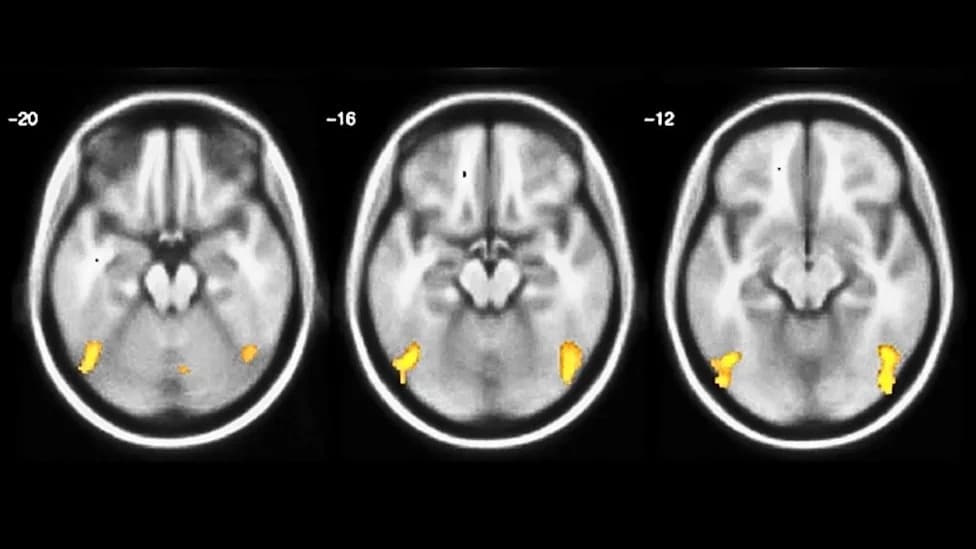
Brain scans after practice showed image processing moving more towards the back of the brain. (Cox et al., J. Cogn. Neurosci., 2026)
Everyday moments — driving with the radio on, making breakfast while chatting, or reading while snacking — feel like multitasking. But do our brains truly perform two demanding tasks at once, or do they simply switch attention rapidly between them?

YouTube Thumbnail
For cognitively demanding work, the evidence has typically favoured the latter: the brain alternates focus rather than handling multiple complex operations simultaneously. A new study in the Journal of Cognitive Neuroscience from researchers at Georgetown University Medical Center, however, shows that with extensive practice some tasks can be rerouted away from the brain's executive hub, producing performance that resembles genuine multitasking.
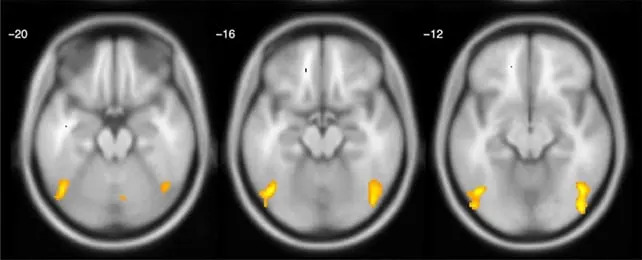
Brain scans after practice showed image processing moving more towards the back of the brain. (Cox et al.,J. Cogn. Neurosci., 2026)
How The Study Worked
The researchers combined functional magnetic resonance imaging (fMRI) and electroencephalography (EEG) to capture both where and when activity occurred in the brain. Eleven volunteers completed more than 30,000 trials over several weeks in which they sorted pictures of cars into categories. Scans were collected before and after this intensive training period to compare changes in processing.

Subscribe to ScienceAlert's free fact-checked newsletter
Main Findings
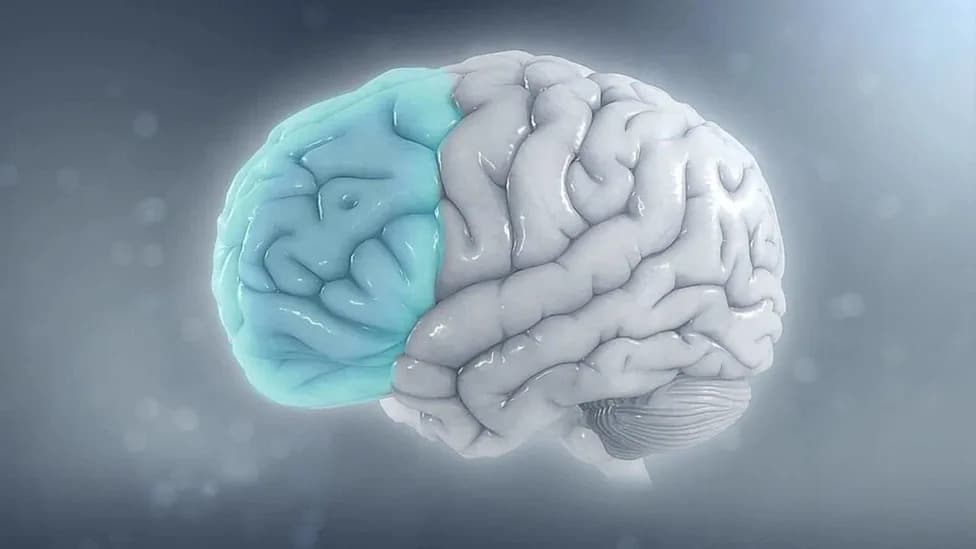
Initially, the car-categorization task engaged the prefrontal cortex — the brain's executive control centre that supports planning and complex decision-making. After training, much of the task-related processing shifted toward the temporal cortex, a posterior region involved in object recognition and memory encoding. This shift is analogous to building a bypass road that diverts routine traffic away from a congested city centre, reducing cognitive load on the prefrontal cortex.

"You really can learn to multitask," says neuroscientist Maximilian Riesenhuber. (Westend61/Getty Images)
"We have another stepping stone in our understanding of how the brain learns," said neuroscientist Maximilian Riesenhuber, the study's senior author. "You really can learn to multitask. There is actually a way to remodel your brain architecture and use other parts of your brain."
In a follow-up dual-task test, participants were asked to identify car images while performing a second, simultaneous task. Those who showed greater offloading of car-processing to the temporal cortex performed better on the concurrent challenge, indicating that rerouting freed executive resources for other work.
Limitations And Implications
The authors caution that this was a small-scale study (11 participants) and that results need replication in larger, more diverse samples. Still, the findings highlight a clear mechanism of neural plasticity that could help explain how experts — such as radiologists — make rapid, often automatic classifications after years of practice. The results may also inform research into compulsive behaviours and guide AI systems that emulate human-like task reallocation.
The study is published in the Journal of Cognitive Neuroscience (Cox et al., 2026).
Help us improve.