Durán's police are locked in a long, dangerous fight with well-funded gangs that traffic cocaine internationally and exploit corruption. Captain Jean Carlos Bustamante leads targeted raids against groups like Los Aguilas while officers face bribery, compromised prosecutions and the recruitment of children into drug networks. Despite reported local drops in homicides and fewer extreme mutilations, experts warn the wider trafficking network and institutional corruption make durable progress difficult.
On Ecuador's Front Line: Police Battle Gangs, Guns and Deep Corruption
[Lee Durant/BBC]
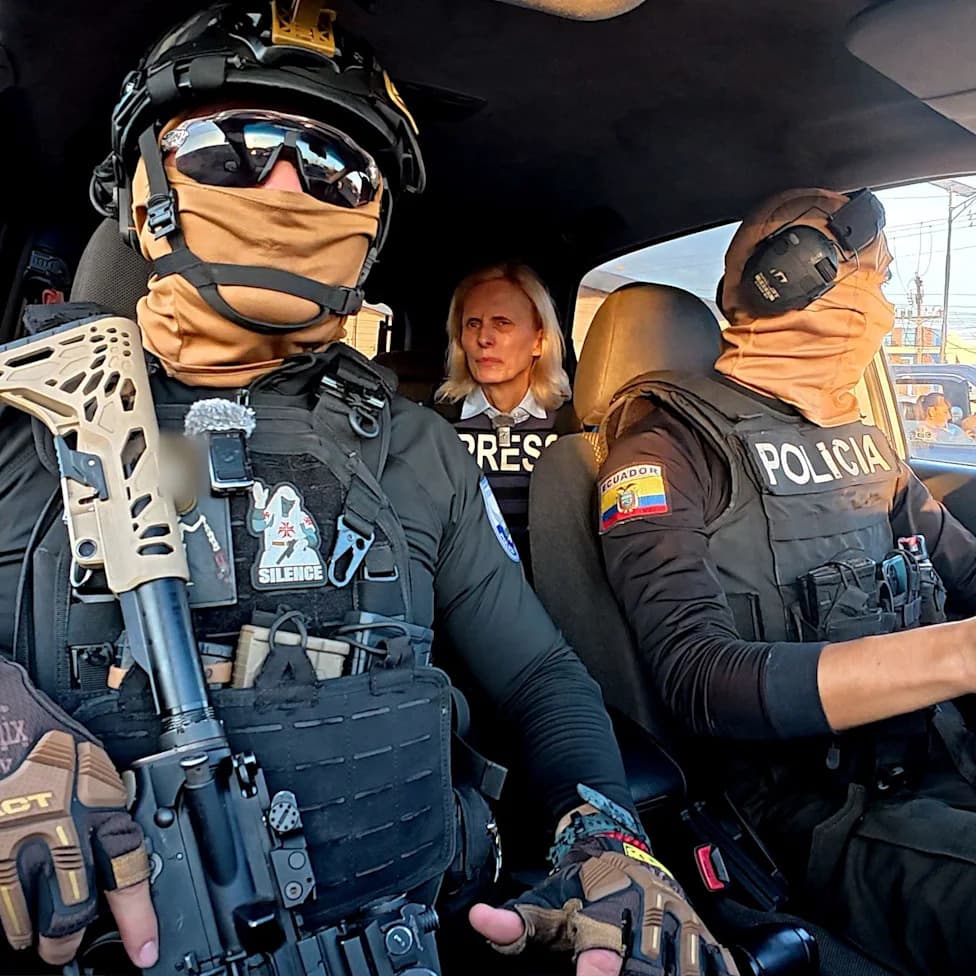
In Durán, a port city outside Guayaquil, police confront a violent drug trade that stretches from South America to markets in Europe and the United States. Captain Jean Carlos Bustamante leads a small, hand-picked team as they raid neighbourhoods controlled by gangs, while also contending with corruption that reaches into the state and parts of law enforcement.
[BBC]
Raids, Risks and Small Victories
At 34, Bustamante moves with the discipline of a former special forces soldier. As dusk falls he and his unit move through narrow streets where windows are barred and people stay silent out of fear. Their target: Los Aguilas (The Eagles), a gang that has carved out territory in Durán.
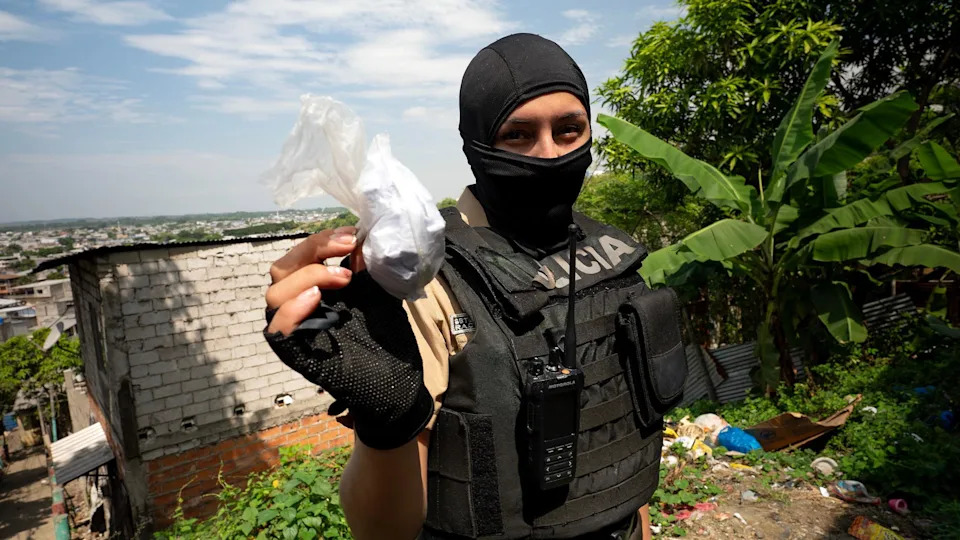
Even when police capture criminals and drugs, they complain corruption in the justice system prevents real change [Lee Durant/BBC]
In one raid officers forced open an abandoned house and recovered two handguns and ammunition for an assault rifle. 'The first reason is that we are safe,' the captain says. 'The second is that there are two guns less for the gangs.' Yet he acknowledges it is a tiny gain in a broader struggle: 'They have many weapons and much more money than the state.'
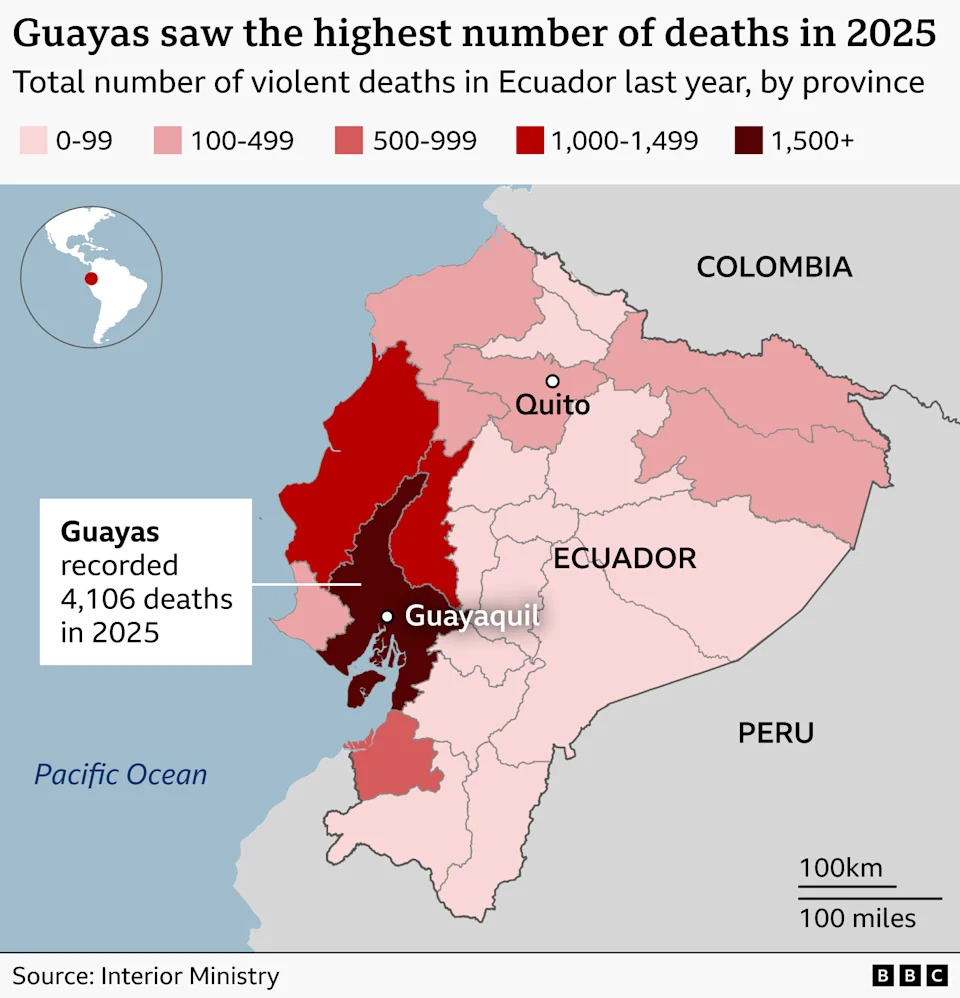
Guayas, the province where Durán is located, had the highest number of violent deaths last year [BBC]
Corruption From The Inside
Officers repeatedly describe corruption as a critical obstacle. Senior police allege that gang money buys influence in courts and politics, and that prosecutors sometimes free suspects who are recaptured in later operations. One unnamed officer reported being offered a bribe 'enough money to retire on' and believes someone inside the force revealed his posting to the gang.
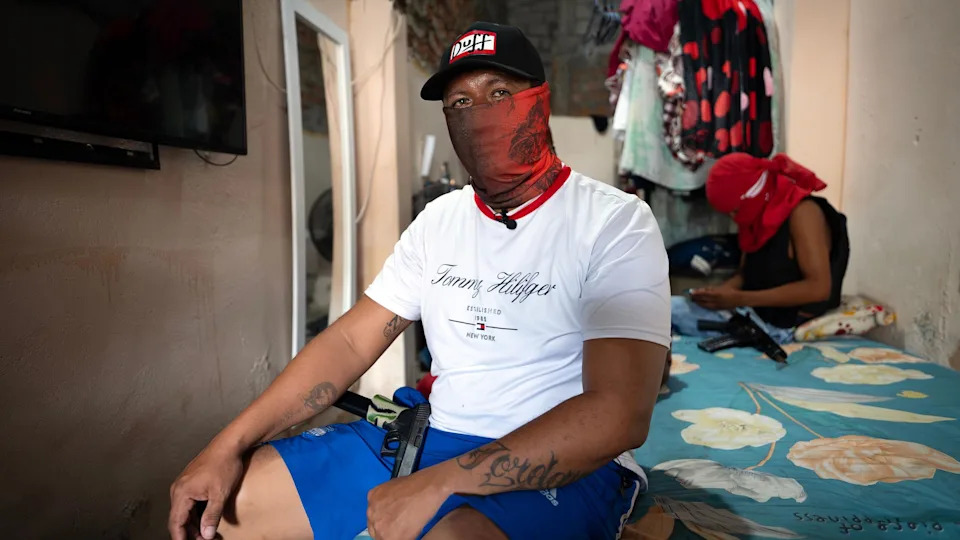
Jonathan - not his real name - says he has four police officers on his payroll [Lee Durant/BBC]
Colonel Santiago Gavilanes, deputy commander of Durán police, says: 'We imprison them and they release them. We know because when we carry out raids, we recapture them. Some of those who are released kill people and leave orphans behind.'
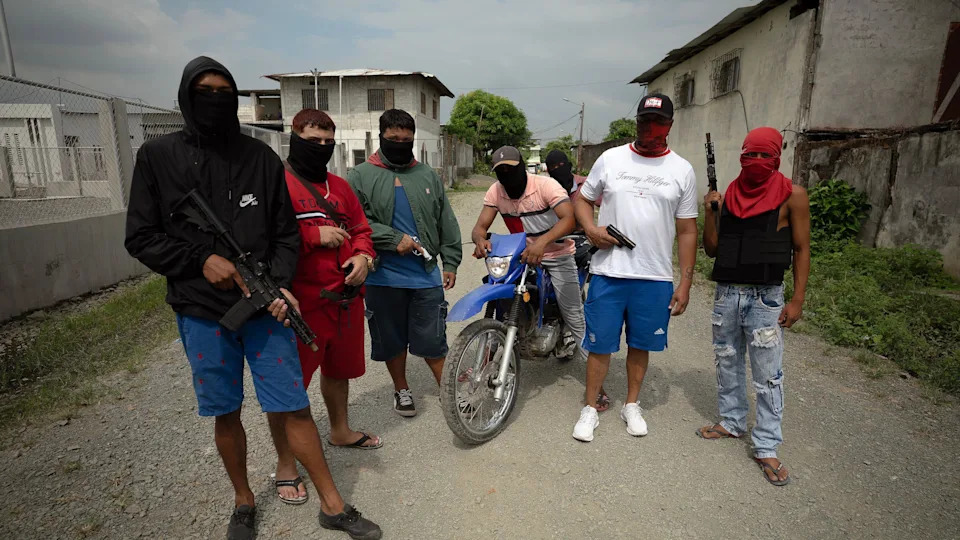
Gang members walk openly down the streets in broad daylight with weapons [Lee Durant/BBC]
Micro-Trafficking And Child Recruitment
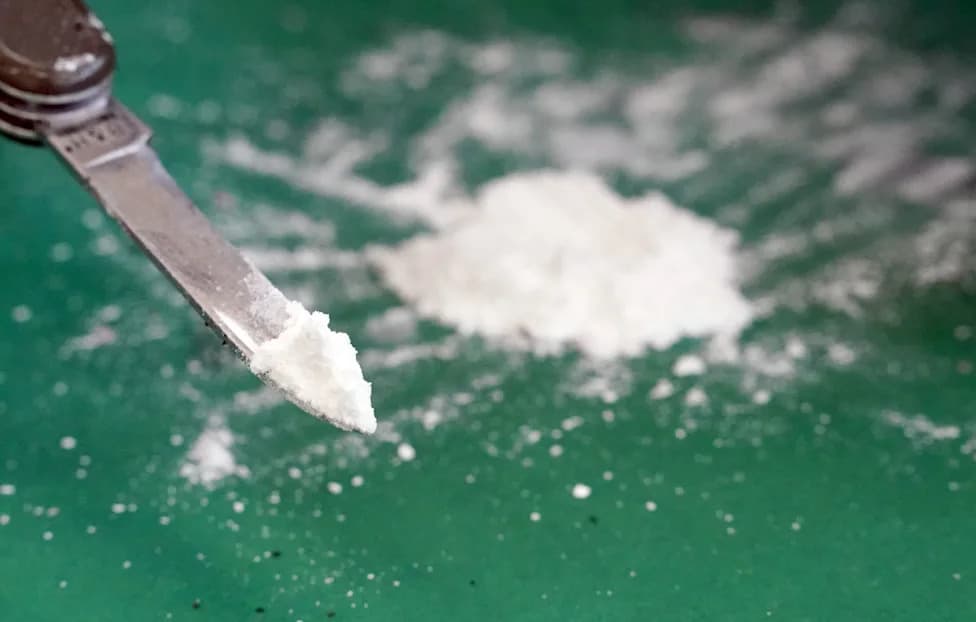
Not all dealers handle kilos. Police frequently target 'micro-traffickers' selling tiny sachets of cheap, highly addictive mixtures — known locally as 'H' — for about $1 each. During one dawn operation officers found paper packets hidden in a flowerpot and detained three suspects; only one remained charged after prosecutors reviewed the case.
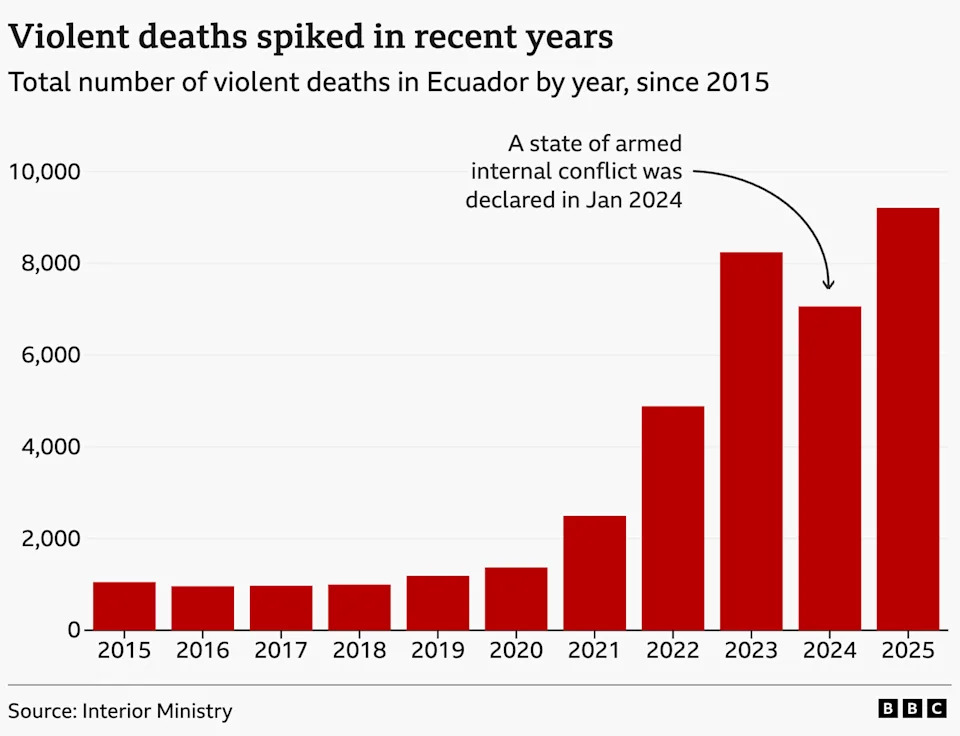
Violent deaths have skyrocketed in Ecuador over the last 10 years [Lee Durant/BBC]
Human rights groups warn that gangs recruit boys as young as 12 and turn many into armed enforcers by their mid-teens. Reporters observed teenagers in bulletproof vests and flip-flops carrying weapons while patrolling gang territory.
Organized Networks And Regional Reach
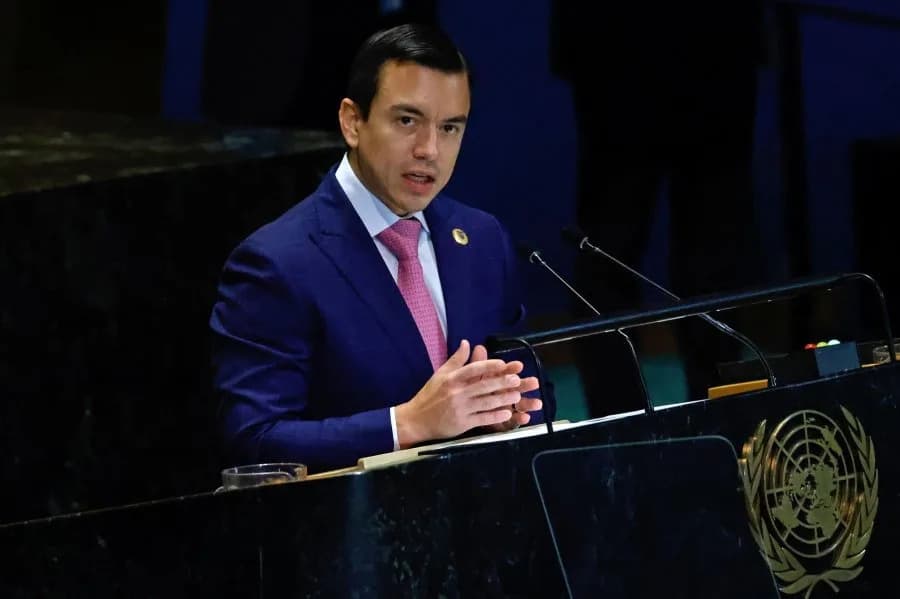
Authorities say Ecuador has become a major trans-shipment route for cocaine. President Daniel Noboa has claimed that roughly 70% of the cocaine destined for Europe and the United States transits Ecuador. Powerful local groups, often linked to Mexican cartels and criminal networks from other regions, exploit weak border controls and Ecuador's extensive Pacific coastline.
Last year Ecuador recorded more than 9,200 homicides, one of the highest totals globally. The national government has mounted an aggressive crackdown over the last two years; the arrests of top crime bosses have fragmented some groups but also, critics say, led to the proliferation of new gangs.
The Human Cost
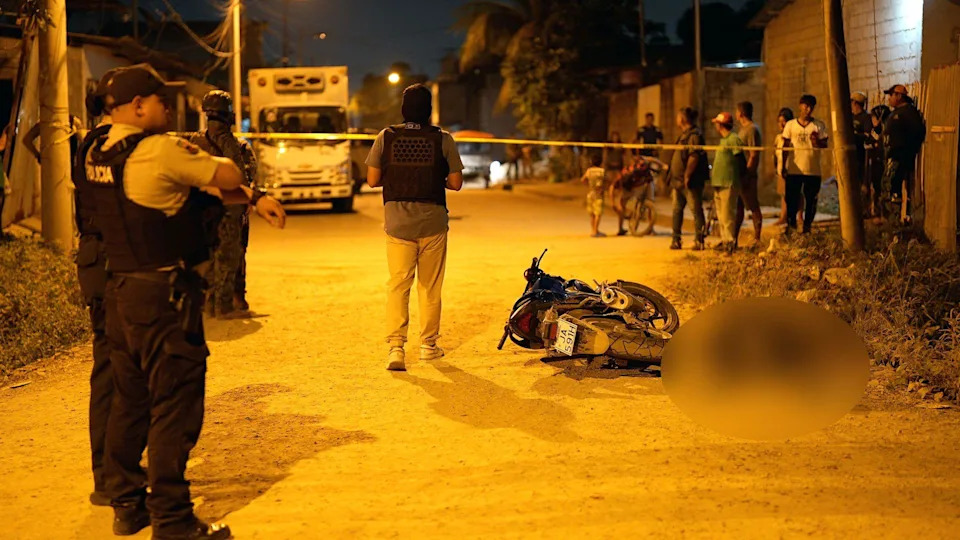
Violence is constant. Reporters witnessed a revenge-style killing: a man shot multiple times beside a motorcycle, neighbours standing in stunned silence while forensic teams worked by flashing lights. 'You might just step outside and catch a stray bullet,' one witness said. Families live with the fear that speaking out can bring deadly consequences.
'You never know who is watching.' — a refrain heard repeatedly throughout Durán.
Signs Of Progress And Limits
Police in Durán report some gains: they say the city's murder rate fell by about half during the first six months of this year, streets remain livelier after dark, and extreme mutilations have declined. Still, senior officers stress that containment is not the same as control. 'Getting complete control is going to be a medium-term process,' Colonel Gavilanes says.
The conflict in Durán illustrates a wider, entrenched problem: well-funded, adaptive criminal networks operating across borders, able to corrupt institutions and recruit vulnerable youth. For front-line officers like Captain Bustamante, the fight continues despite the risks and the knowledge that every small victory may be only temporary.
Reporting contributed by Wietske Burema, Lee Durant and Chris Gibson. Original reporting by the BBC.
Help us improve.