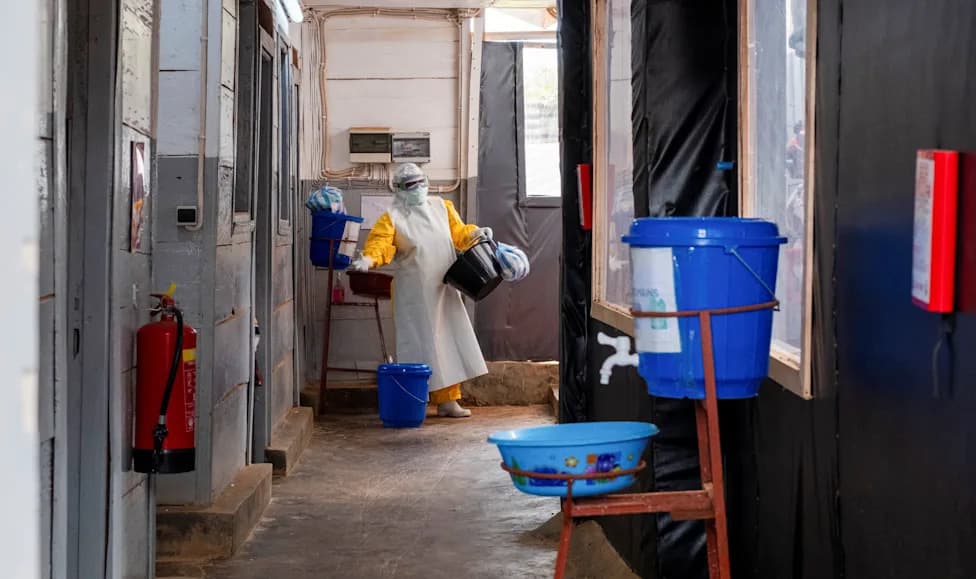
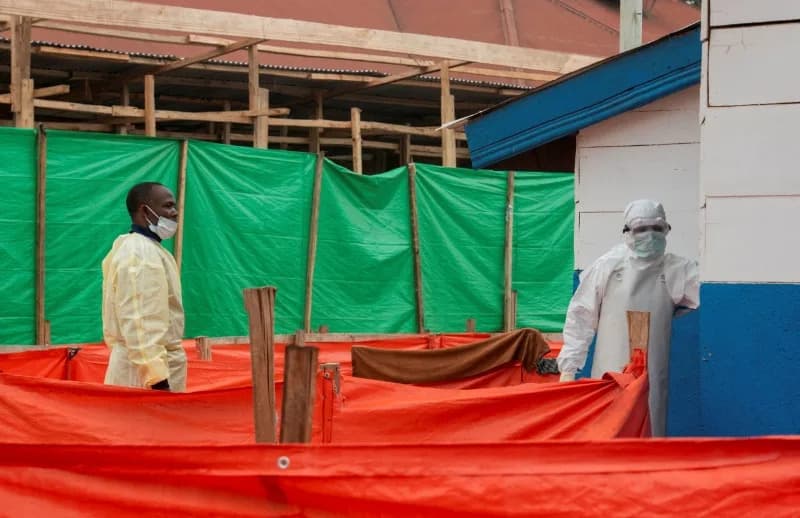
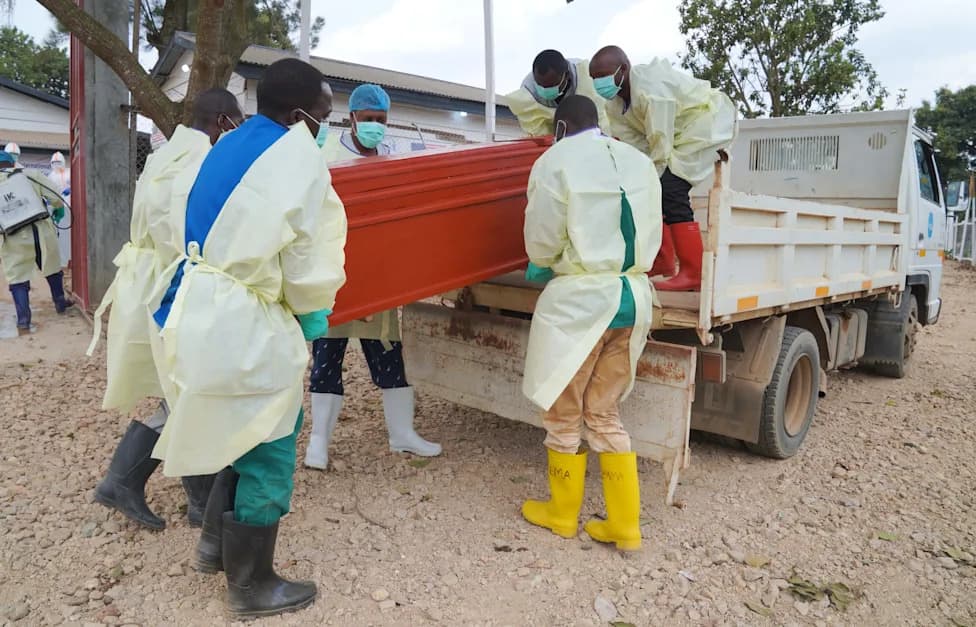
Bunia's Ebola surveillance teams are stretched thin, often operating with as few as four official vehicles to cover roughly 1 million people across 23 health districts. Investigators found frequent gaps in reporting, delayed lab results, and patient refusals that impede contact tracing and isolation. The outbreak involves the Bundibugyo strain, which has no known vaccine or specific treatment; official figures report about 3,200 infections and 1,405 deaths, though WHO estimates the true toll could be two to four times higher.
In the Wheels of an Outbreak: Inside Bunia's Overstretched Ebola Surveillance Teams
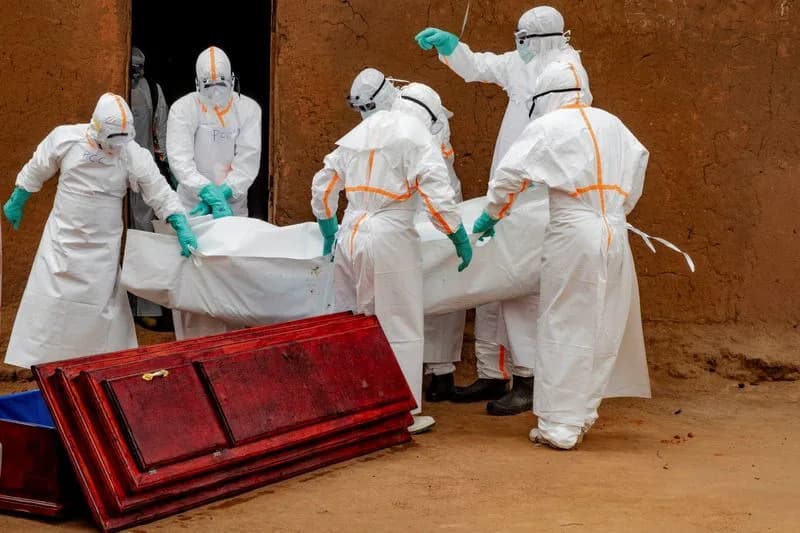
Members of the Civil Protection, a local community-based team that works to help mitigate the spread of the Ebola virus and ensure burials happen safely and quickly, wearing personal protective equipment (PPE), load in to a coffin the body of an unidentified man, who according to his family, died of Ebola, after retrieving it from his house, as aid agencies intensify efforts to contain a new Ebola outbreak involving the Bundibugyo strain, in Bunia, Ituri province, Democratic Republic of Congo, July 10, 2026. REUTERS/Gradel Muyisa Mumbere
In Bunia, a city at the centre of a fast-growing Ebola outbreak in the Democratic Republic of Congo, surveillance teams are racing against time with minimal resources. On many days there are as few as four official vehicles available to cover roughly 1 million people across 23 health districts. When Dr Moubarack Kano arrived for a recent shift and found all the cars in use, he drove his own white Subaru Forester with emergency alert forms in the seat pockets and a rosary hanging from the rear-view mirror.
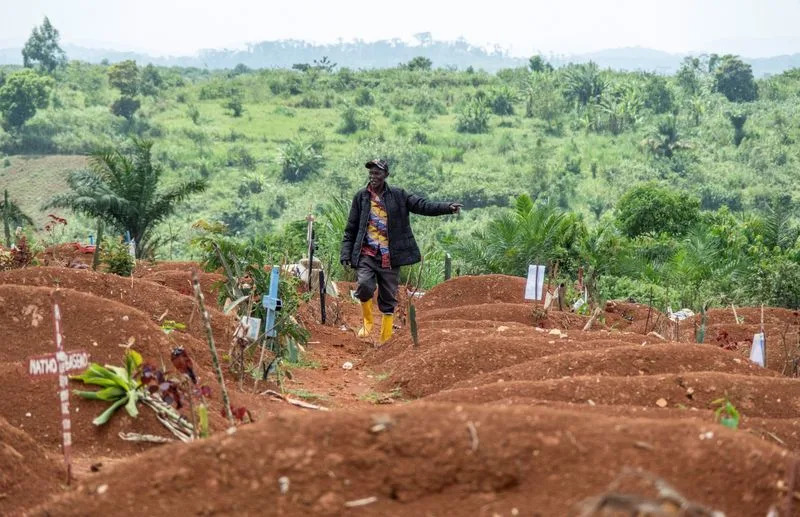
Charles Mambo, the supervisor at the Ceca-20 cemetery, walks past graves during an interview with Reuters, as aid agencies intensify efforts to contain an Ebola outbreak caused by the Bundibugyo virus, in the Ebola hit Mungwalu, Djugu Territory, Ituri province, Democratic Republic of Congo, July 14, 2026. REUTERS/Gradel Muyisa Mumbere
Challenges on the Ground
Reuters accompanied Kano and his colleagues on a patrol as they moved between clinics, checking handwritten consultation registers and following up on possible cases. The investigators repeatedly found gaps in reporting: suspected Ebola cases that had not been alerted to central authorities, missing contact details, and delays in laboratory results. Such breakdowns make it difficult to trace chains of transmission and to isolate people at risk.
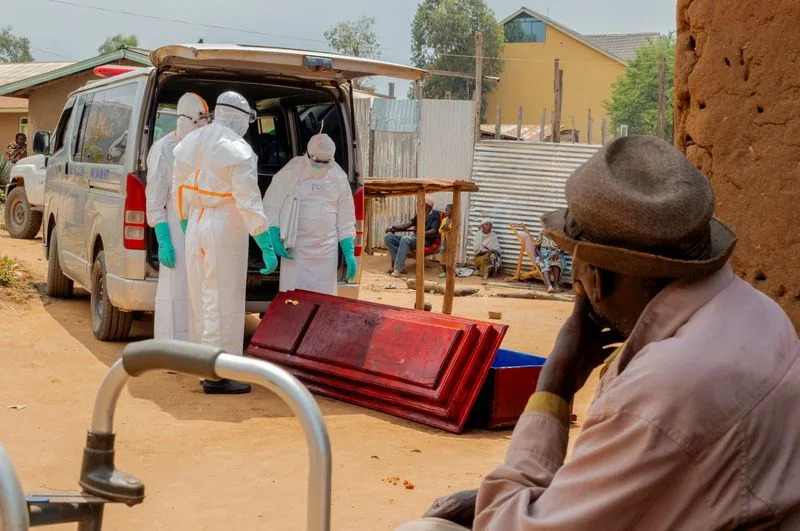
Members of the Civil Protection, a local community-based team that works to help mitigate the spread of the Ebola virus and ensure burials happen safely and quickly, wearing personal protective equipment (PPE), handle a wooden coffin before loading the body of an unidentified man, who according to his family, died of Ebola, as they attend to retrieve it from his house, as aid agencies intensify efforts to contain a new Ebola outbreak involving the Bundibugyo strain, in Bunia, Ituri province, Democratic Republic of Congo, July 10, 2026. REUTERS/Gradel Muyisa Mumbere
Logistics, Staffing and Payments
Beyond the shortage of vehicles, logistical bottlenecks and understaffing have hampered the response. Kano, one of 27 field investigators covering Bunia, said that compared with the 2018–2020 epidemic he now has less time to investigate cases and train teams. Many field workers said they had not been paid since the outbreak was declared on May 15. Authorities have acknowledged operational difficulties and said they are working to resolve payment issues.
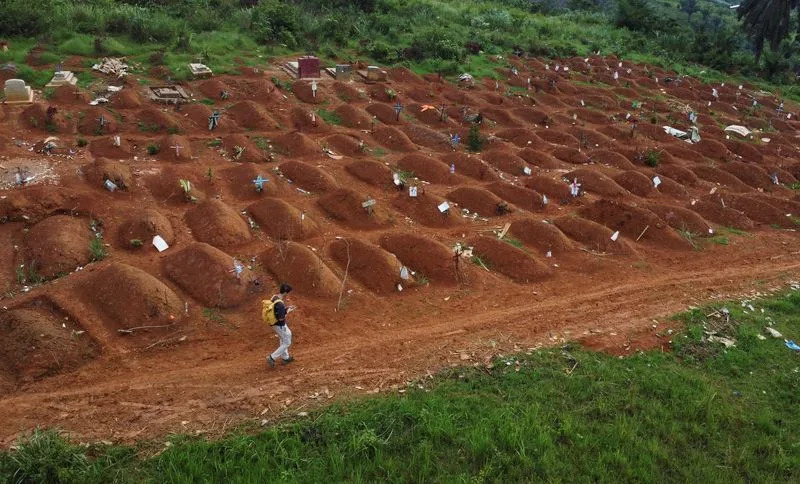
A drone view shows Reuters correspondent Clement Bonnerot walking at the Ceca-20 cemetery, as aid agencies intensify efforts to contain an Ebola outbreak caused by the Bundibugyo virus, in Mungwalu, Djugu Territory of Ituri province, Democratic Republic of Congo, July 14, 2026. REUTERS/Gradel Muyisa Mumbere
Reporting Barriers and Financial Incentives
Investigators found several reasons clinics did not raise alerts: a lack of knowledge of the alert number, the cost of making calls when phone credit is limited, and concerns that notifying authorities could mean losing patients and income if patients are moved or referred elsewhere. "We discover the disease only after it has already spread," Kano said. "We're just chasing it."
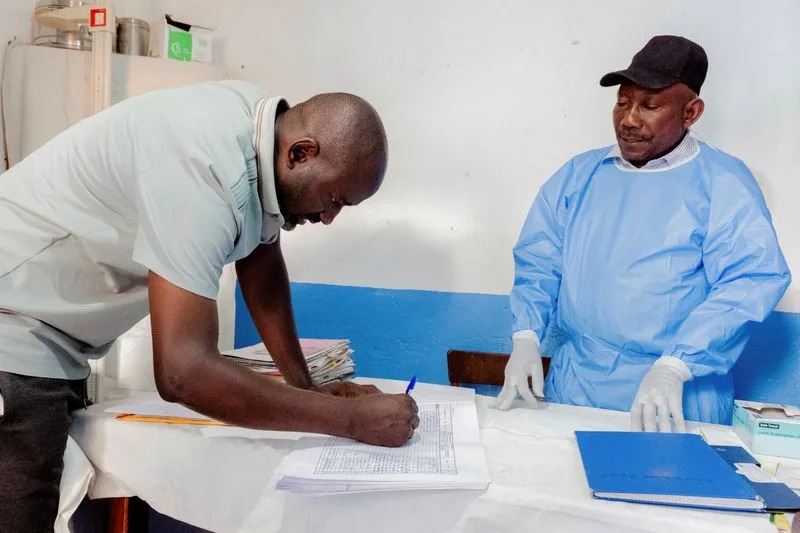
Dr. Moubarack Kano, 40, a Congolese physician who serves as the medical director of the Centre Neuro-Psychopathologique in Bunia, looks at medical records at a health facility, as aid agencies intensify efforts to contain an Ebola outbreak involving the Bundibugyo strain, in Bunia, Ituri province, Democratic Republic of Congo, July 10, 2026. REUTERS/Gradel Muyisa Mumbere
Community Resistance and Delayed Action
Delays and mistrust also play a role. At one centre, two children with fever and IV lines were not sent for testing because their mother refused to believe they had Ebola. The team sent a psychologist to counsel the family. In another case, a father called to report sick children but, according to local coordinators, no rapid response arrived in time and the children later died.
The Virus And The Scale
The outbreak involves the less common Bundibugyo species of Ebola, which currently has no approved vaccine or specific antiviral treatment and can present with milder early symptoms than other strains. Official government figures put infections at about 3,200 and deaths at 1,405, but the World Health Organization estimates the real toll could be two to four times higher.
"Health facilities don't always want to alert," Kano noted, citing financial concerns and patient loss. "When they do so, they risk losing a patient because the patient may be transferred elsewhere. For them, it is a loss of money."
Kano's day ended at a house where a 67-year-old man had died the previous afternoon. Teams in protective suits were disinfecting the site and preparing a safe burial while neighbours watched from a distance. Kano began compiling a contact list, but he feared the virus had already moved beyond the immediate circle of contacts.
The situation in Bunia highlights how limited logistics, gaps in reporting, unpaid field staff, and community mistrust can converge to impede outbreak control. Addressing these issues rapidly — strengthening communication channels, ensuring frontline pay and resources, and improving public engagement — will be essential to slowing transmission.
Help us improve.