Key Takeaway: A proposed federal plan would force Arizona, California and Nevada to reduce Colorado River water use by about 21% across 2027–28 (1.6 million acre-feet each year), with cuts potentially rising to as much as 3 million acre-feet annually from 2029–2036 to protect reservoirs. The proposal has reignited a dispute with Upper Basin states, which oppose mandatory reductions. The Bureau of Reclamation is expected to release a final EIS and binding decision this week, a move that could trigger state lawsuits and prolonged uncertainty.
Federal Plan Would Require 21% Cuts to Lower Basin Colorado River Use, With Larger Reductions Possible
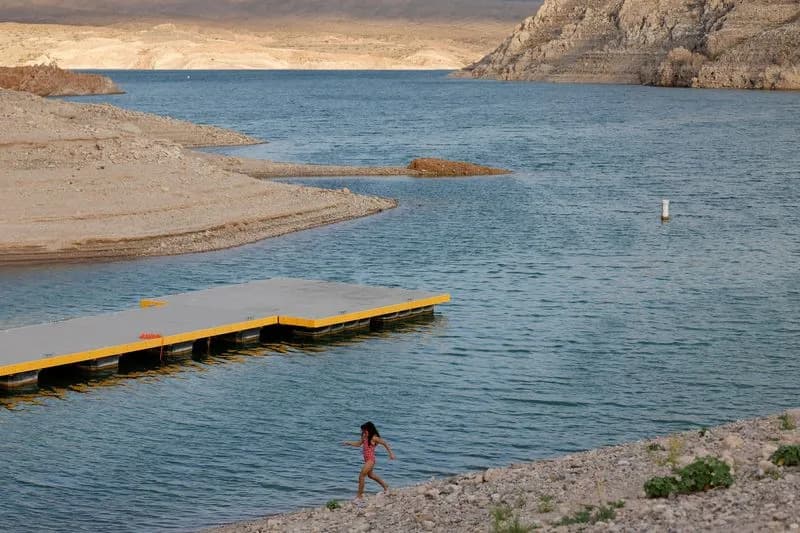
A child walks by the recently extended Echo Bay launch ramp accommodates lower water levels at Lake Mead near Overton, Nevada, U.S., July 21, 2026. Lake Mead, the largest reservoir in the United States by water capacity, has, according to the Metropolitan Water District of Southern California, declined after years of prolonged drought, rising temperatures and heavy demand on the Colorado River system as western states in the U.S. continue negotiations over future water-sharing rules. REUTERS/Caroline Brehman
A U.S. proposal to reallocate shrinking Colorado River supplies would require Arizona, California and Nevada — the Lower Basin states — to reduce water use by roughly one-fifth over 2027–28 and could impose even deeper cuts thereafter to protect critical reservoirs, a senior state water official said on Monday.
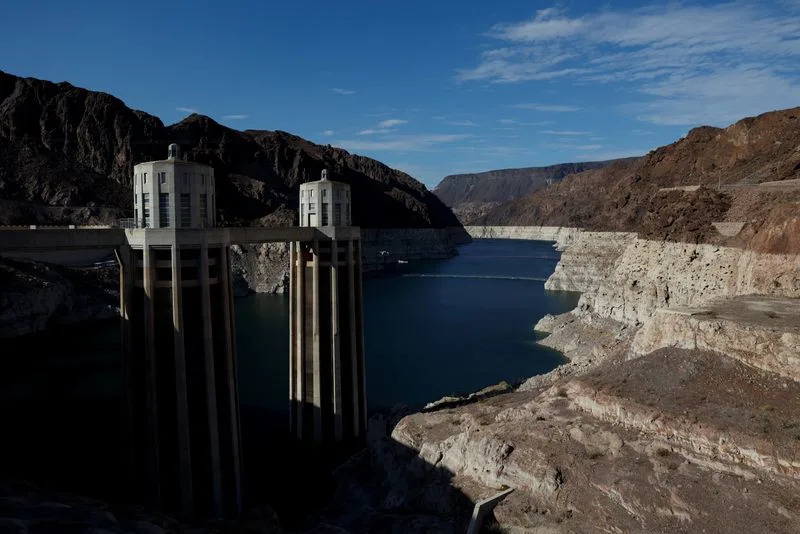
Mineral-stained ‘bathtub ring’ mark previous water levels at Lake Mead near the Hoover Dam in Boulder City, Nevada, U.S., July 21, 2026. Lake Mead, the largest reservoir in the United States by water capacity, has, according to the Metropolitan Water District of Southern California, declined after years of prolonged drought, rising temperatures and heavy demand on the Colorado River system as western states in the U.S. continue negotiations over future water-sharing rules. REUTERS/Caroline Brehman
Who Would Be Affected: The plan targets the Lower Basin states but a senior official, speaking on the condition of anonymity because discussions are sensitive, said reductions should also extend to the four Upper Basin states — Colorado, New Mexico, Utah and Wyoming. The Colorado River supplies drinking water to about one in 10 Americans, irrigates farmland responsible for roughly 15% of U.S. food production, and helps generate power for more than 6 million people across the region.
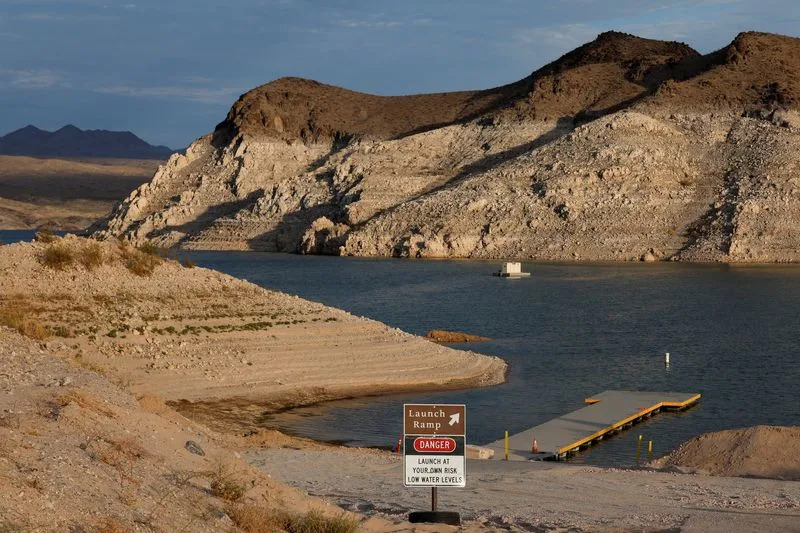
The recently extended Echo Bay launch ramp accommodates lower water levels at Lake Mead near Overton, Nevada, U.S., July 21, 2026. Lake Mead, the largest reservoir in the United States by water capacity, has, according to the Metropolitan Water District of Southern California, declined after years of prolonged drought, rising temperatures and heavy demand on the Colorado River system as western states in the U.S. continue negotiations over future water-sharing rules. REUTERS/Caroline Brehman
Planned Cuts and Timeline
According to the official, the U.S. Bureau of Reclamation is expected to adopt a short-term proposal from Arizona, California and Nevada calling for cuts of 1.6 million acre-feet in 2027 and another 1.6 million acre-feet in 2028 — a combined 3.2 million acre-feet that amounts to about a 21% reduction from the Lower Basin’s current allotment. Reclamation had not immediately responded to requests for comment.
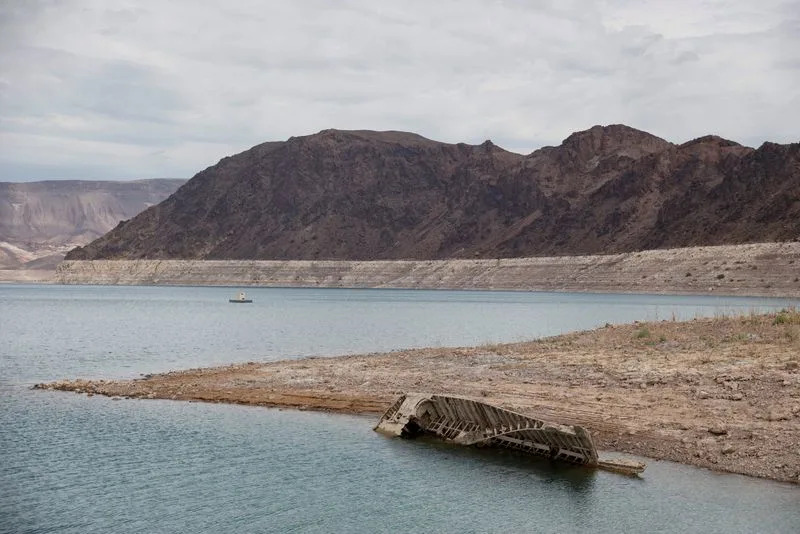
A World War II-era Higgins landing craft rests on the exposed shoreline at Lake Mead National Recreation Area as declining water levels continue to reveal long-submerged features near Boulder City, Nevada, U.S., July 21, 2026. Lake Mead, the largest reservoir in the United States by water capacity, has, according to the Metropolitan Water District of Southern California, declined after years of prolonged drought, rising temperatures and heavy demand on the Colorado River system as western states in the U.S. continue negotiations over future water-sharing rules. REUTERS/Caroline Brehman
The official warned that reductions for the Lower Basin could nearly double in 2029–2036, reaching as much as 3 million acre-feet annually if needed to maintain critical reservoir levels. The 10-year framework would be reviewed every two years and adjusted based on actual water conditions.
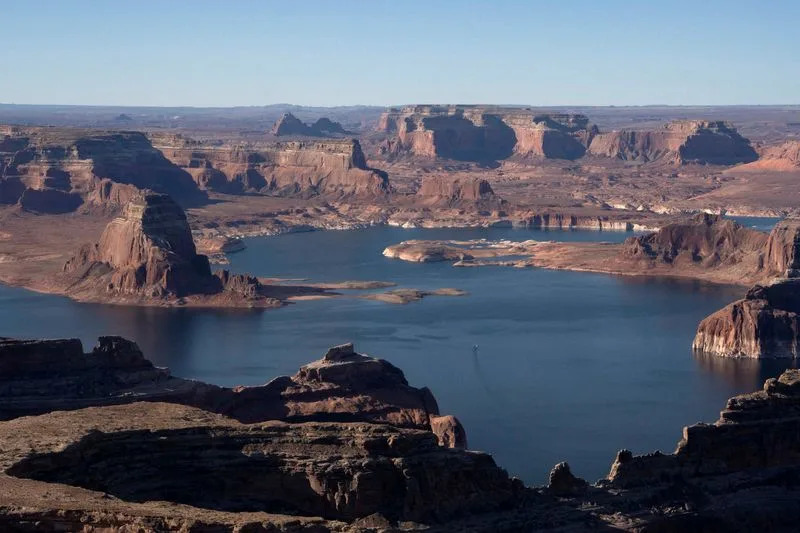
FILE PHOTO: An aerial view shows critically low water levels in Lake Powell, a reservoir of the Colorado River, near Page, Arizona, U.S. May 15, 2025. REUTERS/Rebecca Noble/File Photo
Upper vs. Lower Basin Dispute
Lower Basin leaders previously agreed to a 21% reduction and are urging the federal government to require Upper Basin states to share mandatory cuts. By contrast, a Reclamation draft plan proposed voluntary conservation measures for the Upper Basin rather than mandatory reductions. Upper Basin officials have pushed back, saying their supplies are already constrained by prolonged drought and that larger cuts by the Lower Basin — which consumes most of the river’s water — are necessary to stabilize the system.
Legal And Policy Stakes
Federal intervention could prompt lawsuits from states and stakeholders, potentially prolonging uncertainty over river management for years. Reclamation is expected to issue a final environmental impact statement (EIS) this week and publish a binding record of decision on Friday.
"This is a high-stakes, region-wide challenge that balances drinking water, agriculture and hydropower needs," the anonymous official said, urging a comprehensive approach across all seven basin states.
Context: State negotiators have spent three years trying to replace a 20-year plan that expires at the end of 2026. Any binding federal decision could reshape water allocations and prompt litigation as states defend their interests.
Help us improve.