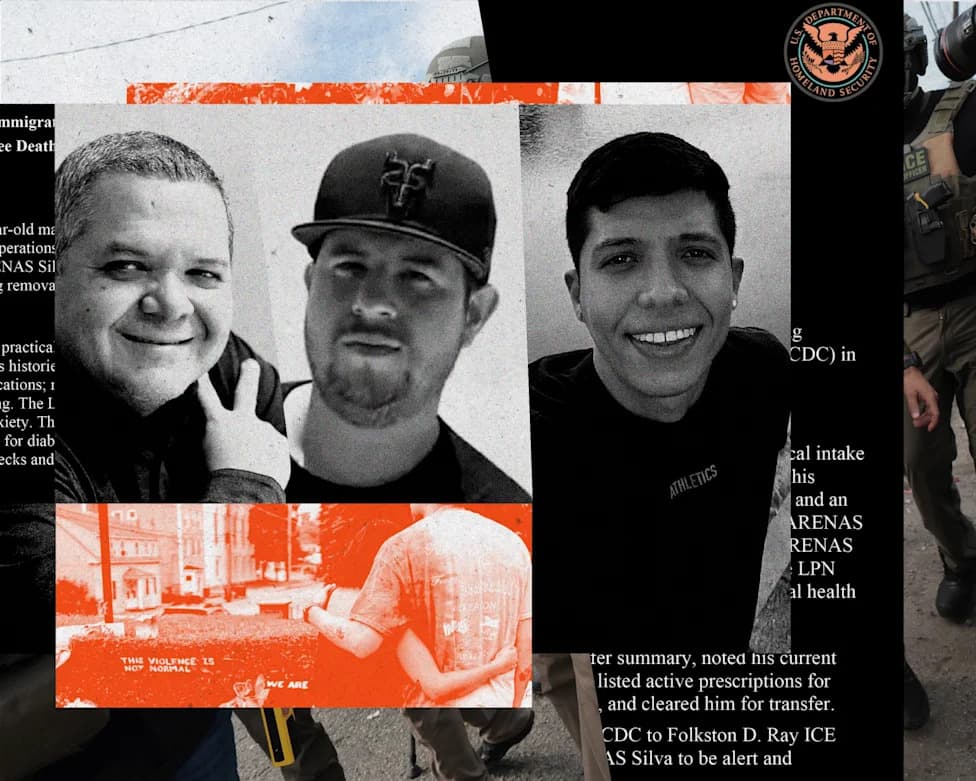
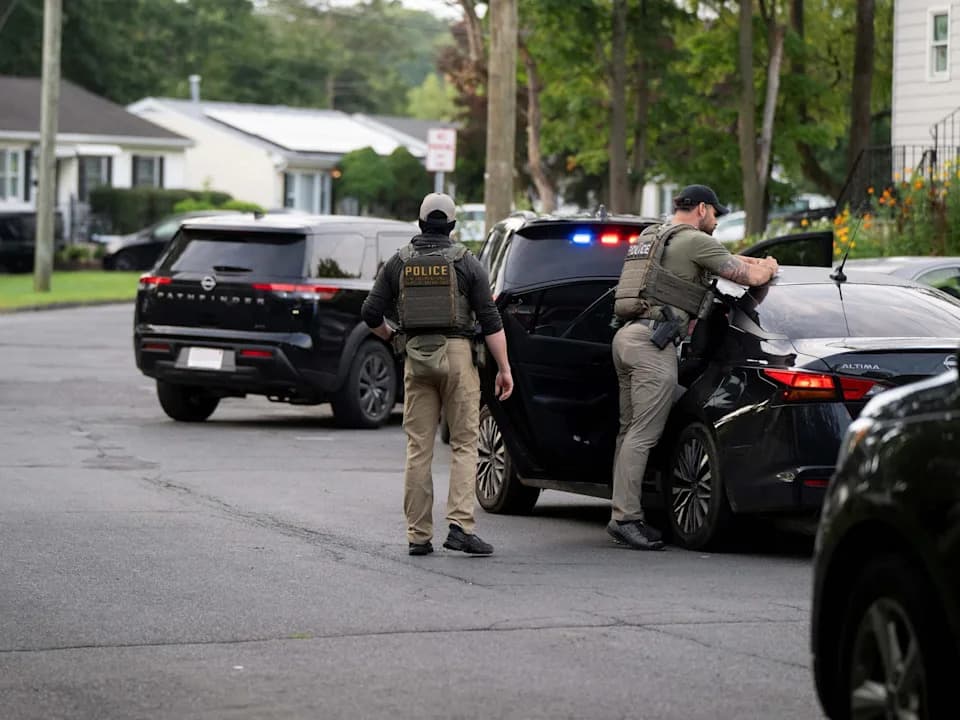
The fatal shooting of Johan Sebastián Durán Guerrero in Biddeford has renewed scrutiny of ICE tactics, training, and the use of force against moving vehicles. Federal policy permits shooting at vehicles only when an officer reasonably believes there is an imminent lethal threat, yet experts warn such shots endanger bystanders and should be a last resort. The incident is part of a broader pattern of vehicle-related uses of force by immigration agents and has revived calls for body cameras, better training, and clearer oversight.
Biddeford Shooting Sparks Fresh Scrutiny Of ICE Tactics, Training And Vehicle-Stop Policy
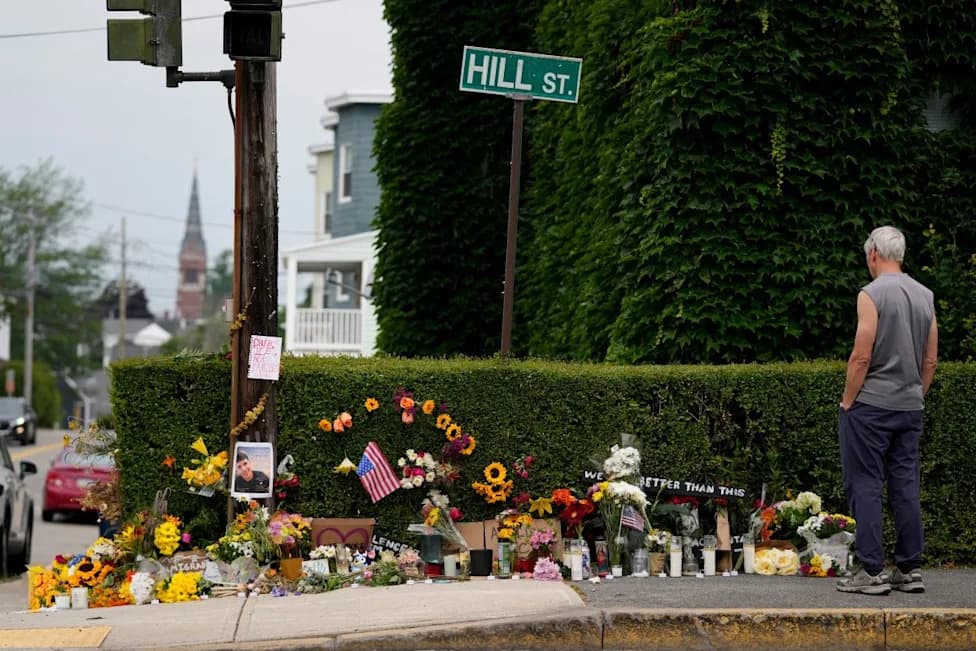
A makeshift memorial near the site where Johan Sebastián Durán Guerrero was killed by an Immigration and Customs Enforcement officer in Biddeford is seen here on July 14, 2026. Photo by Robert F. Bukaty of the Associated Press.
The fatal shooting of Johan Sebastián Durán Guerrero in Biddeford earlier this month has intensified national scrutiny of Immigration and Customs Enforcement (ICE) tactics — particularly the agency's use of force during vehicle stops and the training agents receive to handle moving-vehicle encounters.
What Happened
ICE agents fired at a moving vehicle driven by Durán Guerrero while executing what officials described as a final order of removal. The incident left Durán Guerrero dead and his car with multiple bullet holes in the windshield. Video shows a Kia circling an intersection near his apartment before an agent’s vehicle pinned it to the curb. Federal and state investigations are underway and many details remain unclear.
Policy And Practice
Federal Guidance: The Department of Homeland Security (DHS) use-of-force policy allows shooting at a moving vehicle only when an officer reasonably believes a person in the vehicle is posing an imminent threat of death or serious physical injury by other means, or when the vehicle itself is being used in a way that threatens death or serious injury. The policy also instructs officers to weigh risks to bystanders before firing.
Training and Tactics: Policing experts emphasize that firing at vehicles is particularly hazardous — a bullet can cause a driver to lose control or strike an uninvolved person. Standard tactical guidance recommends approaching vehicles from an angle rather than standing directly in front of them and treating shots through windshields as a last resort.
Scope Of The Problem
According to a Trace database, the Biddeford shooting was the 20th time federal immigration agents have shot or claimed to have shot at a moving vehicle since the start of last year. News reporting also places this incident among five fatal shootings tied to vehicle encounters involving immigration agents since the administration increased enforcement last January. More than half of the deadly-force cases identified began as traffic stops, and in roughly two-thirds of those cases federal officials say the drivers used or intended to use vehicles to cause harm.
Body Cameras, Oversight And Local Records
ICE has not fully deployed body-worn cameras despite earlier pledges following deadly January shootings in Minneapolis, complicating efforts to independently verify details of confrontations. DHS briefly ordered a halt to non-emergency traffic stops after the Maine shooting, but that decision was quickly reversed by President Donald Trump, who called vehicle stops one of the department’s "most important and effective crime-fighting tools." Agency leadership has said vehicle-stop practices and training are under review.
State records show Maine law enforcement — local, state and federal — have fired at vehicles at least 24 times since 2002. Four incidents resulted in at least one death and 11 produced injuries; in every reviewed case the state attorney general found the officers’ use of force justified. Those reviews typically hinge on whether officers reasonably perceived an imminent threat to themselves or others.
Training, Vetting And Accountability Concerns
Experts and reform advocates say the incidents underscore the need for stronger training, clearer tactical guidance, and improved vetting and supervision. Noel March of the University of Maine at Augusta noted ICE’s rapid hiring surge — roughly 12,000 new agents amid a large number of applications — may strain recruitment and training standards. Calls for universal body-camera use and transparent, independent investigations have grown louder.
"When our government agents use — under color of law — lethal force, it must be only in last-resort circumstances," said March. "Our law enforcement officers must have the training, must have the supervision, and must be hired and retained appropriately to carry out this most serious responsibility of public trust."
Legal Standards Guiding Reviews
Use-of-force reviews are informed by U.S. Supreme Court rulings such as Graham v. Connor (excessive-force claims judged from the perspective of a reasonable officer on the scene) and Tennessee v. Garner (limits on deadly force against fleeing suspects). Under those precedents, officers must be able to articulate why they believed they or others faced an imminent risk of death or serious injury before using lethal force against a moving vehicle.
What Comes Next
Federal and state investigators continue to examine the Biddeford shooting. Questions about whether ICE’s policies, training and oversight sufficiently limit the risks posed by vehicle stops remain central to the debate.
Reporting note: Digital editor George Harvey contributed to reporting for the original story.
Help us improve.