
Short version: Despite the IRGC’s growing dominance in Tehran and short‑term disruption from the 2026 conflict, geography and mutual commercial interests make restoration of Iran‑Central Asia trade routes the most likely outcome. Iranian ports (Chabahar, Bandar Abbas), the INSTC and rail links remain vital southern outlets for landlocked republics. The relationship will be transactional and cautious: reconstruction could unlock major markets if sanctions ease, but U.S. pressure, strikes and IRGC assertiveness pose real risks.
Trade Routes Iran Cannot Afford to Lose — Why Central Asia Still Needs Tehran
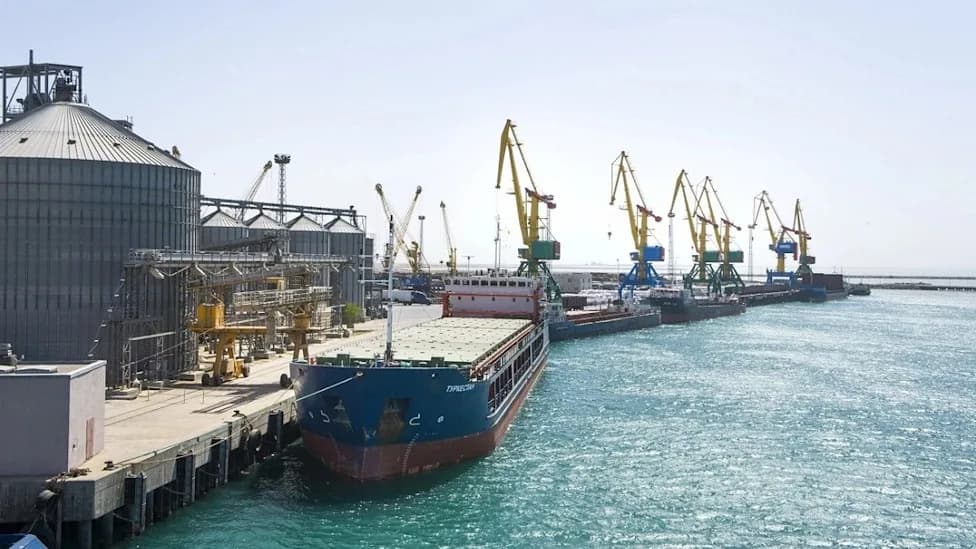
The Trade Routes Iran Cannot Afford to Lose
The Central Asian republics — Kazakhstan, Kyrgyzstan, Tajikistan, Turkmenistan and Uzbekistan — are likely to pursue cautious, pragmatic economic and transit cooperation with an Iran now dominated by the Islamic Revolutionary Guard Corps (IRGC). Geography, existing infrastructure and mutual commercial interests make continuity in connectivity the most probable outcome despite short-term disruption from the 2026 conflict and a more militarised Tehran.
IRGC Ascendancy and Its Effects
After the targeted strikes on 28 February 2026 that killed Supreme Leader Ali Khamenei and family members, Mojtaba Khamenei assumed leadership with strong backing from the IRGC. Key figures in the security and political apparatus — including Pasdaran commanders and veteran Guards in the foreign ministry and parliament — have strengthened the IRGC’s influence. The organisation increasingly functions as a "state-within-a-state," combining hardline political priorities with extensive economic interests and informal control of significant sectors.
Balancing Ideology and Economics
Although the IRGC emphasises ideological and asymmetric tools — regional proxies, sanctions‑evasion networks and asymmetrical deterrence — its incentives in Central Asia are largely pragmatic. Trade, transit fees, and access to regional markets provide steady revenue and reduce the incentive to destabilise neighbouring states whose cooperation it needs.
Pre‑War Connectivity And The Stakes
Before the 2026 conflict, Iran deepened ties with Central Asia on practical grounds. Trade expanded rapidly: Tajikistan’s trade with Iran reportedly quadrupled to the hundreds of millions of dollars, Kazakhstan pursued a $3 billion target centered on agricultural exports, Uzbekistan advanced port and investment roadmaps, and Turkmenistan prioritised gas swaps and pipeline cooperation.
Major transport projects — the International North–South Transport Corridor (INSTC), Caspian shipping links, and Iranian ports such as Chabahar and Bandar Abbas — gave landlocked Central Asia vital southern access to the Indian Ocean, reducing sole reliance on northern routes through Russia or longer routes via China or Europe. An EAEU–Iran free trade agreement that entered into force in May 2025 added institutional momentum to this trend.
Immediate Shock From The 2026 Conflict
The war produced short-term shocks. Iran’s March 2026 ban on food exports damaged import-dependent economies like Tajikistan. Strained maritime security in the Strait of Hormuz, strikes on key infrastructure — including reported attacks on the Aq Tekeh Khan railway bridge and damage to facilities at Chabahar and Bandar Abbas — and higher insurance and transport costs disrupted trade volumes across the region.
Central Asian governments officially adopted neutral tones and urged restraint; several (Tajikistan, Turkmenistan, Uzbekistan) sent humanitarian aid. The episode accelerated efforts to diversify corridors, but it also underscored how exposed the republics are without Iranian southern outlets.
Why Restoration — Not Rupture — Is Most Likely
Several durable incentives point toward restoring and strengthening Iranian routes rather than abandoning them entirely:
- Geography: Iran offers the shortest overland access to the Indian Ocean for several republics via ports such as Chabahar and Bandar Abbas.
- Commercial Opportunity: Post‑war reconstruction in a 93 million–person market could absorb Central Asian exports — grain, construction materials, metals, electricity, engineering and logistics services — if sanctions permit.
- Strategic Hedging: Central Asian capitals pursue multi‑vector policies and want several southern outlets (including rail links to Pakistani ports) to reduce dependence on any single power.
Country Notes
Uzbekistan: Positioned to be one of Iran’s closest pragmatic partners, with connectivity-focused diplomacy and concrete plans to expand rail access to the Persian Gulf and Gulf of Oman.
Kazakhstan: Has strong commercial incentives to restore trade through Iranian ports to diversify beyond northern corridors and access South Asian markets.
Turkmenistan: Shares a long border with Iran and serves as a key overland link; its permanent neutrality enables practical cooperation on gas, electricity and transit without overt alignment.
Risks And Contingencies
Key risks that could reshape ties include sustained U.S. pressure or strikes on transport infrastructure, a longer or more destabilizing regional conflict, or a further hardening of IRGC policy that exports confrontation. Conversely, partial easing of sanctions, stabilisation, and investor confidence would accelerate economic reintegration.
Bottom Line: Expect transactional, cautious engagement. Geography and mutual need for connectivity mean Iran and the Central Asian republics have strong incentives to repair and diversify trade routes — even if political trust remains limited.
Key variables going forward: the trajectory of the conflict; IRGC consolidation versus internal moderation; Central Asian balancing among Russia, China, Turkey and the West; and international sanctions policy.
By James Durso for OilPrice.com — improved and edited for clarity and flow.
Help us improve.





















