Robert F. Kennedy Jr. is a prominent vaccine critic, but vaccine safety remains well-supported by decades of research. A separate, urgent problem is the inconsistent quality of many FDA-approved generic drugs, most produced overseas. Preliminary Department of Defense testing of 13 generics found ~15% of manufacturers produced contaminated or improperly dissolving products and another 12% were borderline. Experts call for independent finished-product testing, public quality scores, procurement reforms that value quality, and incentives to rebuild domestic manufacturing.
Vaccines Remain Safe — But U.S. Generic Drug Quality Deserves Urgent Scrutiny

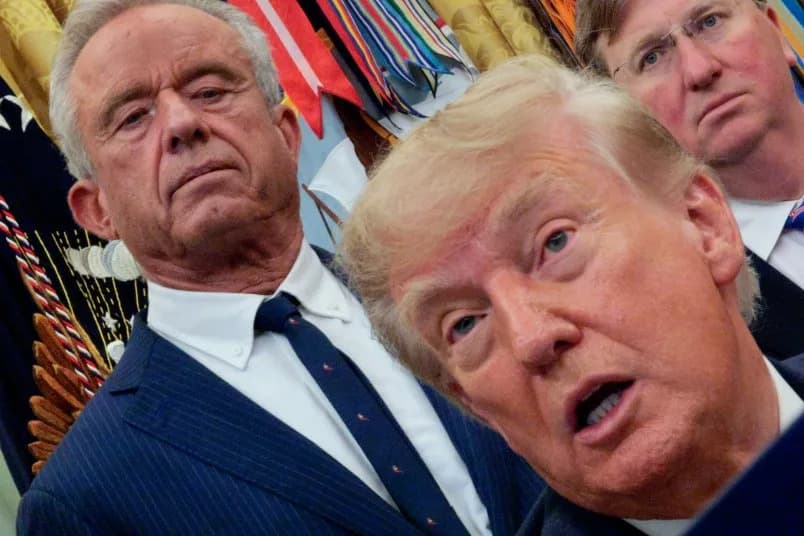
WASHINGTON, DC - APRIL 16: U.S. Secretary of Health and Human Services Robert F. Kennedy Jr. speaks at a news conference to discuss the CDC's latest autism survey. (Photo by Alex Wong/Getty Images)Getty Images
Note: Robert F. Kennedy Jr. is a well-known vaccine critic but is not the U.S. Secretary of Health and Human Services. This article addresses concerns about vaccine skepticism while focusing on a separate, pressing public-health risk: the quality of the nation’s generic drug supply.
Public debate about vaccines has persisted for years, despite decades of research confirming their safety and effectiveness. Meanwhile, a growing body of evidence suggests a more immediate — and less widely discussed — threat to patient safety: the variable quality of many FDA-approved generic medicines, most of which are now manufactured overseas.
Why Generic Drug Quality Matters
Generic drugs are critical to American healthcare. Although they represent only about 20% of U.S. drug spending, generics account for more than 90% of outpatient prescriptions and include lifesaving medicines used in intensive care units, emergency departments, transplant centers and oncology wards. Older adults especially depend on these medicines: an estimated 75%–90% take at least one prescription drug.
What The Data Shows
In a New England Journal of Medicine perspective, Stanford professor Kevin Schulman and I raised concerns that the shift of manufacturing offshore — driven by price competition and lower labor costs — has outpaced the FDA’s capacity for regular inspections. We cited FDA inspection reports, agency decisions that sometimes prioritized preventing shortages over product safety, and documented cases of patient harm.
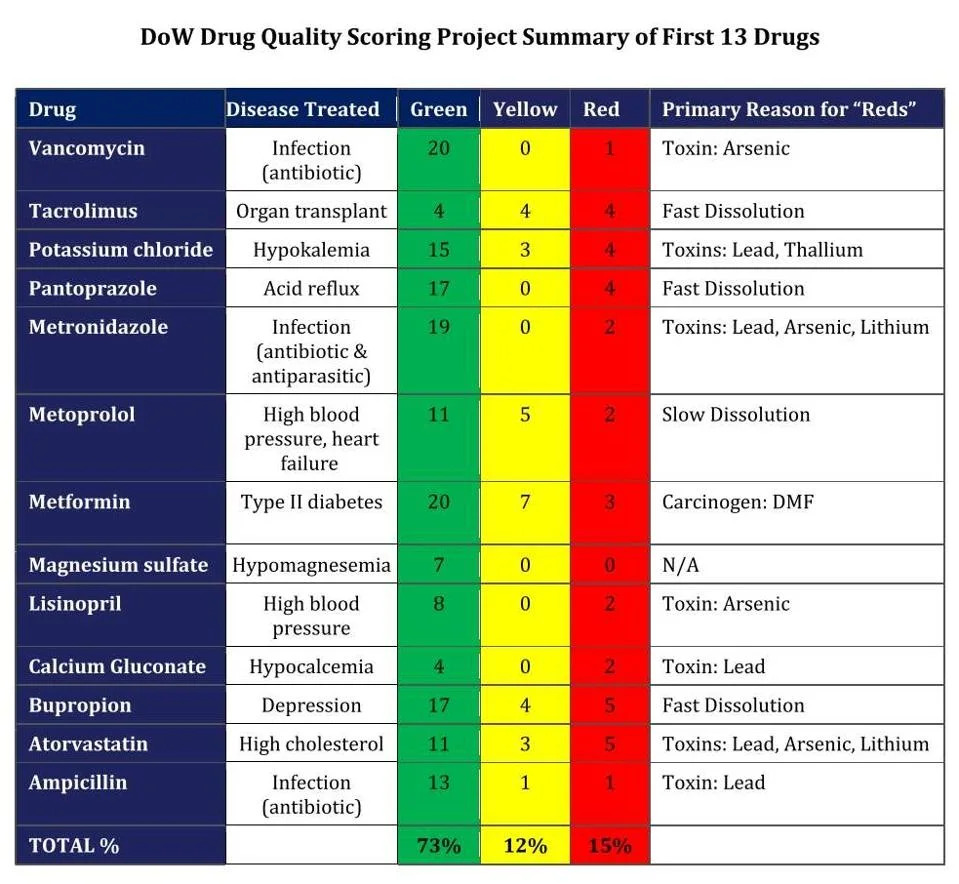
Results of quality testing of 13 generic medications that are included in the U.S.Department of Defense drug formulary. The tested products were purchased from pharmaceutical wholesalers. Samples rated as red were confirmed by independent analytic laboratories.
Preliminary results from an ongoing Department of Defense (DoD) quality study amplify those concerns. Testing of 13 commonly used generic drugs purchased from U.S. wholesalers found that about 15% of FDA-approved manufacturers produced batches contaminated with heavy metals (for example, lead, thallium or arsenic), contained dimethylformamide (a probable carcinogen), or exhibited dissolution rates that were too fast or too slow to be safe. Another 12% of manufacturers produced products of borderline quality. Only about 73% of tested manufacturers scored clearly as good quality. Subsequent testing of additional drugs by the DoD’s analytical lab reportedly found similar problems.
FDA Response And Shortcomings
The FDA has defended its oversight. Officials from the agency’s Office of Generic Drugs and Office of Pharmaceutical Quality characterized many external reports, independent lab results and individual incidents as isolated "anecdotes" that could undermine public confidence in generics. Yet the evidence above suggests systemic vulnerabilities when inspection capacity and regulatory reach lag behind globalized production.
Policy Steps To Protect Patients
To restore trust and improve safety, policymakers should pursue pragmatic, measurable reforms:
- Independent Finished-Product Testing: Encourage and support accredited third-party laboratories to test finished generic products purchased from the U.S. market; require immediate reporting to the FDA when serious defects are confirmed.
- Public Quality Scores: Publish simple, consumer-friendly ratings (for example, a red/yellow/green system) for manufacturers and specific products so purchasers and patients can make informed choices.
- Procurement Based On Best Value: Direct federal purchasers (DoD, VA, CMS) to weigh quality and reliability, not just lowest price, when awarding contracts for generic drugs.
- Incentivize Domestic Capacity: Support federal incentives and long-term contracting to rebuild resilient, modern domestic manufacturing for essential generics.
Why These Steps Help
Independent testing exposes problems sooner than inspection alone, public scores create market incentives for quality, procurement reform rewards reliable manufacturers, and domestic investment reduces overreliance on distant supply chains. Together, these measures realign commercial incentives toward patient safety and better clinical outcomes.
Conclusion: The focus of public health policy should remain on interventions backed by strong evidence. While debates about vaccines continue in some circles, the evidence supporting vaccine safety is substantial. At the same time, independent testing and greater transparency for generic drugs would address a tangible, present threat to patient safety and should be an urgent priority for regulators, federal purchasers and Congress.
Help us improve.