AI and software are transforming warfare by adding cloud services, autonomous systems and decision‑support tools to traditional military hardware. SIPRI groups the military‑AI sector into four categories — defence primes, neoprimes (defence startups), big tech and foundational model providers — each playing a distinct role. Major contracts and recent policy shifts (including cleared access to classified networks and changing model‑use rules) are accelerating adoption worldwide, raising strategic, legal and ethical questions.
The AI Military Complex: Who’s Driving the Push Into Algorithmic Warfare?
INTERACTIVE - Trends in global military spending-1777457386
Software and artificial intelligence are reshaping how wars are planned and fought. While tanks, aircraft and boots on the ground remain central, modern conflict increasingly relies on cloud services, autonomous systems and decision‑support tools that put more combat power behind screens.
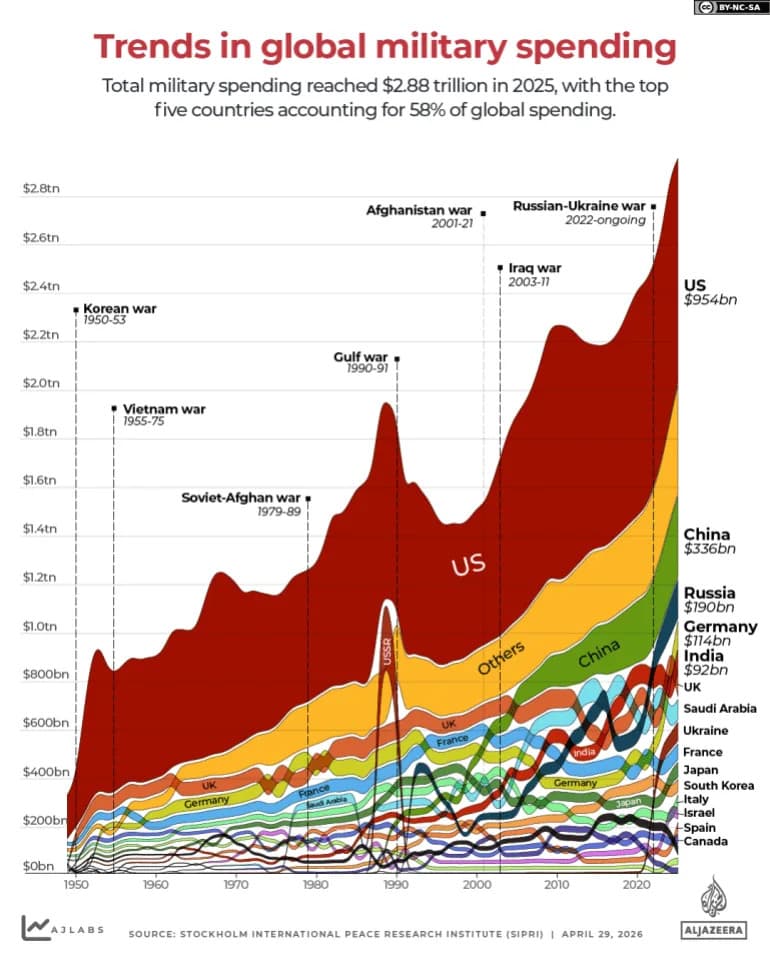
Billions of dollars are flowing into a relatively small group of companies that are helping militaries integrate AI into sensing, targeting, command and logistics. As defence budgets rose — global military spending reached about $2.88 trillion in 2025 — legacy arms firms, new defence startups and major tech companies are all racing to capture a share of the market.
interactive-militaryai2_military AI companies-1785139513
Recent Contracts and Momentum
On July 10, the UK Ministry of Defence signed a £2 billion (about $2.7 billion), 15‑year contract with Omnia Training — a consortium led by Raytheon UK — to train up to 60,000 soldiers a year using AI-enabled training systems aimed at creating a more "combat‑ready" force.
Days earlier, NATO awarded contracts to operate its Enhanced Air Command and Control Data Platform to Anduril (for its Lattice software), Palantir and the French joint venture Athea SAS. Lattice uses AI and computer vision to fuse multiple sensor streams into a single, live operational picture.
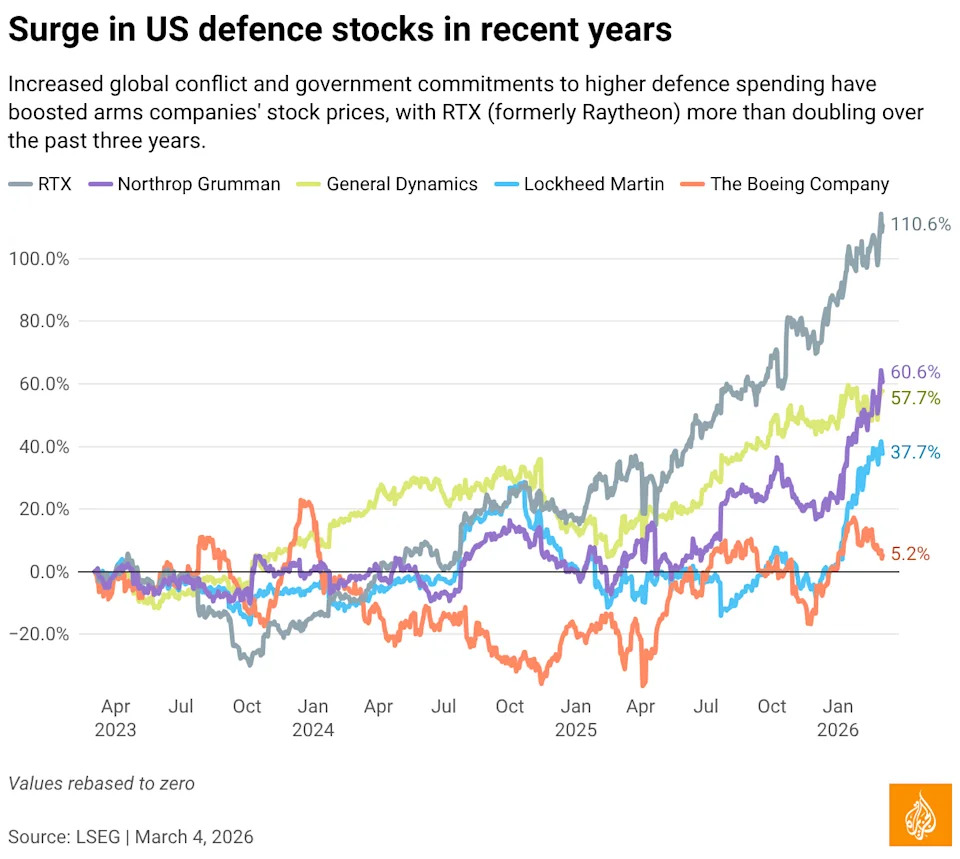
Context: The Pentagon’s 2014 "Third Offset Strategy" explicitly bet on AI and autonomy as central to next‑generation warfare. Recent years have seen that ambition accelerate as militaries adopt AI across intelligence, surveillance, targeting and command systems.
How Researchers Map the Sector
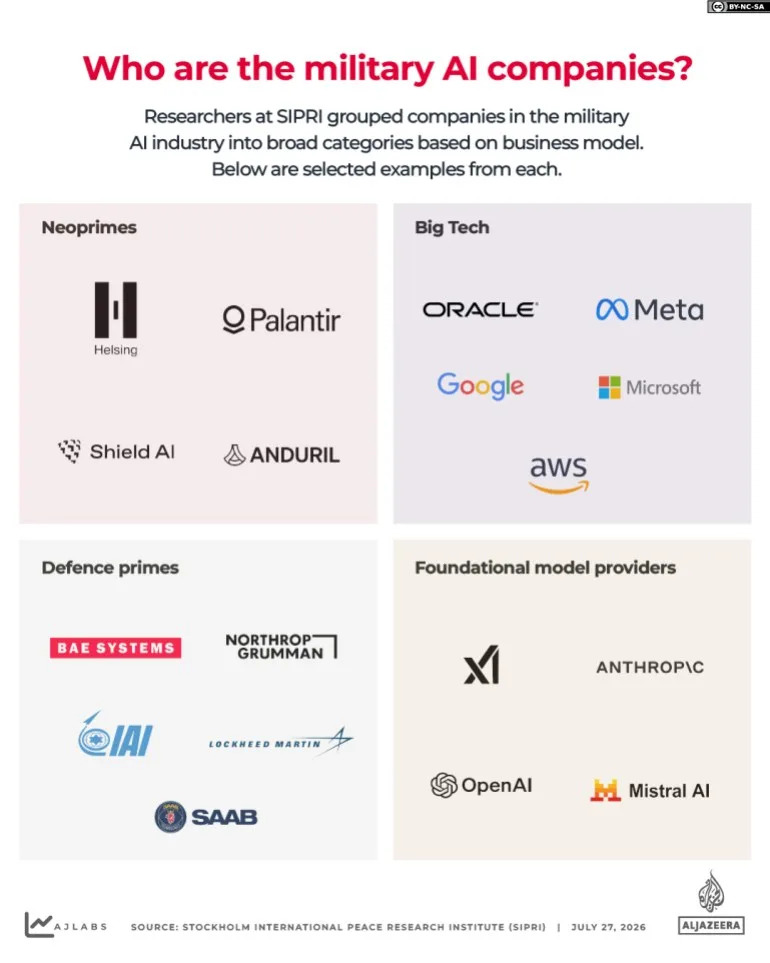
Researchers at the Stockholm International Peace Research Institute (SIPRI) group military‑AI companies into four roles. Below we explain each category with representative companies and examples.
Defence Primes
Long‑standing contractors that historically built hardware — now embedding AI into platforms and weapons systems. Examples include Lockheed Martin, RTX, Northrop Grumman, BAE Systems and General Dynamics. These firms are integrating AI for tasks like sensor fusion, target recognition and pilot assistance. For instance, Lockheed reported flight tests of an AI tool for the F‑35 to support quicker hostile‑aircraft identification.
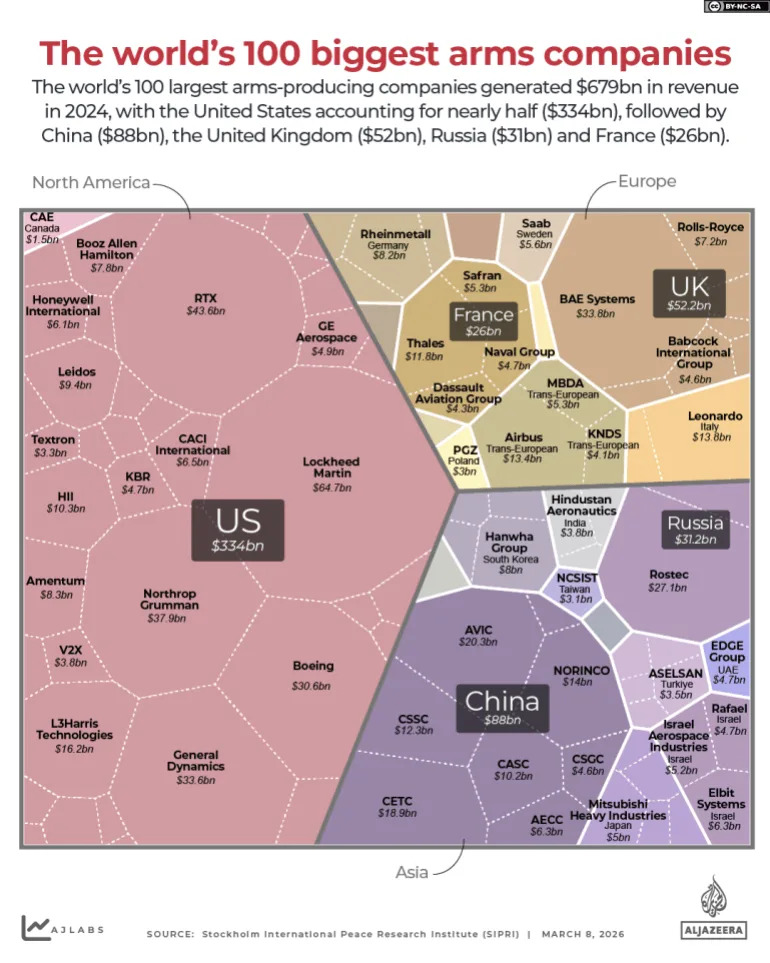
INTERACTIVE Iran War The worlds 100 biggest arms companies-1773039380
Neoprimes (Defence Startups)
Software‑first companies that sell specialised data products and integrated hardware–software solutions. Palantir (known for Project Maven work) provides platforms that sift imagery and signals to prioritise targets and accelerate battlefield decision‑making. Anduril’s Lattice ties sensors, drones and autonomous vehicles into a unified command network; its systems are in use across US forces and allied programmes.
Big Tech
Cloud providers and tech giants supply the compute, tools and large‑scale infrastructure that enable military AI. In 2026 the US Department of Defense cleared eight tech and AI firms — SpaceX, OpenAI, Google, NVIDIA, Reflection, Microsoft, Oracle and AWS — to operate on highly classified IL6/IL7 networks as part of a push to become an "AI‑first" force.
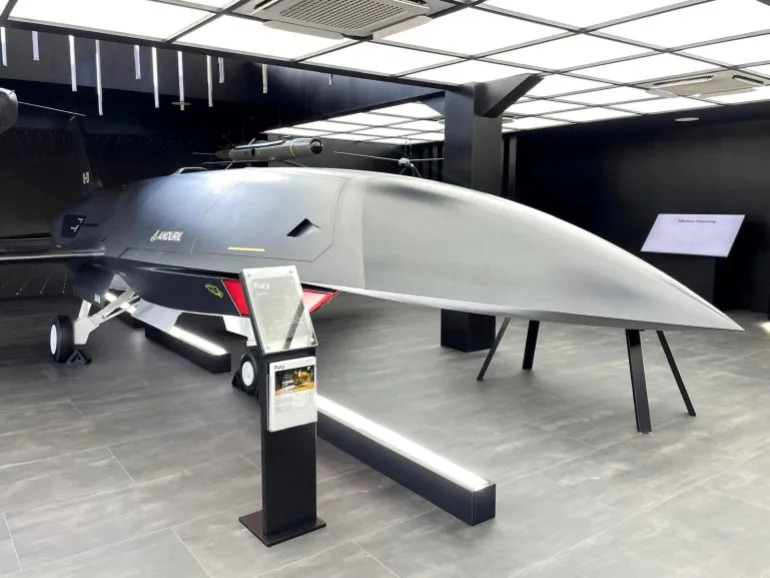
Anduril displays its unmanned combat aircraft "Fury" at the Farnborough International Airshow, in Hampshire, Britain, on July 20, 2026 [Cassell Bryan-Low/Reuters]
Foundational Model Providers
Companies that create large foundational AI models used as building blocks across commercial and defence products. Examples include OpenAI, Anthropic and Mistral AI. Some labs initially resisted military use of their models; policies shifted for some firms — notably OpenAI removed its military‑use ban in 2024. Partnerships between model developers and defence contractors (for example, Palantir and Anthropic) have at times become legally contested over how models are used.
Geopolitical and Global Supply Notes
China has also developed AI tools for military use. Reuters reported that researchers adapted Meta's Llama for a PLA tool called ChatBIT. The Pentagon estimated Chinese military‑related AI spending at roughly $1.5–$2 billion annually and in 2026 added several Chinese firms — including Alibaba and Baidu — to a list of companies it says are linked to the Chinese military. Smaller Chinese startups founded by ex‑employees of major tech firms have reportedly developed targeting, surveillance and decision‑support systems as well.
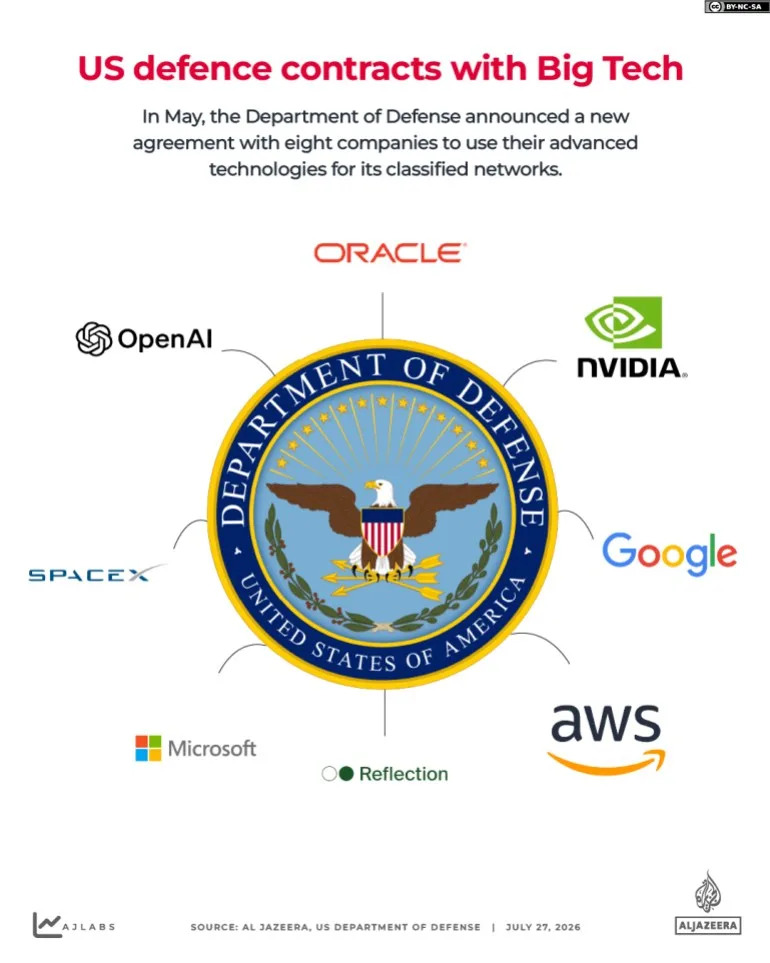
interactive-militaryai2_US DoD with Big Tech-1785139515
What This Means
The convergence of defence primes, neoprimes, big tech and model providers creates a fast‑moving ecosystem where commercial innovations rapidly migrate into military use. That raises strategic and ethical questions about oversight, export controls, liability for autonomous systems, and how to ensure civilian safeguards as AI spreads through lethal and non‑lethal military systems.
Key takeaway: The military‑AI landscape is no longer the preserve of a few defence contractors; it is a blended market of legacy firms, agile startups and cloud‑scale tech companies shaping how future conflicts will be fought and managed.
Help us improve.