Princeton-led researchers, using machine-learning tools on TESS Cycle 1 data, report more than 10,000 exoplanet candidates in a new catalog. The haul includes over 9,000 gas-giant candidates, 100+ Neptune-sized candidates and about 11 potential super-Earths. AI reduced ~80 million light curves to ~2.5 million for human vetting, dramatically cutting the time required for manual review. The team plans to add convolutional neural networks and will mine further TESS data while upcoming missions (PLATO, Roman, Gaia) are expected to boost candidate numbers.
AI Supercharges the Planet Hunt: Princeton Team Reports 10,000+ Exoplanet Candidates From TESS
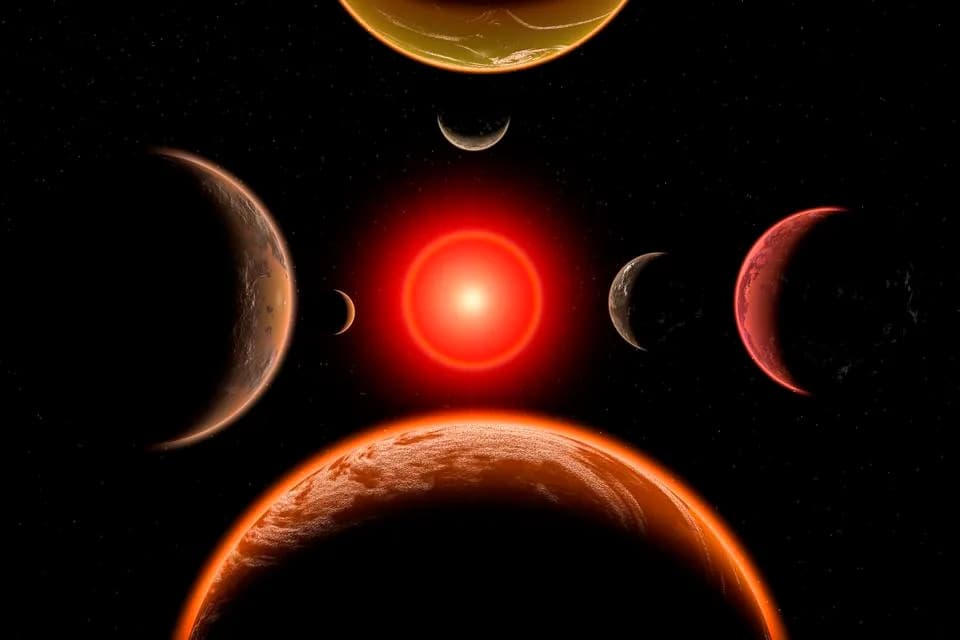
Seven Earth doppelgängers circle the red dwarf star TRAPPIST-1, one of the most astonishing exosolar systems discovered so far in a new golden age of AI-aided astronomy (Photo by: Education Images/Universal Images Group via Getty Images)Universal Images Group via Getty Images
Princeton-led astronomers, aided by machine learning, say they have identified more than 10,000 exoplanet candidates from TESS Cycle 1 data — the largest single candidate haul reported to date. The work, described in the paper "The T16 Planet Hunt: 10,000 New Planet Candidates from TESS Cycle 1," was led by Joshua Roth, a doctoral candidate in astrophysics at Princeton University.
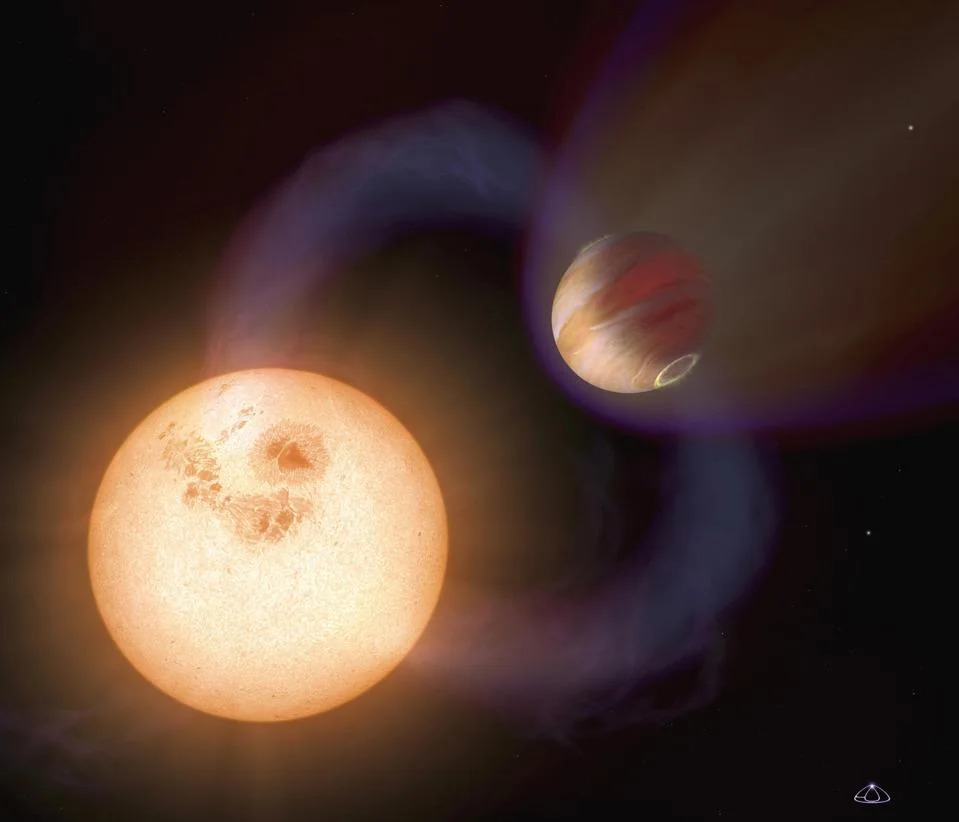
An artist's impression of a "Hot Jupiter" planet about to partially eclipse its star issued by the European Space Agency. A team of American astronomers discovered a cosmic trove of Hot Jupiters circling their stars in imagery captured by the TESS space telescope. AFP PHOTO NASA/ESA/K. SAHU (STScI) AND THE SWEEPS SCIENCE TEAM (Photo credit should read AFP via Getty Images)
The team converted raw imagery from NASA’s Transiting Exoplanet Survey Satellite (TESS) into roughly 80 million light curves — graphs that record how a star’s brightness changes over time — and then applied an AI-driven pipeline to search for the tiny periodic dips that can indicate a transiting planet.
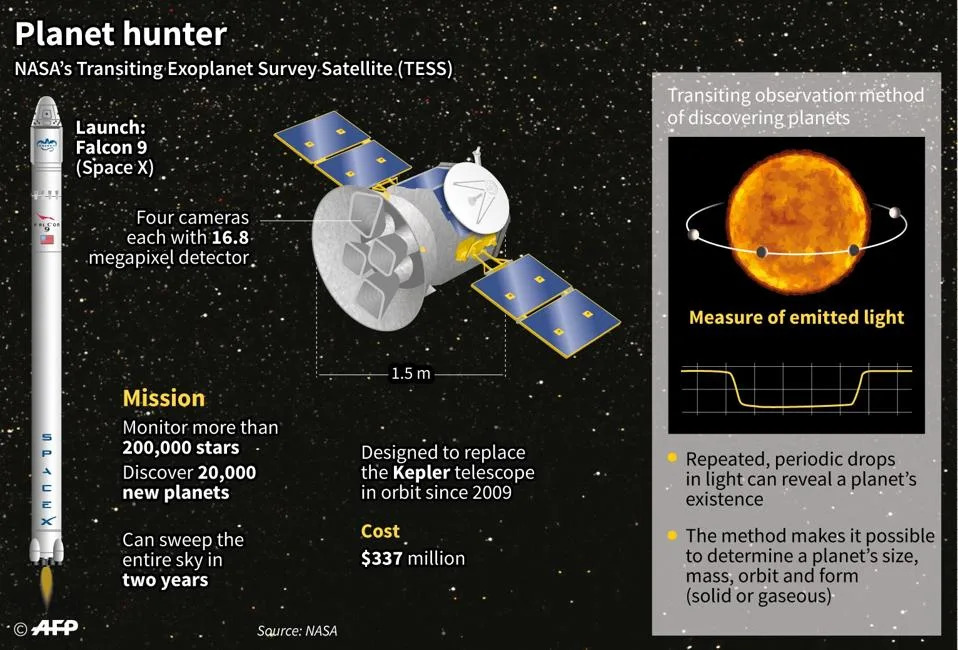
NASA's TESS space telescope, launched in 2018, is continuing its search for exoplanets across the Milky Way. (Graphic by AFP via Getty Images)
Results: A Diverse Cache Of Candidates
The candidate list spans a wide variety of worlds. According to the paper and team interviews, their sample includes:
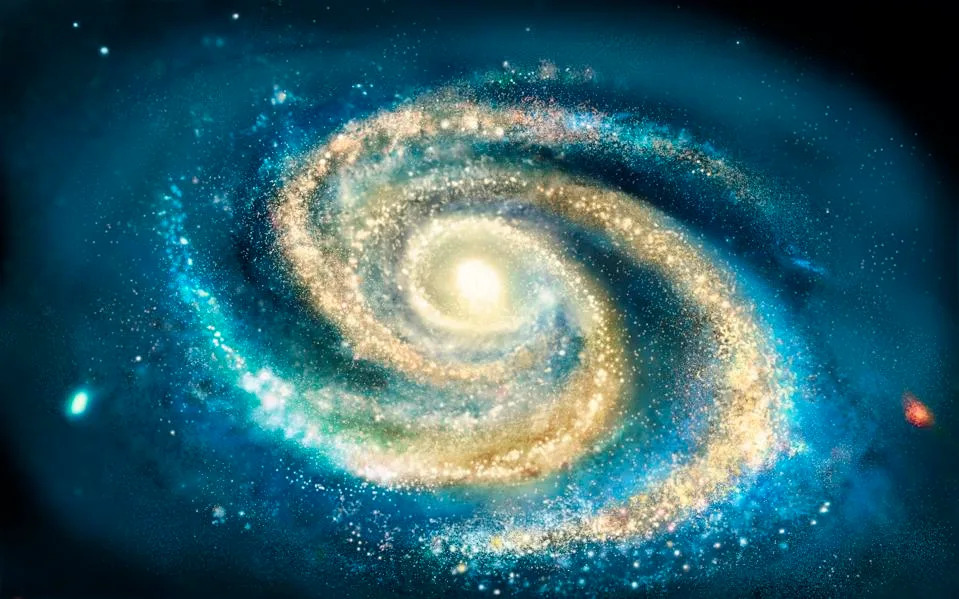
100 years after American astronomer Edwin Hubble began proving the Milky Way was just one island-galaxy in the cosmic ocean of the universe, a new epoch of discoveries has begun. (Photo by: QAI Publishing/Universal Images Group via Getty Images)
- More than 9,000 gas-giant candidates (many described as "Hot Jupiters" because they orbit close to their stars).
- Over 100 Neptune-sized candidates.
- About 11 potential "super-Earths," smaller rocky candidates that could occupy temperate orbits.
All of these are candidate signals that require follow-up observations to confirm and characterize; only a subset will become validated planets.
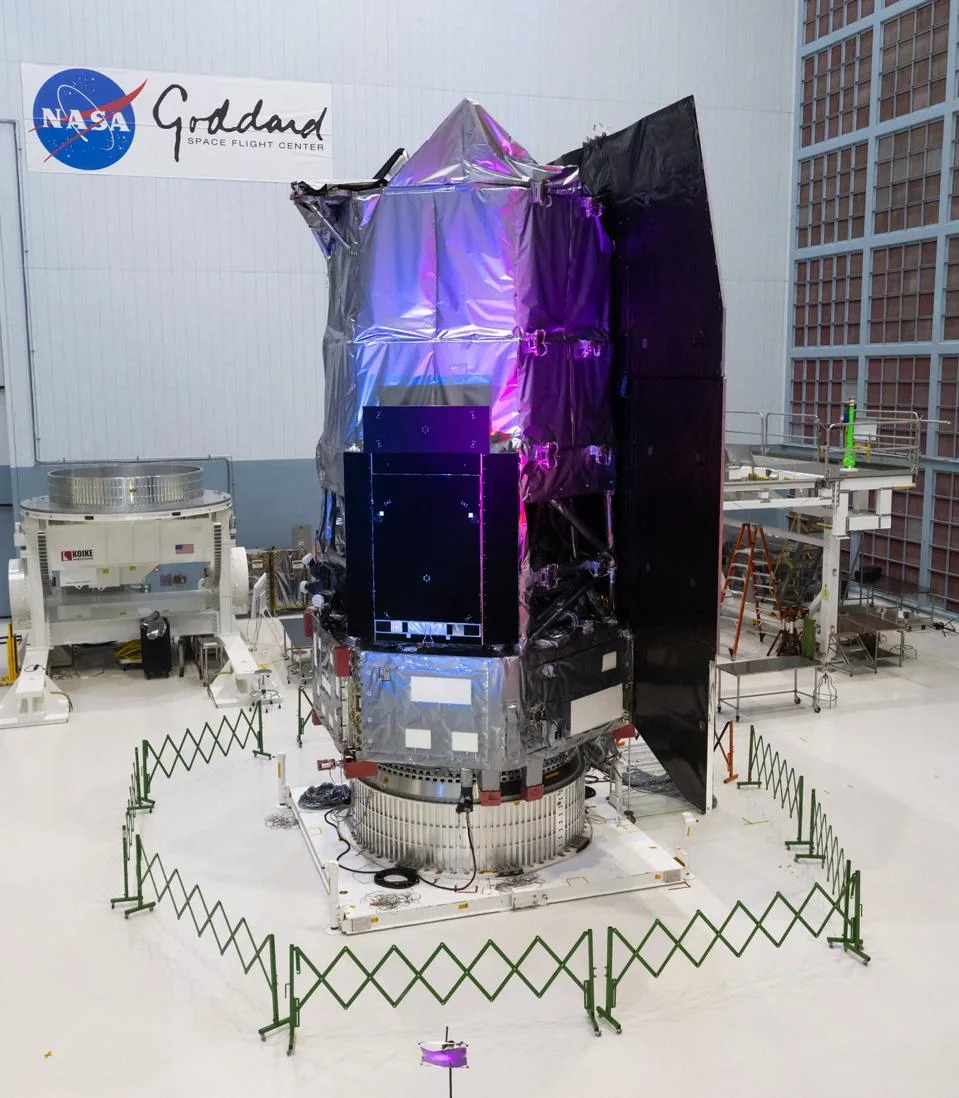
The Roman Space Telescope, unveiled at NASA's Goddard Space Flight Center and set to be launched in August of 2026, could "discover some 100,000 transiting planet candidates," says Princeton planet hunter Joshua Roth. (Photo by SAUL LOEB / AFP via Getty Images)
How AI Made the Search Feasible
The team combined established and custom tools to triage the massive dataset. After producing light curves, they ran software including the Cambridge Exoplanet Transit Recovery Algorithm and a trained Random Forest classifier to prioritize promising signals for human review.
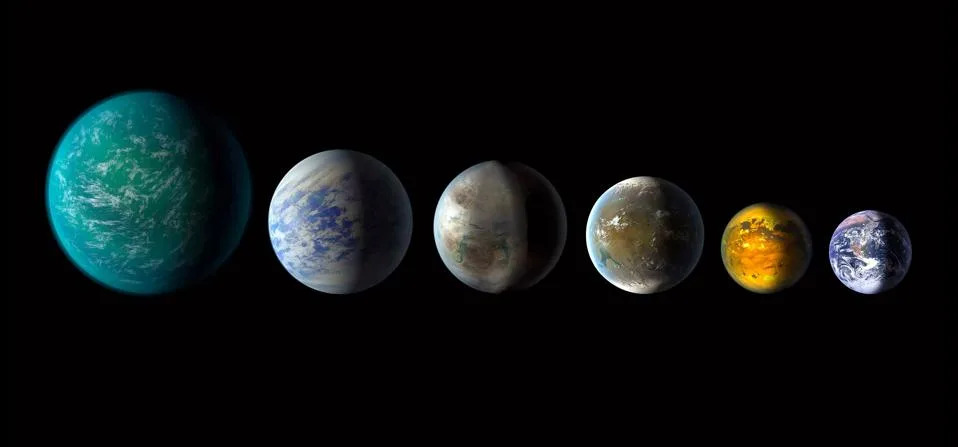
An artist's impression of habitable-zone exoplanets, analogues of Earth, discovered by the Kepler space telescope. (Photo by: Universal History Archive/ Universal Images Group via Getty Images)
"It is safe to say this search would not have been possible without the machine learning step," Roth said, noting that manual vetting of 50,000 candidates took about six weeks. The machine-learning stage reduced roughly 80 million light curves to about 2.5 million for further consideration.
Roth estimates that without the AI reduction the team would have faced more than three years of manual vetting work.
Next Steps And Future Missions
The collaboration — including researchers at Princeton, MIT, UCLA and Las Campanas Observatory in Chile — is already working through TESS Cycle 2 data and plans to add convolutional neural networks (CNNs) to classify full-frame image cutouts, with the goal of further reducing manual review.
Looking beyond TESS, the team highlighted upcoming and future space missions that should dramatically expand candidate lists. ESA’s PLATO mission is optimized to detect smaller, terrestrial planets with improved photometric precision, while NASA’s Roman Space Telescope and the final Gaia data releases are both expected (in published projections) to add very large numbers of candidate planets via transit and astrometric techniques respectively. The combination of better data and increasingly sophisticated machine learning promises a rapid acceleration in planet-candidate discoveries over the coming decade.
Context And Significance
Since the first detection of a planet orbiting a Sun-like star in 1995, exoplanet discovery has moved from isolated detections to large statistical catalogs. Even tens or hundreds of thousands of candidates, however, represent only a tiny fraction of the planets astronomers expect exist across the galaxy and the broader universe.
Roth and collaborators emphasize that AI is not replacing human expertise but enabling it — by focusing follow-up resources on the most promising signals so that the community can confirm and study truly interesting worlds.
Note: Reported counts are candidate counts from the T16 analysis and will require follow-up observations to confirm which are bona fide planets.
Help us improve.