
Britain will see its deepest partial solar eclipse since 1999 on Aug. 12, with over 90% of the Sun obscured in many areas and up to 96% in the far south‑west. Health officials warn against looking directly at the Sun and recommend certified eclipse glasses or indirect viewing methods such as a pinhole viewer or projecting sunlight through a colander. Sunglasses are not sufficient; order certified glasses early. Times vary by location, with London, Bristol and Cardiff seeing the greatest eclipse around 7:13pm.
Experts Urge Using a Colander or Pinhole Viewer to Safely Watch Britain’s Biggest Solar Eclipse Since 1999

A colander can be used to cast a shadow of the Sun on a sheet of white paper during the eclipse on Aug 12 - Ricardo Arduengo/AFP
Britain will experience its deepest partial solar eclipse since 1999 on Aug. 12, and experts are offering simple, safe ways to watch it — including projecting the Sun's image through a colander. More than 90% of the Sun will be hidden by the Moon for much of the UK, with up to about 96% obscuration in the far south‑west.
What Happens During an Eclipse
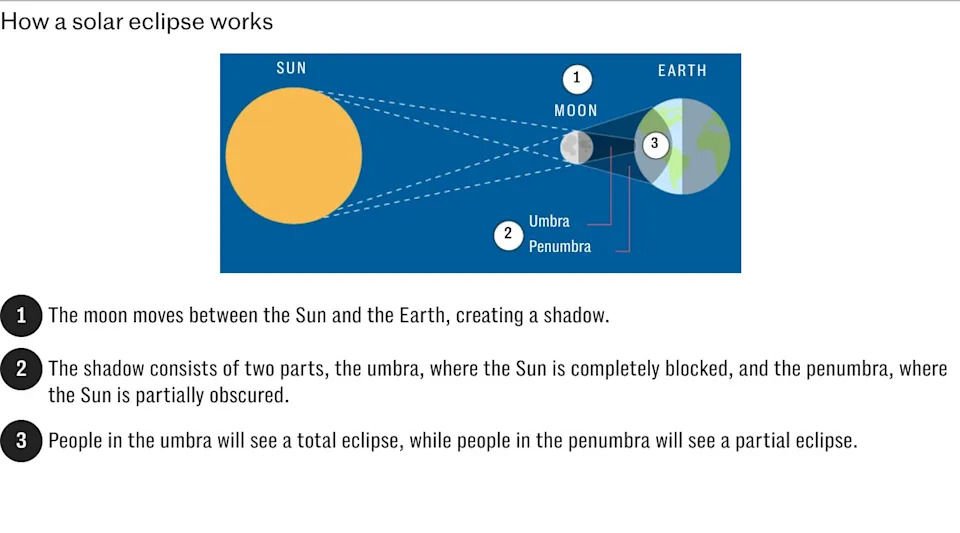
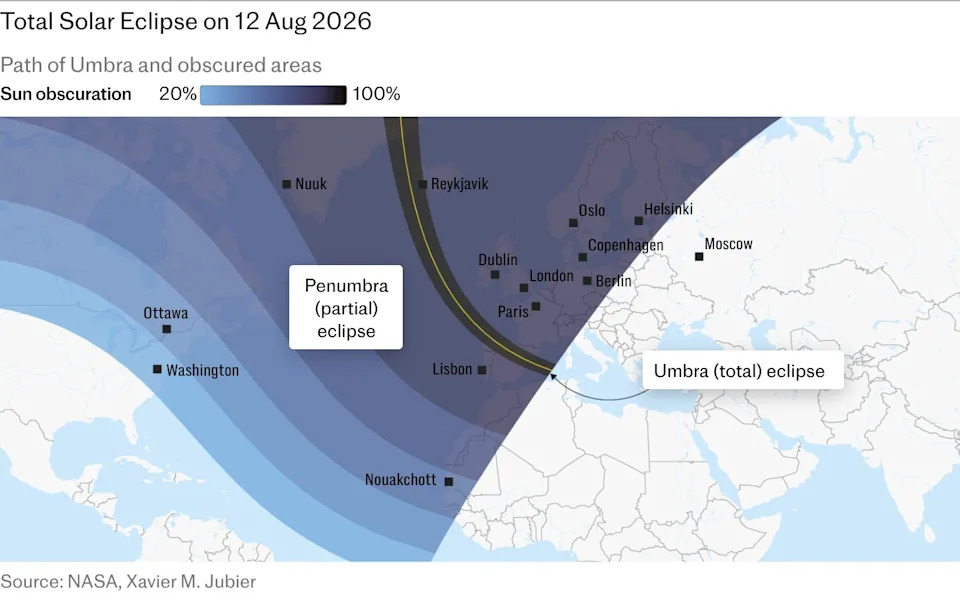
A solar eclipse occurs when the Moon passes between the Sun and Earth, blocking some or all of the Sun's light. Because of the relative sizes and distances of the Sun and Moon, the Moon can match the Sun's apparent size and create a striking silhouette across the sky. Next month's event will be the deepest partial eclipse visible from the UK until 2081, while a narrow track of totality crosses parts of northern Russia, Greenland, Iceland and parts of Portugal and Spain.
Protect Your Eyes
Do not look directly at the Sun without proper protection. Even when mostly covered, the remaining exposed solar disk is bright enough to cause serious and permanent eye damage. The UK Health Security Agency recommends using certified solar eclipse glasses with the correct filters, or viewing the eclipse indirectly.
Safe Ways To Watch
Experts recommend several safe viewing methods for people without certified eclipse glasses:
- Pinhole Viewer: Make a simple projector using a cereal box or card with a small hole. Project the Sun's image onto white paper or a light surface and watch the crescent shape safely.
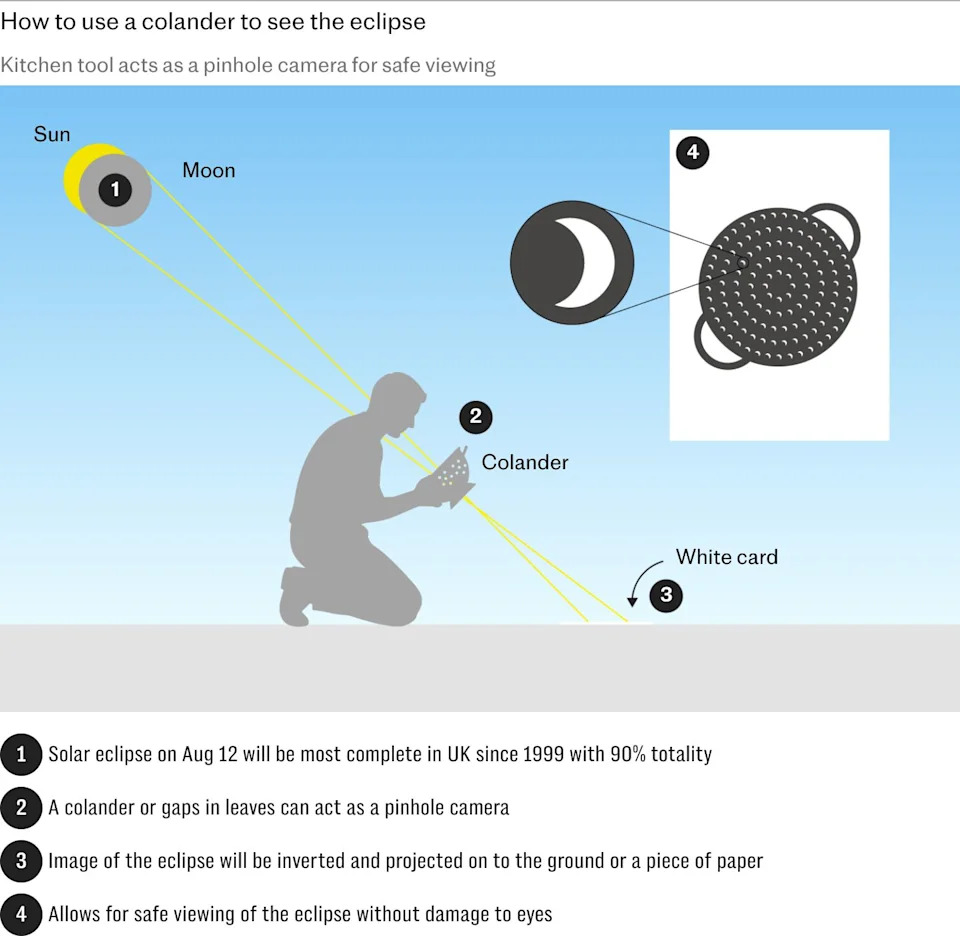
- Colander or Steamer: Stand with your back to the Sun and let sunlight pass through the holes in a colander, steamer or similar kitchen item. The resulting shadows on the ground or paper will display many small crescent Suns.
- Natural Projection: Look at the pattern of light under trees. Gaps between leaves act like many pinhole projectors and will show crescent shapes on the ground.
- Mirrors and Indirect Methods: Small mirrors can safely reflect the Sun onto a shaded surface; do not look at the reflection directly unless it is projected onto another surface.
Never use regular sunglasses to look at the eclipse; they do not provide sufficient protection. Also avoid using eclipse glasses with telescopes or binoculars unless the filters are specifically designed for that equipment and fitted correctly, as concentrated sunlight can damage the filter and your eyes.
Expert Guidance and Practical Details
Robert Massey, deputy executive director of the Royal Astronomical Society, said the Aug. 12 totality track crosses northern Russia, the Arctic Ocean, Greenland, Iceland and parts of the Atlantic, Portugal and Spain, while the UK will see a deep partial eclipse, especially in the far south‑west. Professor Lucie Green of University College London described the event as an impressive spectacle and recommended simple projection methods for safe viewing.
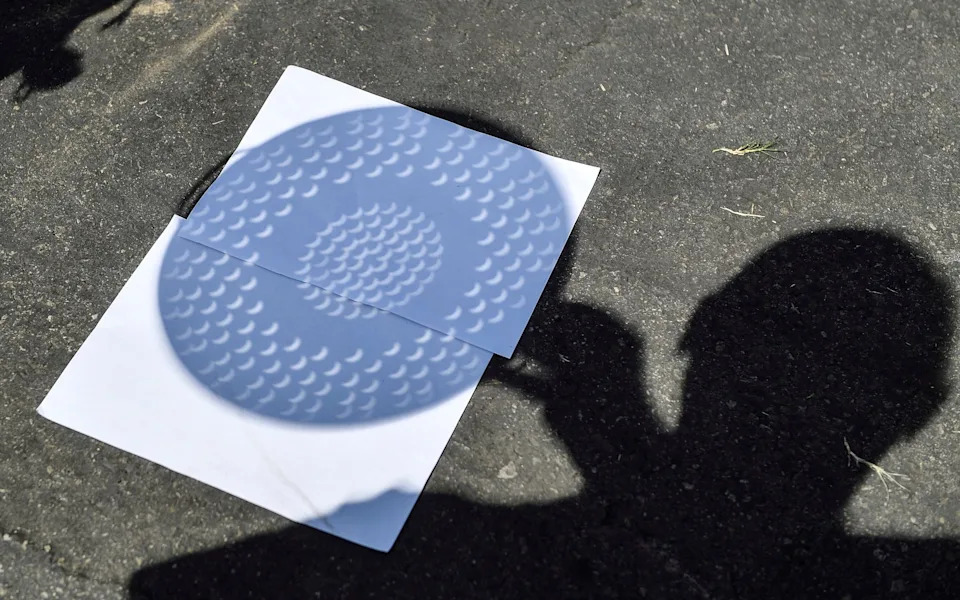
Viewers are encouraged to catch the total eclipse using a a colander and a sheet of paper or a pinhole viewer - Jeff Gritchen/Getty Images
"Stand with your back to the Sun and let the sunlight pass through the colander," Professor Green advised. "On the ground you'll notice beautiful images of the crescent Sun."
Times, Locations and Buying Glasses
Coverage varies by location: Cornwall can expect more than 95% coverage, Cardiff around 93%, and Aberdeen about 89%. Approximate local times for the UK are:
- London, Bristol, Cardiff: Starts ~6:17pm; greatest eclipse ~7:13pm
- Manchester, Liverpool: Starts ~6:13pm
- Glasgow, Edinburgh: Starts ~6:08pm
Certified eclipse glasses are inexpensive and available from reputable suppliers. Organisations such as Royal Museums Greenwich offer options for about £3 and advise ordering early (for example, to receive glasses before Aug. 5) to ensure they arrive in time.
Why Caution Matters
Public-health campaigns around the 1999 eclipse highlighted the risks: the Royal College of Ophthalmologists reported roughly 70 cases of vision problems after that event, and UKHSA records note that about 40% of those people had looked at the Sun for less than a minute. Experts warn that even brief direct glances can cause lasting harm.
Final Tips
If you plan to observe the eclipse, choose a safe method: certified eclipse glasses, a pinhole viewer, or indirect projection using everyday items like a colander. Keep children supervised and avoid tempting them to look directly at the sky. With safe precautions, the Aug. 12 eclipse will be a memorable and entirely viewable event from the UK.
Help us improve.





















